Increased Incidence of Hypothermia Among Seniors Aged 65 and Over
Maintain Proper Indoor Temperature and Use Cold-Weather Gear
Adopt Healthy Lifestyle Habits for Better Well-Being
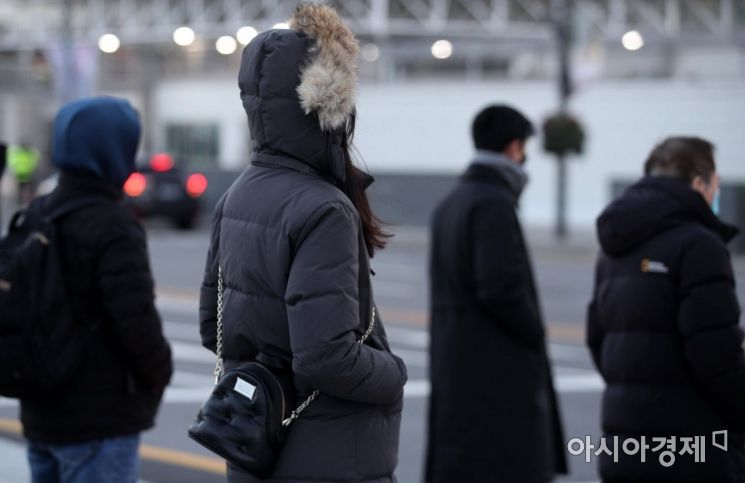 On the 30th, when a cold wave warning was issued across various parts of the country with the morning low temperature in Seoul dropping to minus 7 degrees, citizens in thick clothing were walking to work on the streets of Gwanghwamun, Seoul. Photo by Hyunmin Kim kimhyun81@
[Asia Economy Reporter Lee Gwan-joo] As temperatures have dropped sharply this month, cold wave warnings have been issued in most regions nationwide, requiring caution against cold-related illnesses. When temperatures suddenly fall, the ability to maintain body temperature decreases in chronic patients and the elderly, potentially leading to various illnesses.
According to the Korea Disease Control and Prevention Agency on the 4th, during last winter's season (December 2021 to February this year), 300 cold-related illness cases were reported through the cold illness emergency room surveillance system, including an estimated 9 deaths. Compared to the previous season (December 2020 to February 2021), the number of patients decreased by 31%, but deaths increased by 27%. Among these, 47% were elderly patients aged 65 or older, and by disease type, hypothermia accounted for 77.7%, making it the most prevalent.
Hypothermia is a representative symptom of cold-related illnesses, occurring when core body temperature drops below 35 degrees Celsius. Initially, severe chills occur, gradually slowing pulse and breathing, and in severe cases, it can lead to death.
It is especially dangerous for chronic patients and the elderly. Chronic patients have problems with vasoconstriction and blood circulation, resulting in a reduced ability to maintain body temperature compared to healthy individuals, and the elderly have relatively less body fat and a lower metabolic rate, making it difficult to maintain body temperature.
Maintaining body temperature is the most important response to cold waves. This is because hypothermia and cardiovascular and cerebrovascular diseases can be caused by temperature changes. It is advisable to avoid going out during the cold early morning hours, and when engaging in outdoor activities, thorough protection against the cold with wool hats, gloves, scarves, etc., is necessary.
Since the elderly and chronic patients have relatively reduced ability to maintain and sense body temperature, it is recommended to keep indoor temperatures at an appropriate level (18?20 degrees Celsius) and wear thermal underwear and light outerwear.
Rather than simply curling up from the cold, maintaining healthy lifestyle habits is also important. Choi Kyu-young, a cardiology specialist at H Plus Yangji Hospital, said, "In winter, people tend to drink less water due to the cold, but this can increase blood viscosity and negatively affect cardiovascular and cerebrovascular diseases, so proper hydration is necessary," adding, "Regular aerobic exercise helps promote smooth blood circulation."
© The Asia Business Daily(www.asiae.co.kr). All rights reserved.

![Clutching a Stolen Dior Bag, Saying "I Hate Being Poor but Real"... The Grotesque Con of a "Human Knockoff" [Slate]](https://cwcontent.asiae.co.kr/asiaresize/183/2026021902243444107_1771435474.jpg)















