US to Announce New Rules Soon Due to Blood Shortage from COVID-19
Trend of Lifting Blood Donation Restrictions on LGBTQ+ Men in France, Canada, and Others
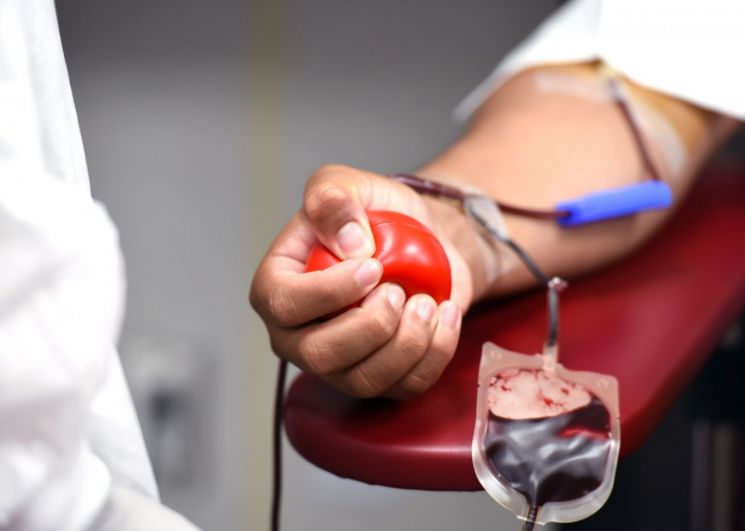
[Asia Economy Reporter Kim Hyunjung] The U.S. Food and Drug Administration (FDA) is set to expand the eligibility criteria for blood donations by gay and bisexual men.
According to a report by The Wall Street Journal (WSJ) on the 30th (local time), the FDA plans to announce new regulations within a few months that will minimize restrictions on sexual activity for gay and bisexual men participating in blood donations.
Under the proposed regulations, all blood donation applicants in the U.S., including sexual minority men, will undergo a uniform individual risk assessment.
The risk assessment will likely include questions about whether the donor has had a new sexual partner within the past three months and, if so, whether the sexual activity involved behaviors with a high risk of HIV infection. If a donor has engaged in sexual activity with a "new partner" in a "specific manner" within the past three months, they will be ineligible to donate blood. They may donate again after three months, once the risk of HIV infection is confirmed to be negligible.
The ban on blood donations by sexual minority men in the U.S. dates back to the 1980s. At that time, due to the low accuracy of HIV testing, blood donations by sexual minority men were completely prohibited.
Since 2015, blood donations by sexual minority men who had not engaged in sexual activity within one year were allowed, but due to severe blood shortages caused by the COVID-19 pandemic, this deferral period was shortened to three months starting in 2020.
In the U.S., the COVID-19 pandemic led to the suspension of blood donation campaigns, resulting in the worst blood shortage in over a decade. Last year, new blood donors decreased by 24%, and at times, hospitals could not meet even a quarter of their blood demand.
Eliminating restrictions on blood donations by sexual minority men is a global trend. It is argued that the "right to donate blood" for sexual minorities must be guaranteed, and restrictions should be based on whether "anal intercourse" occurred rather than sexual orientation.
The United Kingdom lifted restrictions on blood donations by gay and bisexual men last year. If a donor has maintained a relationship with a single partner for more than three months, they can donate without restrictions. If they have two or more partners or have met a new partner within the past three months, they can only donate if they have not engaged in anal intercourse.
Earlier this year, France also lifted the ban on blood donations by gay men, allowing all individuals, including gay and bisexual men, to donate blood starting in March. France had banned blood donations by gay and bisexual men since 1983, allowed donations after one year of abstinence starting in 2016, and reduced the abstinence period to four months in 2019.
Canada completely abolished restrictions on blood donations by gay men in April after 30 years. Previously, Canada restricted donations by gay men who had sexual activity within three months. Other countries that have recently removed blood donation restrictions for male sexual minorities include Greece, Israel, Hungary, Denmark, and Brazil. Currently, in South Korea, "men who have had sexual contact with men within the past year" are not allowed to donate blood.
© The Asia Business Daily(www.asiae.co.kr). All rights reserved.
![Clutching a Stolen Dior Bag, Saying "I Hate Being Poor but Real"... The Grotesque Con of a "Human Knockoff" [Slate]](https://cwcontent.asiae.co.kr/asiaresize/183/2026021902243444107_1771435474.jpg)
















