Daewoong Pharmaceutical Listed as Domestic New Drug for 2 Consecutive Years
Hanmi Pharmaceutical Obtains FDA Approval
IlDong Pharmaceutical's COVID-19 Treatment Approved in Japan
R&D Efforts Must Translate into Results
[Asia Economy Reporter Lee Gwan-joo] Domestic mid-sized pharmaceutical companies that have persistently devoted themselves to new drug research and development have achieved significant progress this year. The newly developed drugs have settled in the market, and now it is time to reap the 'fruits.'
According to the pharmaceutical industry on the 1st, Daewoong Pharmaceutical obtained approval from the Ministry of Food and Drug Safety on the 30th of last month for the type 2 diabetes drug 'Enbolo Tablet' (active ingredient: Inavogliflozin), marking the 36th domestically developed new drug. In the 20-year history of domestic new drug development that began with SK Chemicals' 'Sunplaaju' in 1999, Daewoong Pharmaceutical is the first to achieve new drug approval for two consecutive years. Daewoong Pharmaceutical obtained approval for the gastroesophageal reflux disease treatment 'Pexuclu' in December last year and officially launched it in July this year.
Daewoong Pharmaceutical has continuously focused on new drug research and development. Its R&D expenditure ratio to sales was 15.3% in 2020 and 16.6% last year, ranking among the top in the industry. This year, up to the third quarter, it invested 16.6% of its sales in R&D. Currently, it has more than 10 known new drug candidates under development, including treatments for autoimmune diseases and anticancer drugs, and including jointly developed drugs, it holds about 20 pipelines.
The results of such research and development are expected to be reflected in performance soon. 'Pexuclu' recently obtained product approval in the Philippines, marking the start of its global expansion. It has signed technology export contracts worth about 1.2 trillion KRW with 15 countries and is sequentially applying for product approvals and launches in 10 countries by 2025. 'Enbolo' also plans to enter 10 major countries including China, Brazil, and Saudi Arabia by 2025, and expand to 50 countries by 2030.
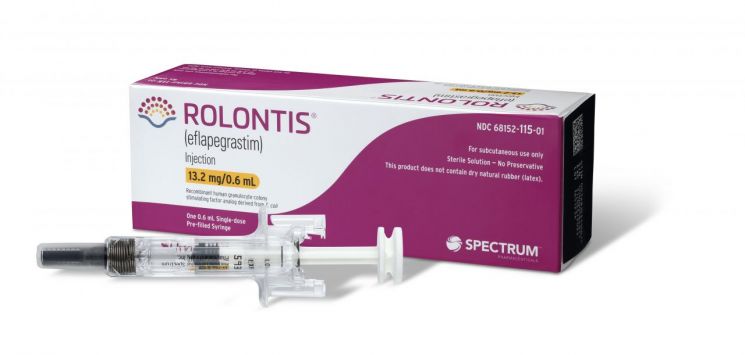
Hanmi Pharmaceutical also achieved a milestone in September this year when its 33rd domestic new drug, the neutropenia treatment 'Rolontis,' received marketing approval from the U.S. Food and Drug Administration (FDA). This came one year and six months after domestic approval in March last year. Notably, it is the sixth domestic new drug to receive FDA approval and the first new drug manufactured in a domestic factory to be sold in the U.S., drawing attention. The local response in the U.S. is also positive. 'Nature Review Drug Discovery' projected that Rolontis' sales will reach $235 million (approximately 310 billion KRW) in 2026.
Hanmi Pharmaceutical plans to target the U.S. market. Its U.S. partner, Spectrum, has increased local sales and marketing personnel in line with the official launch of Rolontis. Spectrum's specialized staff are reportedly actively engaging in sales efforts by increasing contacts with major cancer centers in the U.S.
Il-dong Pharmaceutical, which has increased R&D expenses despite incurring losses in the hundreds of billions of KRW, is also expected to achieve visible results soon. The COVID-19 treatment 'Zocova,' jointly developed with Japan's Shionogi Pharmaceutical, recently received emergency use authorization (EUA) in Japan, making the approval status in Korea a hot topic. Il-dong Pharmaceutical has increased its R&D investment over recent years. Pure expenditure rose from 48.3 billion KRW in 2017 to 108.2 billion KRW last year, more than doubling. The R&D-to-sales ratio was 14.3% in 2020, 19.3% last year, and 19.4% in the first to third quarters this year. Approval of Zocova is expected to provide a solid foundation supporting Il-dong Pharmaceutical's R&D policy.
As mid-sized pharmaceutical companies leading research and development have produced such tangible results, the industry views the future competitiveness of these new drugs in the market as a key issue. Even if new drugs are successfully developed, they must overcome major competing products and expand market share to expect performance growth. An industry insider said, “If a virtuous cycle is established where new drug development leads to performance growth and is reinvested into R&D, domestic new drug development activities will become even more active.”
© The Asia Business Daily(www.asiae.co.kr). All rights reserved.


















