[Seoul District News] Jungnang-gu Submits 1.0162 Trillion KRW 2023 Budget Proposal to Jungnang-gu Council & 12.3% Increase from 905 Billion KRW This Year & Focus on Social Safety Net Expansion, Local Economy Revitalization, and Education Development... Gwanak-gu Provides Visiting Home Medical Services with Jeongdawon Uri Clinic
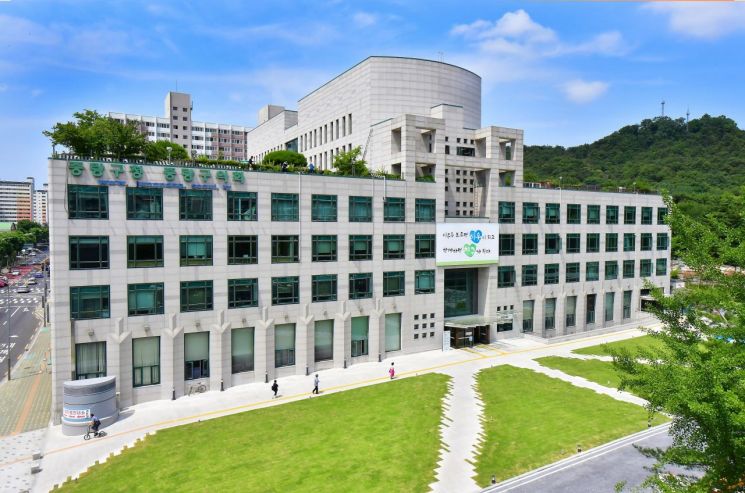
[Asia Economy Reporter Jong-il Park] Jungnang-gu (Mayor Ryu Gyeong-gi) has prepared the 2023 budget at the largest scale ever, totaling 1.0162 trillion KRW.
The budget for next year consists of 995.5 billion KRW in the general account and 20.7 billion KRW in the special account, marking a 12.3% increase compared to this year's main budget of 905 billion KRW. This is the first time since the establishment of Jungnang-gu that the budget has surpassed the 1 trillion KRW mark.
The district explained that this budget formulation is due to an increase in national and city subsidies, as well as expanded fiscal policies for investment and discovery and promotion of public projects for regional development, despite rapid changes in domestic and international economic conditions.
First, 60.7 billion KRW was allocated focusing on stabilizing livelihoods and revitalizing the local economy to support the recovery of daily life after COVID-19. The main contents include restoring the vitality of the contracted local economy, job creation, and support for small business owners and local merchants. Financial support will also continue for building safety nets such as living quarantine, operation of screening clinics, and COVID-19 response projects.
The disaster preparedness budget for a safe city Jungnang was increased by 4.8 billion KRW compared to the previous year, totaling 48.1 billion KRW, the largest ever. The plan is to protect residents and prevent safety accidents through river and sewage facility maintenance, road improvement and facility upkeep, safety inspections of disaster-vulnerable households, and safety management of festival venues.
The social welfare sector totals 569.4 billion KRW. It reflects universal welfare such as livelihood benefits, housing benefits, and basic pensions, as well as support for veterans, elderly welfare, childcare, and welfare for the disabled. Newly established projects include child oriental medicine health management and customized health management for the elderly, which residents can directly experience.
To improve residents' living environments, a budget of 81.4 billion KRW was prepared. The goal is to create a comfortable living environment without inconvenience through urban infrastructure projects such as housing reconstruction and small-scale housing maintenance, plaza and garden maintenance, landscape lighting projects, barrier-free forest trails, and walking trails.
Additionally, 25.6 billion KRW will be intensively invested to strengthen educational competitiveness and reduce educational disparities. Support for school education expenses will be expanded from 8 billion KRW to 10 billion KRW, and efforts will be made to nurture future talents through the establishment of the 2nd Bang Jeong-hwan Education Support Center and an astronomy science center. Pre-school reading will also be expanded, and public libraries will continue to be expanded.
Furthermore, 15.5 billion KRW was allocated to strengthen communication among residents and enable their participation in district administration through linking old neighborhood offices into complex facilities, expanding cooperative schools and residents' autonomy committees, and operating village vitality centers.
Ryu Gyeong-gi, Mayor of Jungnang-gu, said, “The 2023 budget focuses on strengthening residents' welfare and safety, supporting socially vulnerable groups, and revitalizing the local economy. We will continue to actively pursue administration that provides practical help to residents' lives.”
Gwanak-gu (Mayor Park Jun-hee) was selected last month on the 18th for the Ministry of Health and Welfare’s pilot project ‘Long-term Care Home Medical Center’ together with Jeongdawonuri Clinic (Representative Kim Hye-kyung) in the region, and will provide home medical services visiting elderly residents with mobility difficulties.
The Long-term Care Home Medical Center pilot project selected a total of 28 institutions nationwide, including Gwanak-gu, to provide visiting medical services at least once a month by doctors and nurses to elderly people with long-term care grades 1 to 4 who cannot visit medical institutions.
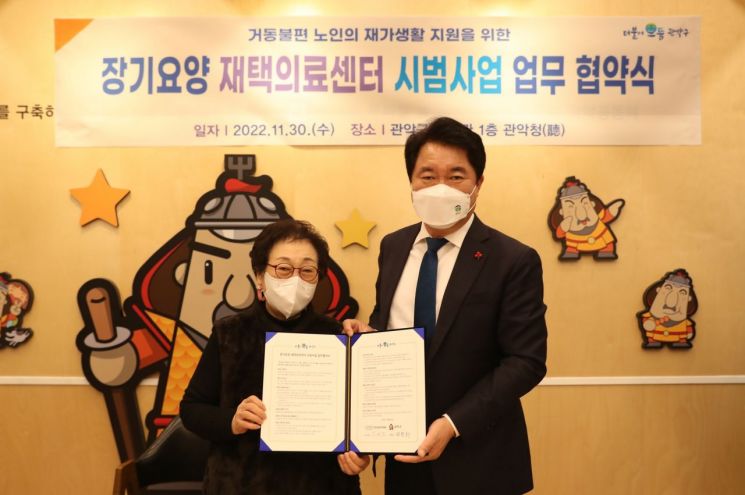
This project supports elderly residents to continue living in the community while managing their health and will be operated as a pilot for one year from December 1, 2022, to November 30, 2023. Accordingly, the district signed a business agreement with Jeongdawonuri Clinic on November 30 to provide smooth medical services through professional medical staff. (Photo)
According to the agreement, Gwanak-gu will guide eligible elderly residents about the project, and social workers will accompany doctors and nurses during home visits and connect them to welfare counseling at local community centers if necessary.
Jeongdawonuri Clinic will support project personnel and facilities, establish individualized care plans, provide visiting medical and nursing services, and conduct monitoring to meticulously manage elderly people living alone or with mobility difficulties so that they are not left in medical welfare blind spots.
The district expects this project to greatly improve medical accessibility for elderly residents with mobility difficulties and help resolve medical welfare blind spots.
A district official said, “We will continue to cooperate with local medical resources and do our best to make Gwanak-gu a happy and healthy place for elderly residents.”
© The Asia Business Daily(www.asiae.co.kr). All rights reserved.


















