2009 Ssangyong Motor Strike 1st and 2nd Trials "Illegal Due to Lack of Justification"
Supreme Court "Police Excessive Suppression, Damage Not Ordinary Loss If Unknown"
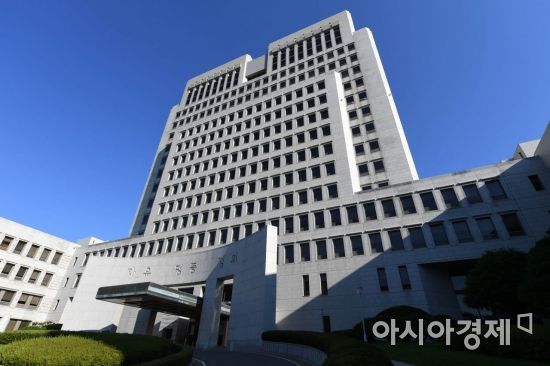
[Asia Economy Reporter Heo Kyung-jun] The Supreme Court overturned the damages claim lawsuit filed by the police against the labor union related to the Ssangyong Motor strike in the final appeal. The court ruled that even if the assembly and protest were illegal, excessive suppression actions cannot be justified, and ordered a retrial to reconsider whether self-defense applies and whether liability for damages should be recognized.
The Supreme Court's First Division (Presiding Justice No Tae-ak) on the 30th overturned the lower court's ruling that recognized the labor union's liability for damages in the damages claim lawsuit filed by the government against the Ssangyong Motor branch of the Korean Metal Workers' Union and its members, and remanded the case to the Seoul High Court for retrial.
Ssangyong Motor workers occupied the Pyeongtaek plant and went on strike for 77 days from May to August 2009 in response to the company's restructuring process to reduce workers due to the 2008 financial crisis.
At that time, the union used Molotov cocktails, bolt slingshots, bricks, and iron pipes to block company officials and police from entering the plant, clashing with the police who tried to suppress the strike. During this process, helicopters and cranes were damaged, and many police officers and union members were injured.
Accordingly, the police filed a damages lawsuit worth about 1.7 billion won against the workers, claiming that helicopters and cranes were damaged during the forced suppression of the Ssangyong Motor strike.
The first trial ruled, "The Ssangyong Motor branch union's strike is illegal as it lacks legitimacy in purpose and means," and judged that "the Ssangyong Motor branch union members who participated in the strike by violent means are liable for damages," ordering them to compensate the police 1.4 billion won.
The second trial mostly upheld the first trial's judgment and sided with the police. However, the court recognized a lower amount of damages related to equipment such as helicopters and cranes than the first trial, reducing the compensation to 1.16 billion won payable to the police.
However, the Supreme Court's judgment differed. The Supreme Court held that the police's use of helicopters to spray tear gas from the air or directly expose outdoor people to helicopter downwash during the suppression of the occupation strike constituted unlawful use of police equipment, exceeding the scope of lawful duty. Therefore, even if the helicopter was damaged during the union's resistance as self-defense, it could be considered 'justifiable self-defense.'
The court stated, "If the police unlawfully used police equipment during the suppression of the sit-in, thereby exceeding the lawful scope of duty, even if the opposing party damaged the police equipment while directly countering the current unjust infringement on life and body caused by the unlawful official act, this constitutes justifiable self-defense."
Regarding the crane damage, the court ruled, "Even if business property was damaged due to unlawful acts, if the perpetrator could not have ordinarily foreseen that the business income obtained by using that property would be lost, the downtime loss claimed by the crane lessor should not be considered ordinary damages."
Additionally, the Supreme Court found the lower court's recognition of the union's 80% liability for the crane damage unreasonable. The court explained, "If the expensive crane, typically used for lifting heavy loads and moving them slowly, was used in a manner deviating from its intended use, the plaintiff (police) can also be held significantly responsible for the damage." It added, "Damage to expensive equipment is generally accompanied by illegal assemblies and protests and is beyond the ordinarily foreseeable scope, so it is reasonable to limit the liability."
© The Asia Business Daily(www.asiae.co.kr). All rights reserved.

















