Labor and management fail to narrow differences in talks on the 29th... Final breakdown declared at 10 PM
Service disruptions inevitable on Subway Lines 1-8
Seoul Metro and Seoul City activate emergency transport measures... "Normal service during morning commute... 86% during evening"
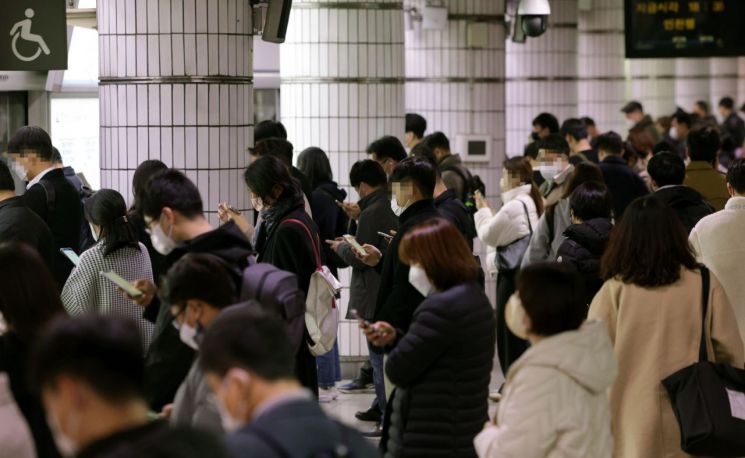
[Asia Economy Reporter Lim Cheol-young] The Seoul Metropolitan Subway went on strike starting at 6:30 a.m. on the 30th after the labor and management of Seoul Metro, who had been negotiating, failed to reach an agreement. This subway strike, affecting lines 1 through 8, is the first in six years since September 2016. Seoul Metro and the Seoul Metropolitan Government have prepared and activated emergency transportation measures, including deploying substitute personnel, to minimize inconvenience to citizens caused by disruptions in subway operations.
According to Seoul Metro and the Seoul Metropolitan Government on the 30th, the joint negotiation team composed of the Metro labor union and the integrated union resumed wage and collective bargaining negotiations at the headquarters in Seongdong-gu, Seoul, from 2 p.m. the previous day. However, they failed to narrow differences over the key issue of implementing 'personnel restructuring' and declared a final breakdown around 10 p.m. Consequently, the Metro labor union held a general strike rally near Seoul City Hall at 10:40 a.m. on the same day, attended by about 6,000 union members, and plans to demand direct negotiations with Mayor Oh Se-hoon. The combined membership of the Metro labor union and the integrated union is about 13,000, accounting for 80% of all Metro employees.
With the union entering a strike, disruptions to major subway operations are inevitable. Seoul Metro, which operates lines 1 through 8 and the Sinnonhyeon to Jungang Veterans Hospital section of line 9, will immediately deploy substitute personnel together with the Seoul Metropolitan Government to minimize inconvenience to citizens caused by the strike. In particular, retirees and non-union members will be assigned on-site to maintain subway operations during rush hours at levels comparable to normal times. However, during off-peak hours when subway congestion is low, the operation rate is expected to drop sharply to about 72.7% of normal. The operation rate during the evening rush hours from 6 p.m. to 8 p.m. will also decrease to 85.7%.
The Seoul Metropolitan Government, having formed and activated an emergency transportation headquarters, will extend the concentrated dispatch intervals for city buses to 30?60 minutes and deploy charter buses mainly at stations with high foot traffic. It will also encourage autonomous districts to operate commuter buses, mobilizing all possible means to enhance alternative transportation capacity. Considering the strike and traffic conditions comprehensively, Seoul plans to operate emergency transportation measures in stages, dividing the strike period into Stage 1 (the first 7 days after the strike) and Stage 2 (after 7 days), to minimize citizen inconvenience.
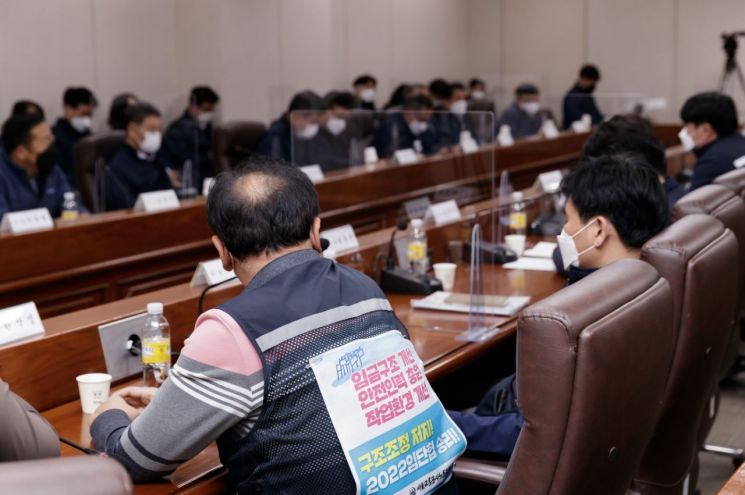
Meanwhile, Seoul Metro stated that if the strike escalates beyond legal boundaries into an illegal labor action, it will implement strict corresponding measures and encourage striking participants to return to work. Additionally, it plans to continue requesting dialogue with the joint negotiation team.
President Kim Sang-beom said, "We presented the maximum proposals that Seoul Metro could offer to reach an agreement, but the strike ensued due to the labor union's unilateral declaration of breakdown. We will do our best to prevent a prolonged strike through negotiations, including continuously requesting dialogue with the union side."
© The Asia Business Daily(www.asiae.co.kr). All rights reserved.


















