Supplementing Response Plan Reflecting Results of Expected Damage Survey and Detailed Response Plan Establishment Research Project
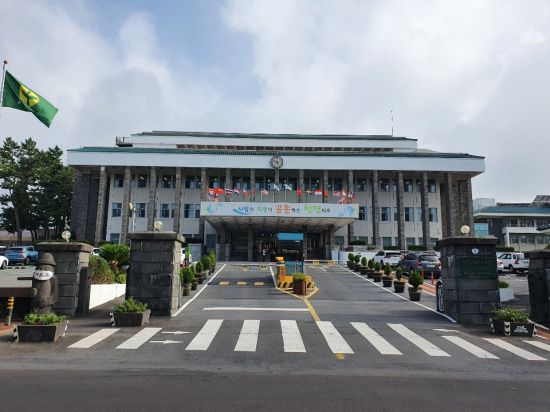
[Jeju=Asia Economy Honam Reporting Headquarters, Reporter Park Chang-won] Jeju Special Self-Governing Province announced on the 29th that it plans to actively promote preemptive countermeasures based on meticulous damage prediction in the marine and fisheries sector in response to Japan's discharge of contaminated water from the Fukushima nuclear power plant.
Immediately after Japan announced its decision to discharge contaminated water from the Fukushima nuclear power plant into the ocean on April 13 last year, Jeju Province established a four-stage (Interest → Caution → Alert → Serious) response plan assuming the discharge and prepared a manual. It also proposed to the central government and the National Assembly to prepare national-level measures jointly with five coastal cities and provinces.
To supplement the currently implemented response plan, Jeju Province conducted the first nationwide research project from March 31 to the 25th of this month to investigate expected damage and establish detailed response plans following the decision to discharge contaminated water from the Fukushima nuclear power plant.
In September, based on the interim research results, a detailed response roadmap was prepared in connection with government responses such as the Office for Government Policy Coordination and the Ministry of Oceans and Fisheries, including radiation monitoring, seafood safety, consumers' right to know, prevention of consumption decline, and protection measures for fishermen.
Additionally, on the 23rd of last month, at the governors' meeting of the Korea-Japan Strait cities and prefectures, a joint response to the contaminated water discharge was proposed, and on the 11th of this month, through a meeting between the government and five coastal cities and provinces, proposals were made to the government for budget support and fundamental measures such as enacting a special law and providing compensation direct payments for fishermen's damage.
In particular, starting from the 1st of next month, the contaminated water ocean discharge situation response team, led by the Jeju Provincial Department of Oceans and Fisheries, will be transitioned to a response system centered on the Deputy Governor for Political Affairs to strengthen a comprehensive crisis management system.
Based on the final research results on Fukushima contaminated water discharge response measures, Jeju Province plans to specifically supplement detailed measures in connection with government responses such as the Office for Government Policy Coordination and the Ministry of Oceans and Fisheries, including seawater monitoring and information disclosure in seafood production areas, expansion of seafood inspections and equipment for seafood safety, and strengthening seafood traceability and origin control for consumers' right to know.
Regarding measures to prevent seafood consumption decline and protect fishermen, Jeju Province will also strongly urge the government to declare a special disaster zone and prepare national-level compensation measures such as damage compensation direct payments, focusing all efforts on minimizing damage to the fisheries industry.
Ko Jong-seok, Director of the Jeju Provincial Department of Oceans and Fisheries, said, “We will focus administrative power on blocking the discharge of nuclear power plant contaminated water and minimizing damage to fishermen through cooperation and collaboration with the Provincial Council and local members of the National Assembly, and do our best to ensure that residents and fishermen can engage in their livelihoods with peace of mind.”
Jeju=Asia Economy Honam Reporting Headquarters, Reporter Park Chang-won baekok@asiae.co.kr
© The Asia Business Daily(www.asiae.co.kr). All rights reserved.

![Clutching a Stolen Dior Bag, Saying "I Hate Being Poor but Real"... The Grotesque Con of a "Human Knockoff" [Slate]](https://cwcontent.asiae.co.kr/asiaresize/183/2026021902243444107_1771435474.jpg)















