Cho Tae-yong "Suppressing North Korea's Illegal Cyber Activities"
North Korean Hackers Running Rampant Amid US Sanctions
"Expecting Overlapping Sanctions to Curb Money Laundering"
[Asia Economy Reporter Jang Hee-jun] The government recently announced plans to expand its independent sanctions against North Korea into the cyber domain. This is because the international community has been unable to exert significant pressure despite North Korea's unprecedented provocations. However, doubts remain about the effectiveness of new sanctions, as North Korean hackers continue to secure up to 2 trillion won annually in missile funds despite U.S. sanctions.
North Korea's Illegal Cyber Activities in Focus... South Korea-U.S. Consultative Body Activated
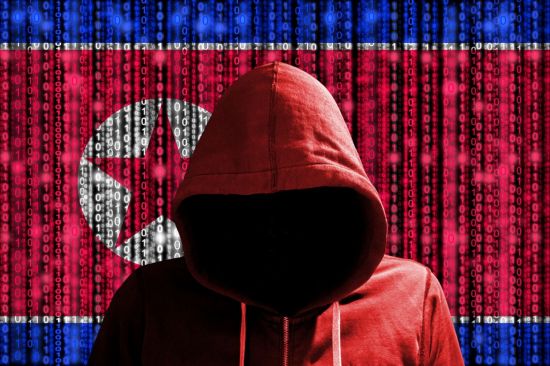 North Korean hacking
Cho Tae-yong, South Korea's ambassador to the U.S., stated on the 28th (local time), "South Korea and the U.S. are intensifying efforts to block various illegal activities carried out by North Korea in cyberspace to fund its nuclear and missile programs," adding that "North Korea's sharp responses (such as the statement by Kim Yo-jong, deputy director of the Workers' Party) are evidence that the efforts of both countries are yielding results."
South Korea and the U.S. view North Korea's ability to continue missile provocations amid economic difficulties as being supported by illegal cyber activities. It is believed that North Korea secures funds for its nuclear and missile programs through cryptocurrency hacking and other means. A South Korea-U.S. consultative body is reportedly operating to respond to this. The two countries are cooperating through information sharing to suppress North Korea's illegal cyber activities. Recently, following the U.S. sanctions on hacking-related companies, the South Korean government also announced plans to consider independent sanctions in the cyber sector as part of these efforts.
Earlier, Lim Soo-seok, spokesperson for the Ministry of Foreign Affairs, said at a regular briefing on the 22nd, "As North Korea's provocations continue, we are also considering additional independent sanctions," adding, "The government plans to designate individuals involved in North Korea's cyber activities as sanction targets and impose sanctions in the cyber sector if North Korea carries out serious provocations such as a seventh nuclear test, under the recognition that an unprecedentedly strong response is necessary."
The 'independent cyber sanctions' mentioned by Spokesperson Lim appear to target hacking organizations. The government has already stated that it is consulting with the U.S. and others on measures to eradicate North Korea's cryptocurrency hacking, based on the judgment that North Korea uses funds obtained through illegal cyber activities for nuclear and missile development.
U.S. Sanctions? North Korea Steals 800 Billion Won in a Single Hack

North Korea is reportedly experiencing its worst food shortage this year. There are frequent reports that the situation is more severe than during the 1994 Arduous March. In addition to chronic food shortages, spring droughts and summer floods have compounded the problem, with this year's estimated food crop production at around 3 million tons. This is far below last year's production of 4.69 million tons, which was already impacted by the COVID-19 pandemic.
Nevertheless, North Korea continues unprecedented provocations. The annual record for ballistic missile launches was 25 in 2019, but this year alone, 63 missiles have already been launched. Since late September, 32 missiles have been fired, accompanied by artillery fire and air force demonstrations. On the 18th, North Korea even launched the intercontinental ballistic missile (ICBM) 'Hwasong-17.'
To suppress North Korea's illegal cyber activities, the U.S. Department of the Treasury placed Lazarus, BlueNoroff, and Andariel?three major North Korean hacking groups?on its independent sanctions list in 2019. However, there has been little success. Once money laundering occurs, U.S. authorities find it impossible to track the funds.
On the contrary, Lazarus, which is subject to U.S. sanctions, hacked blockchain-based game company Axie Infinity in March this year, stealing cryptocurrency worth approximately 830 billion won. It is estimated that North Korea spent up to $650 million in the first half of this year to launch 31 ballistic missiles, equivalent to about 865 billion won. In other words, the cost of half a year's missile launches was secured with a single hack.
Can Independent Sanctions Be Effective Amid 'Security Council Futility'?
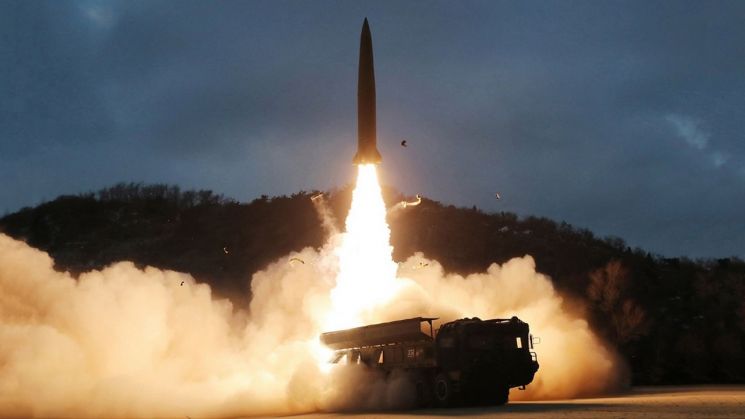
With the United Nations Security Council mired in 'futility' due to frequent vetoes by China and Russia, independent sanctions remain virtually the only means to pressure North Korea. However, to maximize their effectiveness, cooperation from China and Russia?who are seen as North Korea's 'backers'?is considered essential.
However, China and Russia already exercised their veto power in May against a UN Security Council resolution to designate Lazarus as a new target for North Korea sanctions. Given the strengthening security cooperation among South Korea, the U.S., and Japan, and the solidifying trilateral cooperation among North Korea, China, and Russia, expectations for cooperation from China and Russia are low.
A government official explained, "Various measures are being discussed on how to track and prevent North Korea's hacking activities," adding, "Rather than expecting significant effects from a single sanction, we hope to suppress North Korean hackers' activities through overlapping sanctions among key allied countries."
Professor Lim Jong-in of Korea University's Graduate School of Information Security analyzed, "As sanctions from various countries overlap based on South Korea-U.S. cooperation, it will become increasingly difficult for North Korea to launder hacked funds," adding, "Russia is already under significant sanctions due to its invasion of Ukraine, and the likelihood of Chinese financial institutions taking risks to assist North Korean hackers in laundering funds is low." He also advised, "Looking at domestic Bitcoin exchanges and game companies that have suffered North Korean cyberattacks, it is clear that security awareness is low, such as using open-source software as is. Cryptocurrency exchanges and others that could be targets of North Korea need to pay special attention to security and exercise caution."
© The Asia Business Daily(www.asiae.co.kr). All rights reserved.
![From Bar Hostess to Organ Seller to High Society... The Grotesque Con of a "Human Counterfeit" [Slate]](https://cwcontent.asiae.co.kr/asiaresize/183/2026021902243444107_1771435474.jpg)

















