[Seoul Autonomous District News] Geumcheon-gu, Revision and Approval of Gasan District Unit Planning Area and Plan ▲Incorporation of Second-Class General Residential Area Removed from Scheduled Maintenance Zone ▲Expansion of Building Limit Line to Widen Road for Comfortable Pedestrian Environment ▲Relaxation of Prohibited Uses, Improvement of Incentives for Recommended Uses, and Height Plan Relaxation ... Gangbuk-gu, Installation of Smart Poles around Ohhyeon-ro ▲Integration of ICT Technology, Establishment of Automatic Light Adjustment Dimming System ... Jongno-gu, Awarded Best Urban Agriculture Case in Seoul for Two Consecutive Years
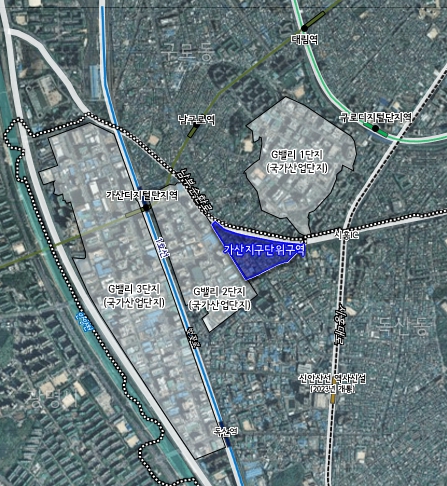
[Asia Economy Reporter Park Jong-il] Geumcheon-gu (Mayor Yu Seong-hoon) announced that at the ‘16th Urban and Architectural Joint Committee’ held on November 23, the ‘Gasan District Unit Planning Zone and Plan Proposal’ was approved with modifications.
The Gasan District Unit Planning Zone (around 140-1, Gasan-dong) is an area adjacent to Nambusunhwan-ro and the G-Valley 1 and 2 complexes, which are national industrial complexes in Geumcheon-gu.
This review was promoted to reflect changes in local conditions such as the revised laws and regulations, the demolition of Guro Overpass (April 2019), and the designation of the national industrial complex district unit plan (November 2021).
The main points include first incorporating the second-class general residential area, which was removed from the Garibong Redevelopment Promotion District, into the Gasan District Unit Planning Zone to enable planned management.
Also, the building setback line was expanded by 0.5 to 2 meters compared to before, widening the road width to respond to increased traffic volume caused by the demolition of Guro Overpass, and improving the poor pedestrian environment of side streets (alleys, etc.).
Along with this, to strengthen urban service functions supporting G-Valley, excessive prohibited uses in commercial areas were relaxed, and incentives for recommended uses were improved. Facilities such as office buildings, libraries, and hospitals were designated as recommended uses and given floor area ratio incentives. Restaurants, bookstores, and others were designated as recommended uses on lower floors to promote the activation of living streets.
To revitalize regional development, height planning relaxation was also promoted. When complying with donation, joint development, and recommended uses, the height standard can be relaxed up to 10 meters to encourage active development.
Geumcheon-gu plans to complete the resident inspection process in December and announce the final plan as early as the beginning of 2023.
Yu Seong-hoon, Mayor of Geumcheon-gu, said, “We expect that this revision of the Gasan District Unit Plan will help revitalize the area and improve the residential environment.”
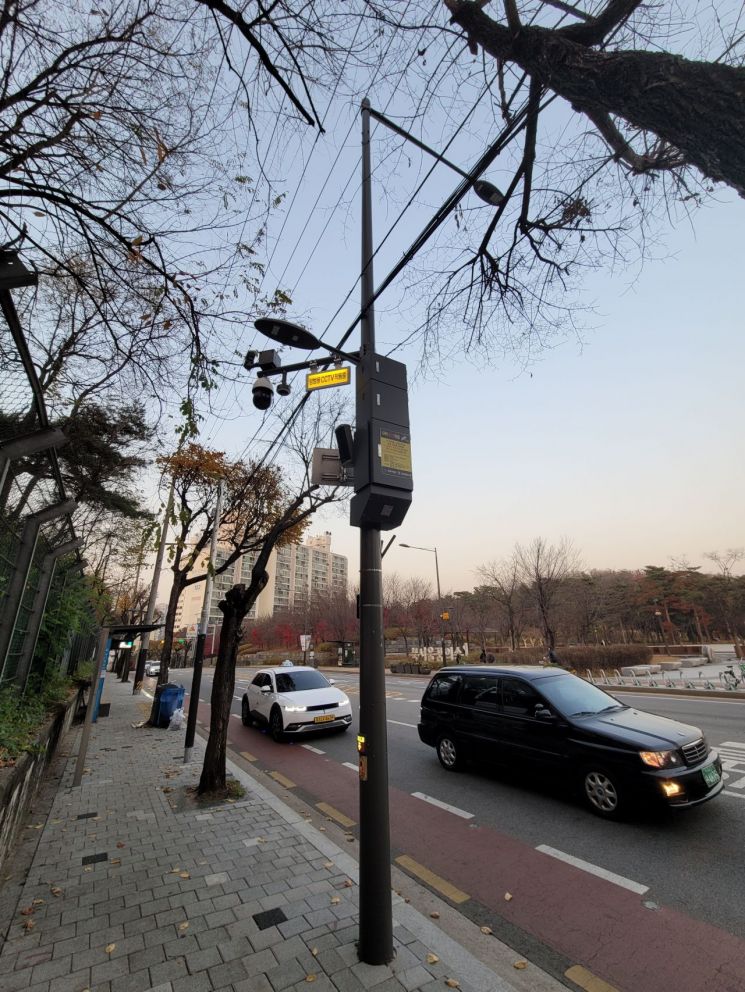
Gangbuk-gu (Mayor Lee Soon-hee) installed smart poles that combine streetlights, CCTV, public Wi-Fi, emergency bells, and urban data sensors into one along Ohyeon-ro.
The district was selected in April for the ‘2022 Smart Pole Standard Model Expansion Project’ hosted by Seoul City and received a budget of 125 million KRW to complete this smart pole installation project.
Smart poles are smart city infrastructure that combines advanced information and communication technology (ICT) with road facilities such as streetlights to improve residents’ safety, welfare, and convenience.
The district combined CCTV and emergency bells with streetlights to establish a system that ensures pedestrian safety in emergencies. Additionally, Internet of Things (IoT) technology was introduced to the smart poles to utilize various urban data such as temperature, fine dust, and air pollution.
Furthermore, a dimming system that efficiently adjusts lighting brightness according to road conditions was built. This system uses public data from Seoul City and the Korea Meteorological Administration to monitor traffic flow and weather information. When traffic flows smoothly and the weather is clear, the streetlight brightness is lowered according to KS road lighting standards; when traffic is congested or weather deteriorates, brightness is adjusted to maximum.
The district predicts that the dimming system will reduce power consumption by more than 40% compared to existing streetlights and expects additional benefits such as reducing carbon dioxide and fine dust and the sleep effect on street trees.
Lee Soon-hee, Mayor of Gangbuk-gu, said, “To advance as a smart city, we will continue to apply various smart techniques. In addition to smart poles, we will actively introduce new technologies to improve the safety, welfare, and convenience of local residents.”
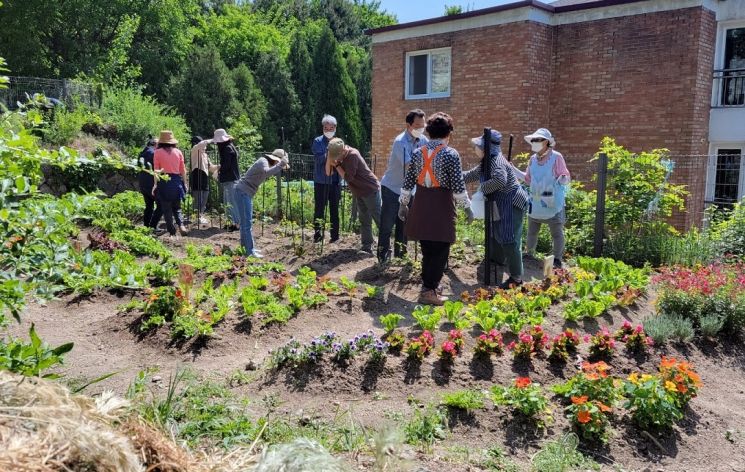
Jongno-gu (Mayor Jeong Moon-heon) achieved the great feat of winning the grand prize for two consecutive years in the 2022 Autonomous District Urban Agriculture Excellence Evaluation hosted by Seoul City, recognizing its efforts to revitalize urban agriculture.
The urban agriculture excellence evaluation awards 25 autonomous districts in Seoul based on balanced assessments of ▲urban vegetable garden creation ▲urban vegetable garden management ▲others (education, urban agriculture communities).
Jongno-gu was highly evaluated for continuously discovering small spaces despite the lack of cultivation space compared to other areas in the city center, creating vegetable gardens, and actively supporting residents’ urban agriculture activities.
For example, this year, 26 various types of vegetable gardens were created, including small vegetable gardens, school vegetable gardens, children’s vegetable gardens, healing vegetable gardens, and rooftop vegetable gardens.
In addition, newly established children’s and healing vegetable gardens (11 daycare centers and 4 senior welfare facilities in the district) operated ecological healing programs to promote emotional development in young children and implement social agriculture.
Also, by hiring vegetable garden experts, the district provides residents with systematic farming techniques such as advice on seasonal crops and pest management, and conducts introductory education for novice urban farmers centered on the Urban Agriculture Support Center located in Muak-dong.
Since 2011, Jongno-gu has continuously discovered small plots, cleaned spaces where household waste was present, and converted them into urban vegetable gardens.
Supporting 17 urban agriculture communities in the area, it encourages experiences producing safe food and contributes to spreading a village community culture that shares affection among neighbors by donating harvested crops.
Mayor Jeong Moon-heon said, “I am pleased that Jongno-gu’s various efforts to revitalize urban agriculture have borne fruit. We will continue to strive to create vegetable gardens and distribute box gardens so that all residents can enjoy the joy of harvest and have time to heal their mind and body in daily life.”
© The Asia Business Daily(www.asiae.co.kr). All rights reserved.



















