Amendment to the Enforcement Decree of the Urban Regeneration Act Passed at the Cabinet Meeting
Enforcement Decree Amended for Follow-up Measures on the New Government's Urban Regeneration Promotion Plan
Urban and Residential Regeneration Innovation District Project Areas Expanded 4 and 10 Times Respectively
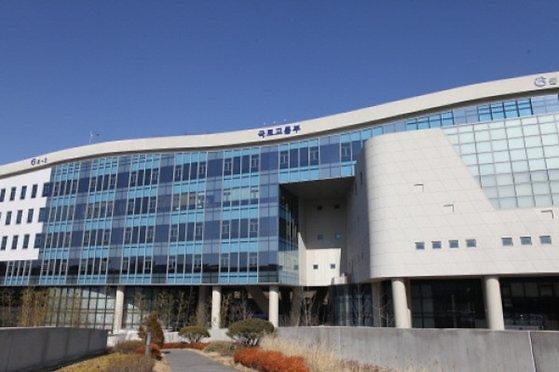
[Asia Economy Reporter Cha Wanyong] Starting from the 11th of next month, the standards for securing parks and green spaces in residential regeneration innovation districts will be significantly relaxed, and minor changes excluding plans for lowering sale prices and rents will be able to bypass various procedures. Additionally, urban regeneration innovation districts will see a substantial relaxation in the project area limit criteria to allow large-scale complex developments tailored to regional characteristics.
The Ministry of Land, Infrastructure and Transport announced on the 29th that the partial amendment to the Enforcement Decree of the Special Act on Urban Regeneration Activation and Support was approved at the Cabinet meeting. This amendment concretizes the relaxed standards from the partial amendment to the Urban Regeneration Act Enforcement Decree in June and serves as a follow-up measure to the "New Government Urban Regeneration Promotion Plan" announced in July.
First, for residential regeneration innovation district projects with fewer than 1,000 households, the obligation to secure parks and green spaces is exempted. For projects with 1,000 households or more, the park and green space securing standards are relaxed from the current 3㎡ per resident to 2㎡ per household or 5% of the site area, whichever is larger.
Furthermore, to expedite project promotion, changes such as ▲modifications to the usage plan of rental housing ▲changes in plans to lower sale prices or rents ▲changes in usage or disposal plans exceeding 10% of the total floor area or land area of constructed buildings are excluded from being considered minor changes.
When reflecting changes in the upper-level innovation district plan into the implementation plan, or when innovation districts overlapping with other development projects (such as urban development projects) incorporate revised project plans of previous projects into the innovation district implementation plan, these are also treated as minor changes.
The amendment also includes follow-up measures to the new government’s urban regeneration promotion plan. The project area limit for urban regeneration innovation district projects will increase fourfold from the existing 500,000㎡ to 2,000,000㎡ to enable large-scale hub projects suited to project characteristics. For residential regeneration innovation districts, the area limit will expand from the current 20,000㎡ to 200,000㎡ to facilitate increased housing supply.
To revitalize station area development projects, complex transfer center development projects are included among those that can be designated overlapping with innovation district projects. To mitigate initial risks of innovation district projects and ensure stable supply of public facilities, space support REITs are added as a requirement for negotiated contracts for buildings supplied through innovation district projects.
Administrative procedures have been simplified by amending the regulation to treat cases where the total project cost increases by less than 10% during the urban regeneration project process as minor changes.
The amended Enforcement Decree of the Special Act on Urban Regeneration Activation and Support will take effect from the 11th of next month, and the regulation on the term of private members of local urban regeneration committees will be enforced six months after its promulgation.
Kim Sangseok, Head of the Urban Regeneration Project Planning Division at the Ministry of Land, Infrastructure and Transport, said, “This regulatory reform is expected to activate urban regeneration projects and accelerate their progress. The residential regeneration innovation districts will see improved project feasibility enabling smooth housing supply, and urban regeneration innovation districts will be able to undertake large-scale complex developments suited to their characteristics.”
© The Asia Business Daily(www.asiae.co.kr). All rights reserved.

















