"The structure where heat rotates in a 'ㄷ' shape, heats the room, and then exits"
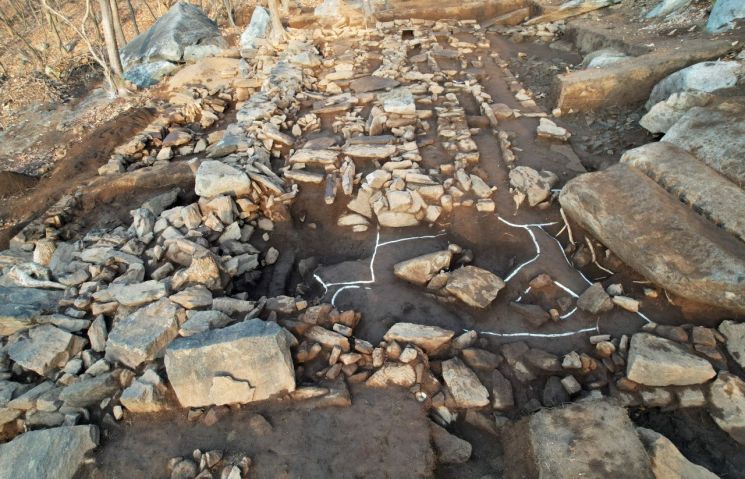
Traces of a large ondol heating system were confirmed in a building presumed to have been used after Goryeo moved its capital to Ganghwa Island to resist the Mongol invasion.
The National Ganghwa Cultural Heritage Research Institute announced on the 28th that it discovered traces of the traditional heating method, ondol, at the Ganghwa Myojisa Temple Site, which is believed to be a Goryeo-era temple ruin. According to the "Goryeosa (History of Goryeo)," Ganghwa Myojisa is said to have been a temple where King Wonjong of Goryeo stayed before performing the Choeje (ritual) at Chamseongdan on Manisan Mountain in 1264. The Choeje is a ritual performed toward the stars in shamanism or Taoism.
The exact location and chronology of Myojisa have not been identified. It is only estimated to have been on the southern slope of Chopi Peak, east of Manisan Mountain. The institute investigated a leveled building site constructed with retaining walls at this location. As a result, they found traces of ondol installed throughout the room except for part of the east side at the upper section.
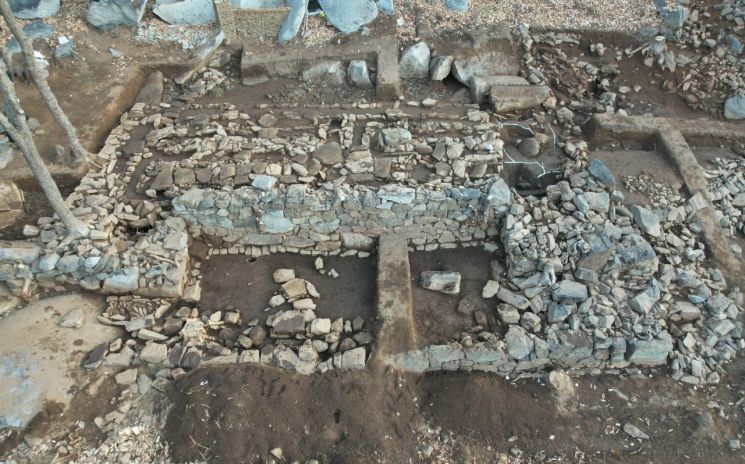
The building site measures 16.5 meters in width (east-west) and 6.3 meters in length (north-south). The building is estimated to have been five bays wide and two bays deep. It was confirmed that ondol heating was separately installed on both sides of the room. The institute explained, "The heat introduced through the furnace circulates in a 'ㄷ' (U) shape to warm the room and then exits through a smoke hole." The goraeduk (channels through which heat passes) installed in the ondol room are 40 to 60 centimeters wide. The guduljang (heated stones) placed on top measure 70 to 120 centimeters in length. Compared to other ondol facilities identified so far, this is relatively large.
Facilities with ondol heating installed throughout the entire room are believed to have appeared from the late Goryeo period. The institute stated, "This site clearly shows the form of 'full-room ondol' installed in the 13th century, providing important academic evidence for understanding the evolution of ondol structures." The institute will continue its investigation of the Myojisa temple site until next year. They plan to examine the lower retaining wall section as well to clarify the temple's characteristics and structure.
© The Asia Business Daily(www.asiae.co.kr). All rights reserved.


















