[Asia Economy Reporter Baek Jong-min] One of the most surprising differences I noticed while working as a correspondent in New York compared to Korea was the way credit cards are used. Even now, many people in the U.S. still use cash. Many pay for goods by taking out bills and coins from their wallets, but card usage has significantly increased since the COVID-19 pandemic. However, while observing locals using cards, I found something strange. Instead of inserting their cards into the credit card payment terminal, they held their cards close to the terminal to make payments. Many preferred contactless payments to prevent virus transmission. It was similar to using Samsung Pay in Korea. I tried holding my card, issued in Korea, near the terminal. There was no response. I had no choice but to insert the card into the terminal to complete the payment. After understanding the situation, I learned that cards issued in Korea could not perform contactless payments overseas. They were not cards that supported near field communication (NFC) payments used in contactless payment (EMV Contactless) systems from the start. Ultimately, I was able to use contactless payments only through a card issued by a local bank. Naturally, I could also use Apple Pay.
Rumors are rife that Apple Pay's arrival in Korea is imminent. Not only iPhone users but also Samsung Electronics and the credit card industry are paying close attention to the impact. And rightly so. Apple Pay is also called a ‘wallet killer.’ The U.S. daily Wall Street Journal (WSJ) noted that when Apple Pay first appeared in 2014, it was uncertain whether consumers would accept contactless payments, but now many people use their iPhones as wallets instead of physical wallets. According to WSJ, the proportion of iPhone users using Apple Pay exceeded 50% in 2019 and has now reached about 75%.
Although it is such a widespread service, Apple Pay was useless for Korean users. The reason is simple. The payment method Apple chose was different from the domestic card payment method. This explains why the cards I had issued in Korea were useless. Conversely, Apple Pay could not be used in Korea. NFC-supported card terminals were rare, and credit cards issued in Korea were not compatible with Apple Pay.
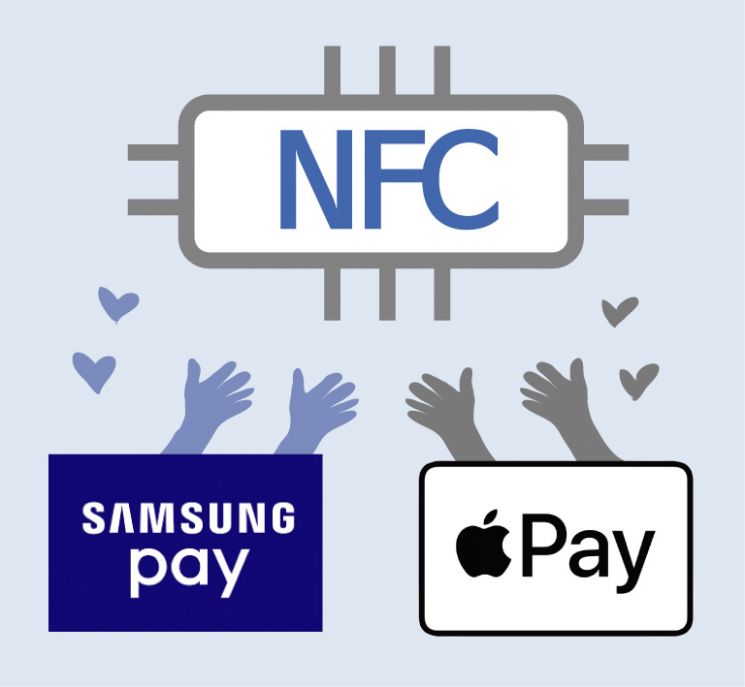
So how is Apple Pay implemented? Ultimately, Apple Pay is also based on semiconductors. To use Apple Pay, every terminal used has an NFC tag. A tiny semiconductor chip and antenna form the NFC tag. While application processors for smartphones and CPUs for PCs compete in 3-nanometer processes, this tiny chip is still manufactured using tens of nanometer processes. The chip costs about 25 cents. This means that a semiconductor chip costing about 300 won could cause wallets to disappear. Although there are expensive semiconductors costing hundreds of thousands of won, the semiconductors we use in daily life are this affordable. It is not only expensive semiconductors that change our lives.
© The Asia Business Daily(www.asiae.co.kr). All rights reserved.

















