Kuomintang's Big Win in 11/26 Local Elections... Taiwan Unification Momentum May Weaken
Great-Grandson of Chiang Kai-shek, Kuomintang Chairman, Elected Youngest Mayor of Taipei City
[Asia Economy Senior Reporter Cho Young-shin] Tsai Ing-wen, President of Taiwan, took responsibility for the defeat in the November 26 local elections and stepped down from her position as chairperson of the Democratic Progressive Party (DPP).
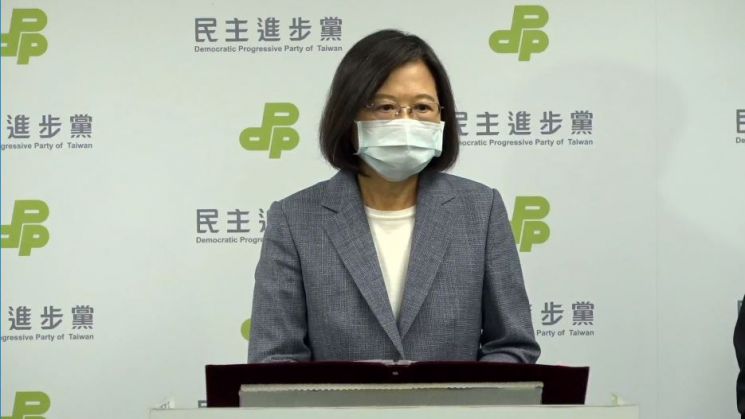
This midterm election was largely seen as a midterm evaluation of President Tsai. It was also interpreted as a preliminary battle ahead of the January 2024 Taiwan presidential election. With the DPP, which is promoting Taiwan unification, suffering a crushing defeat in the election, there are forecasts that the momentum for unification will weaken.
According to Chinese-language media including the state-run Xinhua News Agency on the 27th, President Tsai resigned from her position as DPP chairperson the day before, taking responsibility for the November 26 local election results.
In the election to select heads of 21 counties and cities in Taiwan (as of 10:30 PM on the 26th), opposition Kuomintang (KMT) candidates won in 13 locations. The ruling DPP managed to win only 5 places. Among the remaining 3, independents won in 2, and the second opposition party, the Taiwan People's Party, won in only 1.
KMT candidates secured 4 of the 6 special municipalities: Taipei, New Taipei, Taoyuan, and Taichung. Additionally, KMT candidates declared victory in Keelung City, Hsinchu County, Changhua County, Nantou County, Yunlin County, Yilan County, Hualien County, Taitung County, and Lienchiang County.
On the other hand, the DPP led by President Tsai won in Tainan and Kaohsiung among the special municipalities, and in Chiayi County, Penghu County, and Pingtung County among other regions.
Upon the election results becoming clear, President Tsai stated, "I humbly accept the results," and announced her resignation from the DPP chairperson position.
The Taiwan United Daily News reported, "The DPP suffered its worst defeat in local elections since its founding in September 1986."
Although this election was conducted largely on a candidate-centered basis without major contentious issues, President Tsai emphasized during the campaign the threat from China and the defense of Taiwan's democracy. Given this, the election results are seen as falling short of public support for Tsai's strong 'pro-America, anti-China' stance. Therefore, the DPP, which must field a successor candidate for the 2024 presidential election, is now under intense pressure. Conversely, the KMT has gained momentum to reclaim power.
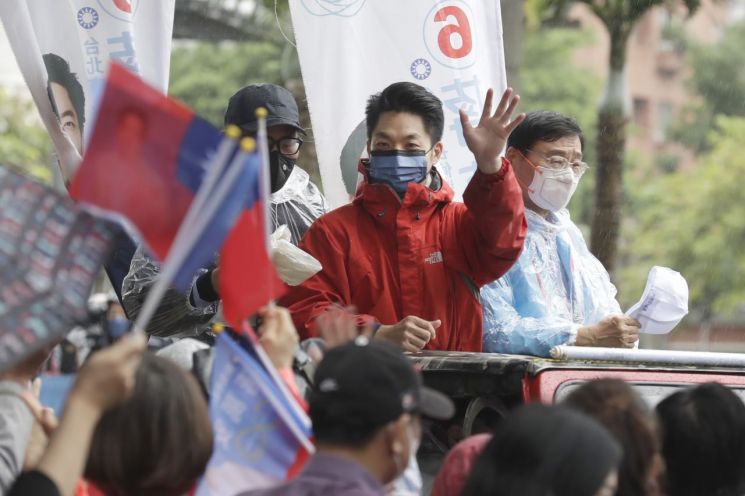
The Taipei mayoral election, which attracted the most attention, saw KMT candidate Chiang Wan-an, great-grandson of Taiwan's first president Chiang Kai-shek, comfortably defeat DPP candidate Chen Shih-chung with over 40% of the vote at the same time. At 43 years old this year, he set the record as the youngest Taipei mayor in history.
The South China Morning Post (SCMP) analyzed that with this election defeat, President Tsai's remaining two years in office will not be easy.
Wang Gongyi, head of the Taipei-based think tank Taiwan International Strategic Research Association, analyzed, "Many voters expressed dissatisfaction with President Tsai and DPP policies through their votes."
Kuomintang Chairman Eric Chu, who won the election, expressed gratitude to the Taiwanese people, saying, "This victory is not only a victory for the KMT but also a victory for the people of Taiwan and for democracy."
Professor Chang Chun-ho of the Department of Political Science at Tunghai University in Taichung predicted, "With this election victory, the KMT's chances of taking power in the 2024 presidential election have increased."
Wang pointed out the cause of the DPP's defeat, saying, "Many Taiwanese people were not convinced by the so-called Taiwan threat card used by President Tsai and the DPP."
The victorious KMT in this election advocates a unification policy that favors maintaining the current status quo and pursuing peaceful unification when the time is right, rather than radical unification.
© The Asia Business Daily(www.asiae.co.kr). All rights reserved.


















