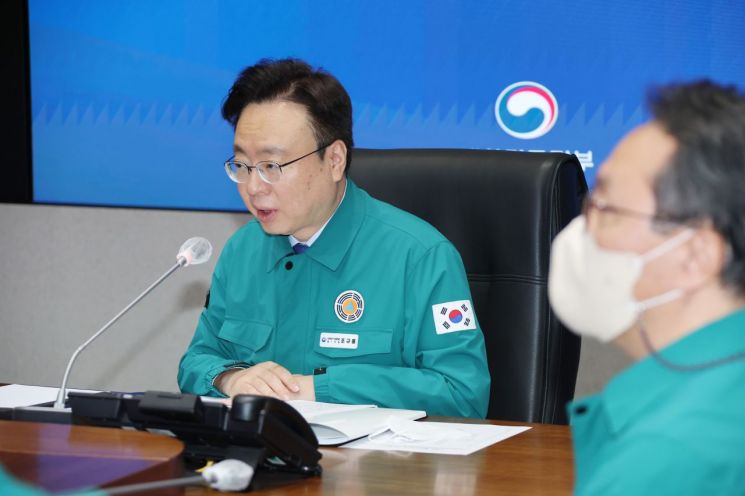
[Asia Economy Reporter Byeon Seon-jin] In preparation for the 7th wave of COVID-19, the government will secure hospital beds capable of handling up to 200,000 confirmed cases per day.
The Central Disaster and Safety Countermeasure Headquarters (CDSCH) announced on the 25th, "The recent trend of increasing COVID-19 confirmed cases and deaths continues, and the bed occupancy rate for severe and critically ill patients is also rising," and released a medical response plan for the winter COVID-19 resurgence. According to the CDSCH, the COVID-19 reproduction number in the third week of November was 1.10, exceeding 1 for five consecutive weeks. A reproduction number above 1 indicates 'epidemic spread.' Last week, the number of new critically ill patients was 409, a 16% increase from the previous week, with 9 out of 10 being aged 60 or older.
First, severe and semi-severe beds will be secured mainly in tertiary general hospitals and large general hospitals with high treatment capabilities. Mild to moderate beds will be additionally secured in dedicated nursing hospitals for elderly and bedridden patients, with a total of about 330 beds to be gradually reactivated starting from the 28th. The CDSCH explained, "The peak daily confirmed cases in the 7th wave are predicted to be between 50,000 and 200,000," adding, "To actively respond to hospitalization demand, beds capable of handling the maximum forecast of 200,000 cases are being secured."
For outpatient care, to improve access for home treatment patients, night and holiday medical consultation centers will be expanded, and resource status will be shared with local medical communities to maintain an uninterrupted medical system. Additionally, to ensure rapid transfer and treatment of emergency patients, the regional medical council and medical institutions as well as bed and other local medical resource statuses will be regularly shared.
In cases where confirmed patients occur in facilities without resident medical staff, the operation of the Medical Mobile Task Force will be extended until January next year to provide prompt medical support. The government will continue to monitor the trend of confirmed cases and cluster infection occurrences and, if necessary, strengthen quarantine rules and implement measures to protect residents of infection-vulnerable facilities.
For infection-vulnerable facilities such as nursing hospitals and care facilities, additional vaccinations will be encouraged during the winter to protect the health of residents. Incentives will be provided by awarding extra points during government awards to local governments and facilities with excellent vaccination records.
Medical consultation for home treatment, outpatient care, and inpatient treatment fees, which were scheduled to expire this month, will be extended and paid until December 31 due to the COVID-19 situation. Starting next year, payments will be differentiated at 50-100% of the current level, considering the epidemic situation and the support needs of each target group. The government will continuously monitor the epidemic scale and review the termination timing of COVID-19 additional fee payments.
Furthermore, to prepare for the simultaneous winter epidemic of COVID-19 and influenza, the supply of cold medicine will be stabilized. For acetaminophen (650mg) used in prescriptions, which is the most commonly used antipyretic analgesic, an additional supply of more than 50% compared to the current monthly average will be secured until November next year. To encourage production, the insurance drug price for prescription acetaminophen, which was previously low at about 50 won per tablet, will be temporarily increased by up to 20 won starting next month. Additionally, distribution stage inspections and monitoring will be strengthened to ensure the smooth circulation of the increased supply of antipyretic analgesics.
© The Asia Business Daily(www.asiae.co.kr). All rights reserved.
![Clutching a Stolen Dior Bag, Saying "I Hate Being Poor but Real"... The Grotesque Con of a "Human Knockoff" [Slate]](https://cwcontent.asiae.co.kr/asiaresize/183/2026021902243444107_1771435474.jpg)
















