MuHyup-Sanhak Cooperative Foundation Holds Academic Seminar
Sharing Supply Chain Research Results from 6 Research Teams at 5 Domestic Universities
[Asia Economy Reporter Kim Pyeonghwa] It has been revealed that global supply chain shocks have caused domestic prices to rise for about nine months. Additionally, it was analyzed that these shocks triggered economic fluctuations such as short-term export declines and contraction in private investment.
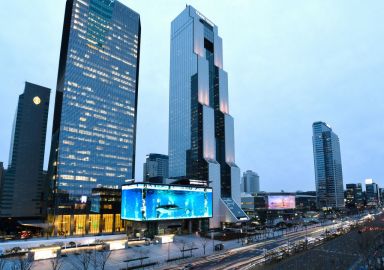
The Korea International Trade Association held an academic seminar on "Analysis and Response to Global Supply Chain Risks" on the 25th at the Trade Tower in Samseong-dong in collaboration with the Industry-Academic Cooperation Foundation. This seminar was organized to share the research outcomes of six research teams from five universities selected as policy research projects to enhance the domestic academic community's capabilities in global supply chain research.
On this day, Professor Noh Youngjin's team from Dong-A University analyzed the effects of global supply chain shocks on the domestic economy using the "Global Supply Chain Pressure Index (GSCPI)" developed by the Federal Reserve Bank of New York. According to this analysis, global supply chain shocks cause domestic prices to rise for about nine months. In particular, export companies are more vulnerable than domestic companies because they may reduce investment as the intensity of supply chain shocks increases.
Professor Ko Kyungil's team from Baekseok University revealed that global supply chain shocks cause economic fluctuations such as short-term export declines and contraction in private investment. From the perspective of individual companies, supply chain shocks such as production delays and logistics disruptions can influence corporate behaviors like supply chain diversification and digital transformation. Furthermore, since these shocks can also impact sustainable growth considering the environment and stakeholders, they emphasized the need for supply chain innovation such as resource reallocation and new business development.
"Reduce Dependence on Semiconductor Materials and Components from the Top 10 Countries"
Professor Shin Seongho's team from Dong-A University analyzed the import status of semiconductor materials, components, and equipment supplied from overseas using Semiconductor Trade Statistics Service (TRASS) data. They pointed out that although dependence on Japanese materials has decreased, dependence on materials and components through the top 10 importing countries is increasing. In particular, they analyzed that supply chain risks are significant in photolithography equipment and wafer cutters. TRASS is a data service provided by the Korea Trade Statistics Promotion Institute, featuring information such as HS codes by export/import items, target countries, amounts, and weights.
Professor Shin's team stated, "Since domestic production of semiconductor materials and components is difficult in the short term, focus should be on supply chain flexibility. Monitoring the current status through supply chain mapping of each supply chain link is necessary to reduce risks."
Professor An Geonhyeong's team from Kyonggi University pointed out that due to the U.S. Chips and Science Act (CSA), new investments in Chinese semiconductor factories by South Korea are restricted, so minimizing damage to local factories is essential. They also argued for attracting investments from global semiconductor equipment companies to South Korea. In the battery sector, they noted the need for mergers and acquisitions (M&A) of foreign companies and vertical integration of the electric vehicle manufacturing industry to stabilize the material supply chain.
Special Tugboat Pilot System and Ship Seating System Needed
Professor Choi Bongseok's team from Kookmin University analyzed that if the European Union (EU) imposes the Carbon Border Adjustment Mechanism (CBAM) on steel products from Korea, China, and Japan, production decreases of approximately $950 million for China, $150 million for Korea, and $8 million for Japan are expected. Additionally, to export steel to the EU, CBAM certificates must be purchased, with the purchase cost expected to exceed approximately 150.8 billion KRW.
Professor Park Honggyu's team from Chungnam National University emphasized that to reduce port congestion, installing night pilotage or temporary storage yards and implementing the special tugboat pilot system and ship seating system are necessary for flexible port operations. The special tugboat pilot system is a system that uses large tugboats as pilots to prevent suspension of pilot operations during bad weather. The ship seating system allows port berthing only after passing eligibility screening to minimize berth occupancy rates and disputes. They also argued for strengthening monitoring of new ships, used ships, and charters to prevent the avoidance of Korean shipping routes.
© The Asia Business Daily(www.asiae.co.kr). All rights reserved.

















