Cultural Heritage Administration Acquires 'Ryuseongryong Bimanggi Ipdaetongryeok-Gyeongja'
No Seung-seok, Director of Yeohae Classical Research Institute, Reviews Content for Two Months
Includes 1600 Ganghang's Captivity and Alcohol Brewing Methods
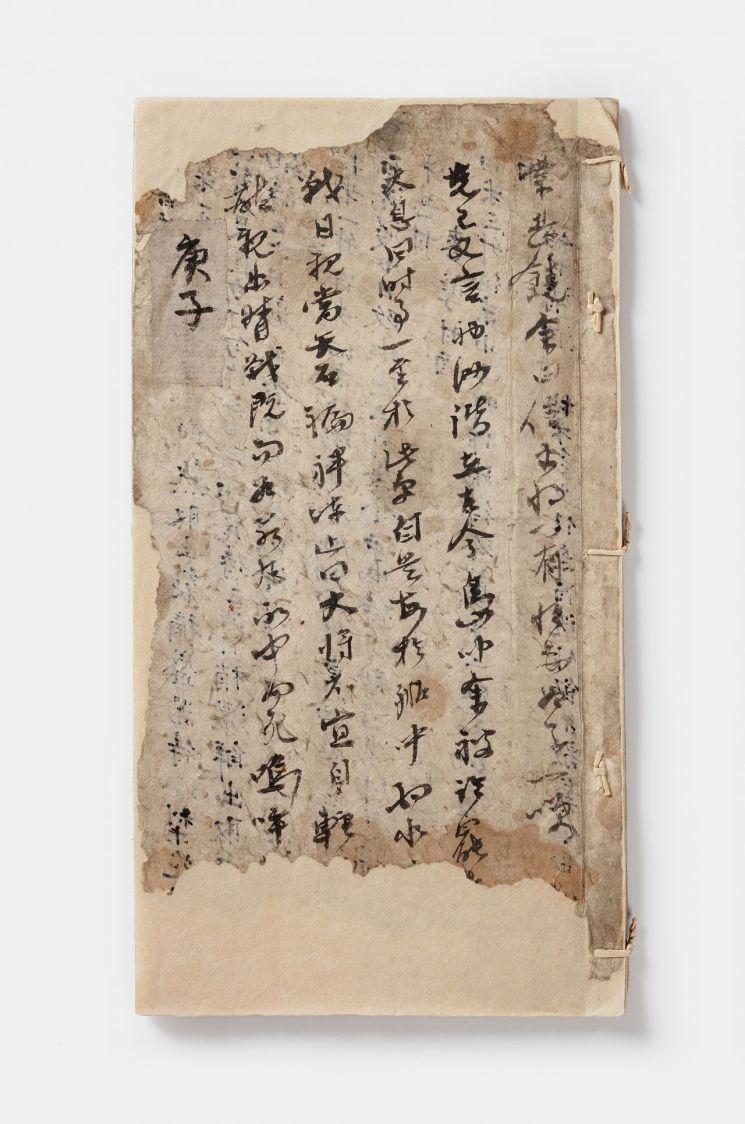
"Originally, when Yi Sun-sin was on Gogeumdo (古今島), he heard that I was dismissed after being accused (...) and sighed deeply, saying, 'Has the state of affairs really come to this?' From then on, whenever he was on the boat, he would place clear water (...) and on the day of battle, he insisted on braving the arrows and stones himself. The deputy commanders tried to dissuade him, saying, 'The commander should not take such risks himself.' (However, he did not listen) and directly went into battle to encourage the troops, eventually being struck by a flying bullet and dying. Ah!"
This is a record written on the cover of 'Ryuseongryong Bimanggi Ip Daetongryeok - Gyeongja (柳成龍備忘記入大統曆-庚子)'. It contains content related to Admiral Yi Sun-sin (1545?1598). It is presumed to have been written in the year of Gyeongja (1600) by Seoae Ryu Seong-ryong (1542?1607), a civil official who served as Yeonguijeong (Prime Minister) during the Imjin War and author of the 'Jingbirok'. Its existence was first revealed through a tip from Professor Kim Moon-kyung, Emeritus Professor at Kyoto University. The 'Daetongryeok' corresponds to a calendar book (冊曆) used today, recording months, days, and solar terms. It was useful for farming as it indicated seasonal changes. Its form is similar to a kind of diary, with schedules and personal thoughts written next to dates.
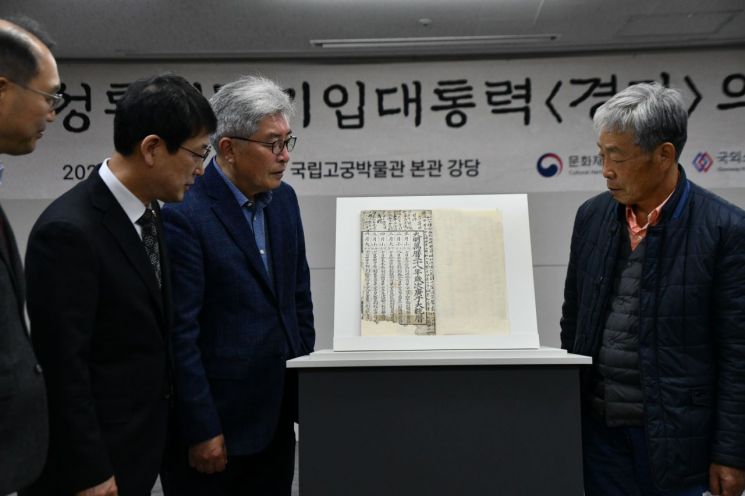
The Cultural Heritage Administration and the Overseas Korean Cultural Heritage Foundation conducted a thorough investigation and announced on the 24th that they brought the 'Ryuseongryong Bimanggi Ip Daetongryeok - Gyeongja' into the country last September. After two months of review by classical scholar Noh Seung-seok, director of the Yehae Classical Research Institute, records related to Yi Sun-sin were confirmed and it was purchased with restoration funds. It will be stored at the National Palace Museum of Korea and used for research and exhibition.
The 'Ryuseongryong Bimanggi Ip Daetongryeok - Gyeongja' consists of sixteen pages including the cover. Its size is 20 cm wide by 38 cm tall, slightly longer than a commonly used A4 sheet. The booklet contains ink writings (墨書) and red annotations (朱書) detailing the weather, appointments, symptoms, and prescriptions for 203 days of the year 1600 (Gyeongja year). The people mentioned number about 190. The Cultural Heritage Administration estimates it to be Ryu Seong-ryong’s personal copy (a book bearing the owner's handwriting). The basis is his collected works, 'Seoaejip'. An official explained, "Based on the handwriting, frequently mentioned people and events, and comparing the information with the 'Seoae Teacher’s Chronology (西厓先生年譜)', which records Ryu Seong-ryong’s timeline, we reached this conclusion."
The cover, temporarily bound with paper, has eighty-three characters remaining, with the top and bottom parts cut off. The text mentions a person named 'Yehae (汝諧)', which is Yi Sun-sin’s courtesy name, another name used to refer to Admiral Chungmugong. It describes the situation during the Imjin War when Yi Sun-sin ignored surrounding objections and commanded on the battlefield until his death. The Cultural Heritage Administration analyzed, "The paper used on the cover is similar to that used in the 'Jingbirok', which often reused the reverse side of sheets. It seems to have been written to express feelings at the time of Chungmugong’s death and later repurposed."
The Daetongryeok also contains various entries that help understand the contemporary situation, including the return of Kang Hang (1567?1618), who was taken to Japan as a prisoner during the Jeongyu War and came back in 1600. It also records methods for making seven to eight types of alcohol, including how to ferment rice and the amount of water to add. The 'Ryu Seong-ryong Jongga Munjeok (柳成龍 宗家 文籍)', a collection of documents and materials preserved by Ryu Seong-ryong’s descendants, is currently designated as a treasure and managed accordingly. The Daetongryeok includes six volumes, but records for the Gyeongja year are not included.
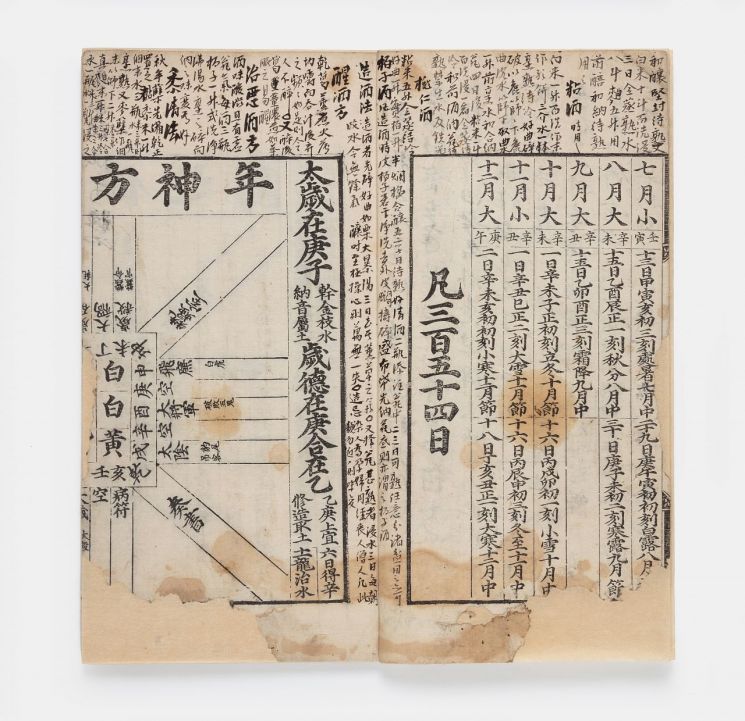
Choi Eung-cheon, head of the Cultural Heritage Administration, said, "The Daetongryeok, which entered Korea during the reign of King Gongmin of Goryeo in 1370 and was used for about 280 years, has few surviving artifacts in the country. This is the first time a Daetongryeok from the Gyeongja year has appeared." He added, "Not only does it contain records by Seoae but also confirms historical facts that occurred in the Gyeongja year, giving it high cultural heritage value. It will also invigorate future research and utilization of recorded cultural heritage."
© The Asia Business Daily(www.asiae.co.kr). All rights reserved.
![Clutching a Stolen Dior Bag, Saying "I Hate Being Poor but Real"... The Grotesque Con of a "Human Knockoff" [Slate]](https://cwcontent.asiae.co.kr/asiaresize/183/2026021902243444107_1771435474.jpg)


















