[Asia Economy Reporter Byeon Seon-jin] The feared seventh wave of COVID-19 is not spreading rapidly. The average number of confirmed cases over the past week is in the 50,000 range, an increase from the early November level of 40,000 to just under 10,000 more. However, the number of severe cases and deaths is comparable to the peak just before the sixth wave last summer, when there were 100,000 confirmed cases.
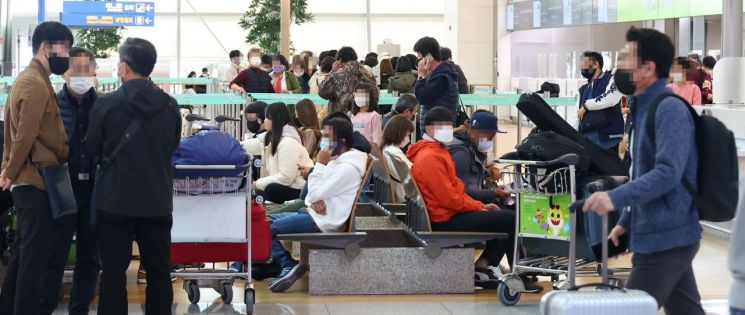
According to the Central Disease Control Headquarters on the 25th, as of midnight the previous day, the number of new COVID-19 confirmed cases was 59,089, with a 7-day average of 53,056 cases. On the 9th, when the authorities defined it as the "seventh wave" (Lee Sang-won, head of the Epidemiological Investigation and Analysis Division of the Central Disease Control Headquarters), the 7-day average was 44,477 cases. A week later, on the 16th, it increased by 1.2 times to 53,702 cases, then showed a slight decrease.
The seventh wave occurs in winter, when the "3Cs" (closed spaces, crowded places, close-contact settings) are easily formed, raising the possibility of up to 200,000 confirmed cases at the peak, but most forecasts expect it to be smaller. Authorities and experts expect the peak of the seventh wave to be from late November to early December. If the reproduction number, which indicates how many people one infected person infects, remains at 1.1, it is predicted that next week the number of cases will be in the 60,000 to 70,000 range (research teams led by Professor Lee Chang-hyung of Ulsan Institute of Science and Technology and Professor Jeong Eun-ok of Konkuk University).
The problem is that the proportion of severe cases and deaths relative to confirmed cases is high. The number of critically ill patients was 437 on the 24th, marking six consecutive days above 400 since the 19th. On the same day, the number of deaths was 59, with a 7-day average daily death toll of 52. The 7-day average number of deaths has exceeded 50 since the 18th. This is similar in scale to the number of severe cases and deaths when 100,000 to 150,000 confirmed cases occurred in early to mid-August. This is why there is speculation that the COVID-19 fatality rate, which had dropped to 0.04% in July, could exceed 0.08% in November. The fatality rate in September and October was 0.07%.
There are concerns that the number of severe cases may increase further as the peak approaches in 1 to 2 weeks. Since antibodies that defend against infection form two weeks after vaccination, the authorities are encouraging winter vaccinations, especially for vulnerable groups. As of midnight on this day, the vaccination rate for those aged 60 and over (based on eligible population) was 17.0%, and the vaccination rate for vulnerable facilities such as nursing hospitals, care facilities, and mental health promotion facilities was 18.7%. This is far below the government's goal of raising the vaccination rate to 50-60% within a month.
The slow increase in vaccination rates is analyzed to be due to concerns about breakthrough infections and side effects from frequent vaccinations. Regarding this, Professor Jeong Jae-hoon of Gachon University’s Department of Preventive Medicine said, "Because the infection prevention effect decreases over time, vaccination needs to be repeated," and Professor Lee Jae-gap of Hallym University’s Department of Infectious Diseases urged vaccination, stating, "There have been no reports from several countries of increased adverse reactions due to multiple vaccinations." The Korea Disease Control and Prevention Agency also explained that "the adverse event reporting rate for the updated vaccine is 0.3%, which is lower than the 3.7% reporting rate for the monovalent vaccine."
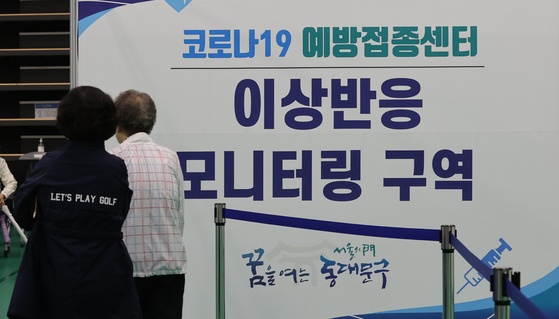
The authorities emphasize that vaccination is necessary not only to prevent severe illness and death from infection but also to prepare for 'long COVID' (long-term aftereffects). According to a study published in July by the Korea Disease Control and Prevention Agency and the National Health Insurance Service on 230,000 adults infected with COVID-19, the vaccinated group (with two doses) had a 52% and 60% lower risk of acute myocardial infarction and ischemic stroke, respectively, compared to the unvaccinated group when infected with COVID-19.
Jung Ki-seok, head of the COVID-19 Special Response Team, said at the 9th meeting of the National Infectious Disease Crisis Response Advisory Committee on the same day, "The number of severe COVID-19 patients is still increasing, and considering the seasonal factor of winter, the epidemic situation must be analyzed carefully," adding, "To dispel distrust in vaccine effectiveness and anxiety about adverse reactions, the government must provide objective and accurate information."
© The Asia Business Daily(www.asiae.co.kr). All rights reserved.
!["The Woman Who Threw Herself into the Water Clutching a Stolen Dior Bag"...A Grotesque Success Story That Shakes the Korean Psyche [Slate]](https://cwcontent.asiae.co.kr/asiaresize/183/2026021902243444107_1771435474.jpg)

















