Busy Response to Minimize Transport Refusal Damage
Early Shipment and Transport Alternatives for Steel, Petrochemicals, and Cars
"Product Unit Price Increase Likely to Expand Damage Scale"
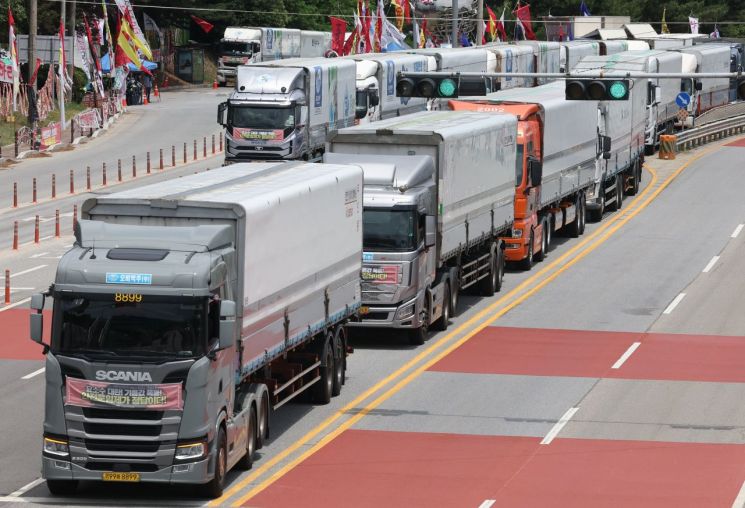
[Asia Economy Reporters Oh Hyung-gil, Choi Dae-yeol] The industrial sector, including steel, petrochemicals, and automobiles, is activating emergency measures due to the Cargo Solidarity strike. Compared to the strike in June, which caused more than 1.6 trillion won in damages over 8 days, this time the damage is inevitably greater due to rising exchange rates and inflation.
While closely monitoring the unexpected strike impact and changes in logistics conditions, the situation is such that the government and Cargo Solidarity can only be waited on to reach a swift agreement, as the problem cannot be directly resolved immediately.
The Cargo Solidarity Headquarters of the Korean Confederation of Trade Unions (Cargo Solidarity) launched an indefinite full strike starting at midnight on the 24th. About 25,000 members of the Cargo Solidarity union immediately began refusing transportation, and in some regions, non-union members are also expected to join the strike additionally.
The industrial sector expresses concern that this strike will inevitably prolong. Cargo Solidarity demands not only an extension of the safety freight rate system, which expires at the end of this year, but also an expansion of the applicable vehicle types and items. However, the government and ruling party agree to a three-year extension but oppose expanding the items.
Due to clear differences in positions, if the strike prolongs, the damage will inevitably fall entirely on the industrial sector. Since the strike was anticipated, companies have prepared and implemented emergency measures based on past logistics crisis experiences, but there are concerns that the damage will gradually snowball.
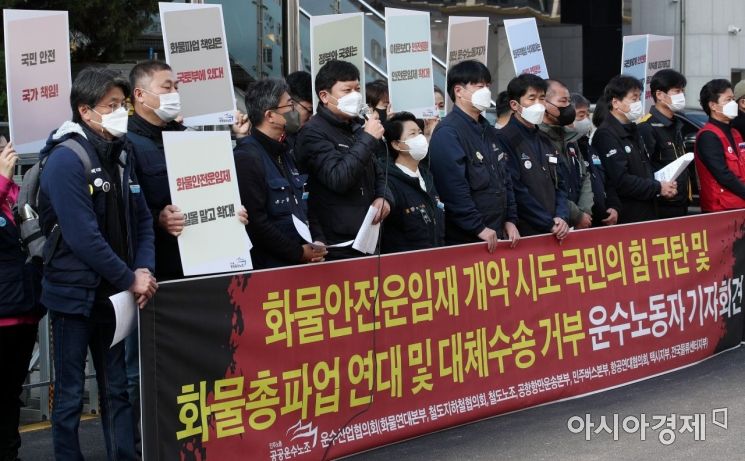 Officials from the Cargo Solidarity Headquarters and the Public Transport Union Transport Industry Council held a press conference on the 23rd in front of the People Power Party headquarters in Yeouido, Yeongdeungpo-gu, Seoul, condemning the government and ruling party's attempt to worsen the Cargo Safety Freight Rate System, expressing solidarity with the cargo general strike, and refusing alternative transportation by transport workers. Photo by Kim Hyun-min kimhyun81@
The steel industry has established countermeasures such as closely communicating with customers in shipbuilding and construction and shipping urgent products first. Since halting steel product transportation affects the entire industrial sector, they plan to respond based on the principle that timely delivery is crucial.
POSCO is currently repairing typhoon damage at the Pohang Steelworks, and Hyundai Steel is worried that the damage may increase as logistics chaos overlaps with difficulties in normal operations due to guerrilla strikes by the labor union. Especially during the June strike, Cargo Solidarity union members held a send-off ceremony near the Pohang Steelworks, causing unexpected damage, so they remain tense about any possible incidents.
The petrochemical industry, considered a major blockade point, has prepared in advance by shipping key products first. The Korea Petrochemical Industry Association also started operating an emergency response team from this day and plans to actively respond if logistics problems occur.
They are working with local governments mainly around the Yeosu and Daesan industrial complexes, where logistics difficulties were severe, to ensure no disruption in logistics transportation by item. During the strike period, they are securing as many emergency dispatch volumes as possible or shipping products early to minimize yard and inventory volumes.
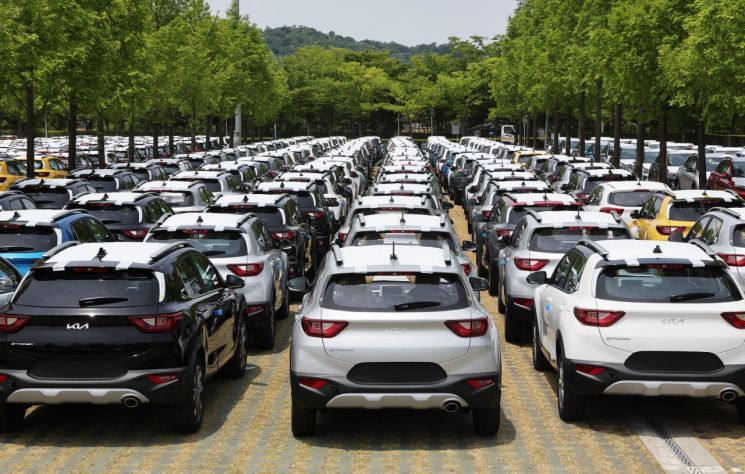
The finished car industry anticipates possible transportation disruptions during new car deliveries and has organized alternative personnel and teams. During the June strike, the operating rate of car carriers (vehicles transporting cars) dropped, leading company employees, including headquarters staff, to drive vehicles directly from factories to shipping yards.
However, since temporary operation permits are required to drive new cars and customers would receive vehicles after they have already been driven hundreds of kilometers, this method is considered inappropriate, and such road transport will be minimized.
Logistics companies are also preparing, expecting transportation refusal to become a reality. They plan to assign transportation tasks to non-union members or use routes that have not been utilized before to minimize damage. They are also considering conducting transportation work on weekends if transportation disruptions occur due to the strike.
While weekend transportation work involves additional costs and requires adjusting schedules of consignors and production/manufacturing companies, it is expected to reduce damage to some extent.
Frontline ports carrying export/import containers are also closely monitoring the situation. Some shipping companies, anticipating possible disruptions in land transportation due to Cargo Solidarity’s transportation refusal, have pre-loaded or unloaded three days’ worth of cargo. A representative of a national shipping company said, "If transportation refusal lasts more than a week, container loading and unloading could be disrupted, potentially causing the entire export/import schedule to be delayed."
It is pointed out that the government must respond firmly to obstruction of transportation by non-union members during the strike. A logistics industry official said, "If transportation refusal movements intensify by blocking entrances to container yards at major ports, the damage will not be limited to some industries but will affect the entire domestic industrial sector," emphasizing, "It is necessary to strictly deal with organized issues such as obstruction of transportation by non-union members."
The industrial sector fears that if the logistics crisis prolongs at a time when production volumes increase toward the end of the year, the damage will snowball. During the 8-day strike in June, the government estimated damages of 1.15 trillion won in the steel industry, 500 billion won in petrochemicals, and 257.1 billion won in automobiles, totaling 1.6 trillion won.
Kim Pyeong-jung, head of the Korea Petrochemical Industry Association, said, "Compared to the June strike, the damage is expected to be greater due to rising exchange rates and increased product prices," adding, "Resolving the strike is the most urgent matter above all."
© The Asia Business Daily(www.asiae.co.kr). All rights reserved.



















