Lingering Ethnic Tensions Since Kosovo Civil War
EU "Member States Must Halt Escalation to Join"
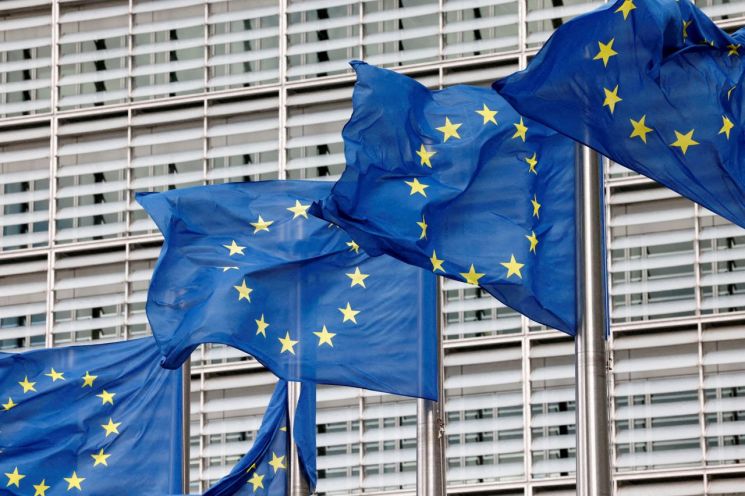
[Asia Economy Reporter Hyunwoo Lee] The conflict between Serbia and Kosovo on the Balkan Peninsula, triggered by a dispute over vehicle license plates, has ultimately failed to reach an agreement despite mediation by the European Union (EU). The EU warned both sides that if they wish to join the union, they must cease actions that provoke further conflict.
According to the Associated Press on the 21st (local time), Josep Borrell, the EU High Representative for Foreign Affairs and Security Policy, stated at a press conference following a meeting in Brussels, Belgium, with Serbian President Aleksandar Vu?i? and Kosovo Prime Minister Albin Kurti, "Despite several hours of discussions starting at 8 a.m., both sides failed to agree on a solution."
Borrell further warned, "Both sides bear significant responsibility for today's failed talks and any potential escalation of tensions or violence that may occur in the coming days." The Kosovo government announced that starting from the 22nd, drivers using Serbian license plates instead of those issued by Kosovo will be fined 150 euros (approximately 210,000 KRW), raising concerns about possible physical clashes between the two sides.
Previously, the Kosovo government declared that all vehicle license plates must be replaced with those issued by Kosovo authorities by April 21 of next year. However, the Serbian residents living in Kosovo strongly opposed this, refusing to accept the change. In northern Kosovo, where Serbs exercise de facto autonomy despite Kosovo's jurisdiction, mayors of four municipalities, judges, police officers, and other Serbian public officials have resigned en masse, effectively halting public services.
The intensifying conflict over vehicle license plates is understood to be influenced by ethnic tensions accumulated between Serbia and Kosovo since the Kosovo War. Kosovo attempted to separate from Serbia during the dissolution of the Yugoslav Federation in the late 1990s, leading to a brutal civil war that resulted in thousands of deaths. Kosovo declared independence in 2008 with approval from the United Nations, the United States, and Western Europe, but Serbia, supported by allies Russia and China, does not recognize Kosovo's independence and still considers it part of its territory.
European countries, including the EU, are concerned about the possibility of renewed physical clashes on the Balkan Peninsula amid heightened security anxieties caused by the war in Ukraine. The EU is urging both sides to reach an agreement quickly and warned that escalating tensions could jeopardize both parties' applications for EU membership.
Borrell urged both sides to comply with their respective proposals, stating, "The proposals were nearly agreed upon but failed for various reasons, so we urge both sides to implement these requests." He warned, "If the ultimate goal of the leaders of both countries is EU membership, we expect them to act accordingly."
© The Asia Business Daily(www.asiae.co.kr). All rights reserved.

![Clutching a Stolen Dior Bag, Saying "I Hate Being Poor but Real"... The Grotesque Con of a "Human Knockoff" [Slate]](https://cwcontent.asiae.co.kr/asiaresize/183/2026021902243444107_1771435474.jpg)















