Total Strike by Cargo Solidarity Union Begins on 24th
Steel and Auto Parts Suffer if Transport Disrupted
Peak Season Cement Industry Faces Critical Blow
[Asia Economy Reporters Oh Hyung-gil, Kim Jong-hwa, Choi Dae-yeol] “From September to early December, the peak season when cement sales exceed regular shipments by more than 20%, a crucial period that determines annual performance, a general strike is devastating."
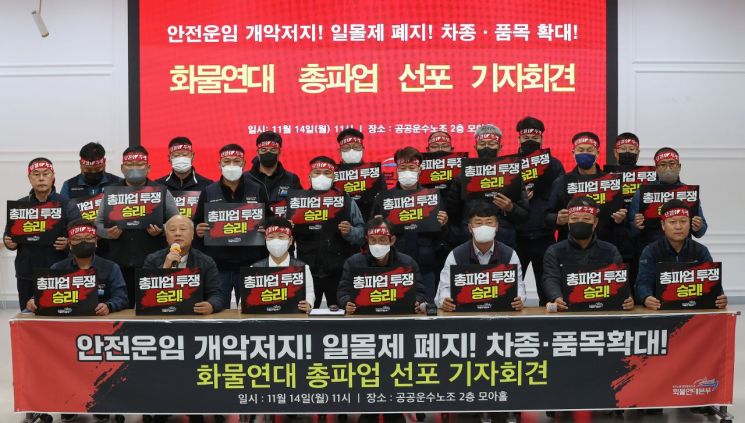
As the labor sector, starting with the Cargo Solidarity Union, has announced a large-scale general strike ahead of the year-end, the industrial sector is on high alert. The Cargo Solidarity Union has declared an unprecedentedly intense winter struggle (Dongtu) by concentrating its forces like never before.
Following the impact of the '3 highs' (high exchange rates, high interest rates, and high prices) and a slump in consumption that has severely contracted production, there is growing fear that if logistics paralysis occurs simultaneously, factory shutdowns could spread.
The National Democratic Labor Union Federation Cargo Solidarity Headquarters (Cargo Solidarity) will begin an indefinite full-scale general strike starting at midnight on the 24th. This comes about five months after the strike in June, as discussions with the government on the safety freight rate system, which is set to expire at year-end, have made no progress, prompting the resumption of the strike.
The Cargo Solidarity Union stated, "During the eight-day general strike in June, we agreed with the Ministry of Land, Infrastructure and Transport to continue promoting the safety freight rate system and to discuss expanding the scope of items, after which we suspended the strike, but no results were achieved. This upcoming general strike will be unprecedentedly strong and will bring all industries to a halt simultaneously," warning of the impact.
Although the Cargo Solidarity Union has only about 25,000 members, if they engage in indefinite transport refusal and obstruct transportation, serious damage is expected to Korea's core industries such as steel, shipbuilding equipment, cement, and automobile parts.
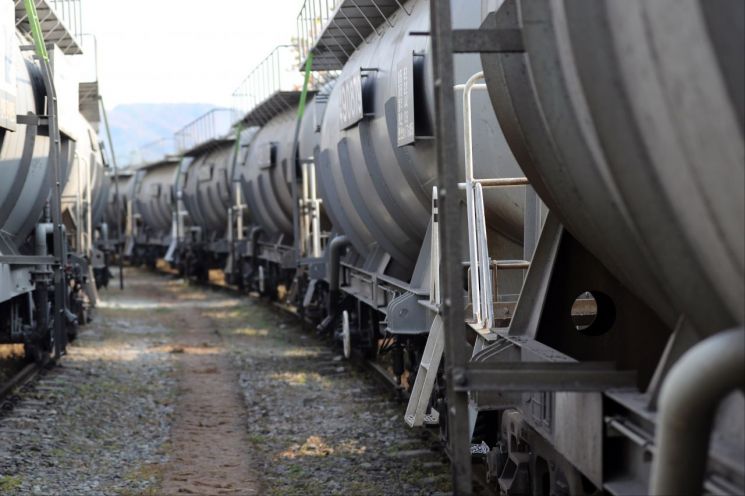
In particular, the cement industry is expected to suffer fatal damage from this general strike. With cement shipments already disrupted due to train operation suspensions following the fatal accident at Obong Station on the 5th, the strike would completely block cement transportation, forcing construction sites to come to a standstill.
It is estimated that there are about 3,000 Bulk Cement Trailers (BCT) transporting cement, of which about one-third, approximately 1,000, are operated by transport owners affiliated with the Cargo Solidarity Union. During previous strikes, the Cargo Solidarity obstructed the operations of non-union transport owners and blocked the front and rear gates of cement plants, paralyzing cement transportation.
Cement is transported by BCT, rail, and ships, but ships are used only for exports. If the Cargo Solidarity blocks BCT operations and the railway union halts rail transport, all means of cement transportation would effectively be cut off.
The industrial sector has effectively entered an emergency response system, forming temporary teams within each company. A logistics industry official said, "Regardless of whether the Cargo Solidarity's demands are right or wrong, since negotiations are not conducted at the individual company level, there are many difficulties in responding," adding, "If the strike materializes, we are reviewing various countermeasures." It is reported that major shipping companies are securing inventory to minimize production disruptions caused by logistics supply shortages.
Although they have no choice but to respond by diverting shipments to non-union members, conflicts such as blocking access to logistics centers and obstructing non-union transport during the June strike suggest that significant transport disruptions are inevitable for a considerable period.
There is also growing dissatisfaction at the corporate level over the government's and political circles' passive stance, which has made problem resolution difficult. An industry official lamented, "Even though the government declared a 'strict response' stance during the June strike, it seems they let it slide without holding anyone accountable," adding, "With intense political strife between ruling and opposition parties and additional power struggles over various labor issues, the damage to frontline industrial sites will only increase."
© The Asia Business Daily(www.asiae.co.kr). All rights reserved.


















