Electric Vehicle Exports, One-Third to the US... 520% Increase YoY
Electric Vehicle Trade Deficit with the US Expected to Turn Surplus This Year
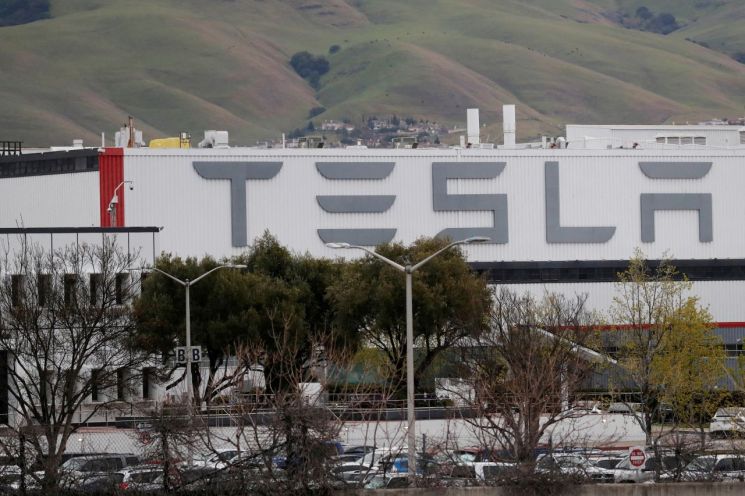
[Asia Economy Reporter Choi Dae-yeol] It has been revealed that South Korea's electric vehicle (EV) trade surplus up to last month this year has already surpassed the total surplus for the entire previous year. This is due to the global increase in demand for electric vehicles. By country, exports to the United States have increased more than sixfold, and it is expected that South Korea will record a trade surplus in EVs with the U.S. for the first time in three years.
According to statistics from the Korea International Trade Association on the 21st, EV export value from January to October this year amounted to $6.263 billion, a 45% increase compared to the same period last year. This has already exceeded last year's total annual export volume of $5.649 billion. EV imports have also increased significantly. During the same period, EV import value reached $1.577 billion, up 49%.
The trade balance from EV trade recorded a cumulative surplus of $4.686 billion up to last month, surpassing last year's total annual surplus of $4.447 billion. Although two months remain, considering that the annual EV trade surplus has been in the hundreds of millions of dollars in previous years, this year's trade surplus is expected to be the largest ever.
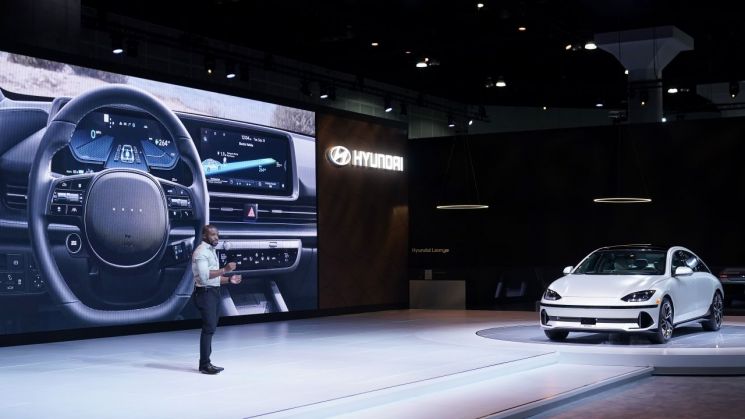 On the 17th (local time), a video creator is presenting about Hyundai's Ioniq 6 at the LA Auto Show, which opened on the same day. Hyundai's second dedicated electric vehicle, the Ioniq 6, will be launched in the United States next year.
 The most notable aspect of this year's EV trade is the significant increase in exports to the United States. From January to October this year, exports to the U.S. amounted to $2.091 billion, a 521% increase compared to the same period last year. This means that one-third of total EV exports were sent to the U.S. In 2020 and last year, the UK was the largest export destination for South Korean EVs, but this year, South Korea has exported far more to the U.S., creating a large gap.
With the sharp increase in exports to the U.S., South Korea is expected to record a large-scale trade surplus in EVs with the U.S. for the first time in three years. The trade balance with the U.S. in EVs from January to October shows a surplus of $1.279 billion. The U.S. has long been South Korea's largest automobile export market, but recently, due to increased Tesla imports, South Korea recorded deficits in the EV sector for two consecutive years (2020 and 2021).
According to Cox Automotive and KaysU, sales of South Korean brands Hyundai and Kia EVs in the U.S. during the first three quarters of this year totaled 45,602 units. Dedicated EV models such as the Ioniq 5 and EV6 have been steadily selling well in the U.S. since early this year. During the same period, Tesla sales in South Korea amounted to 13,032 units.
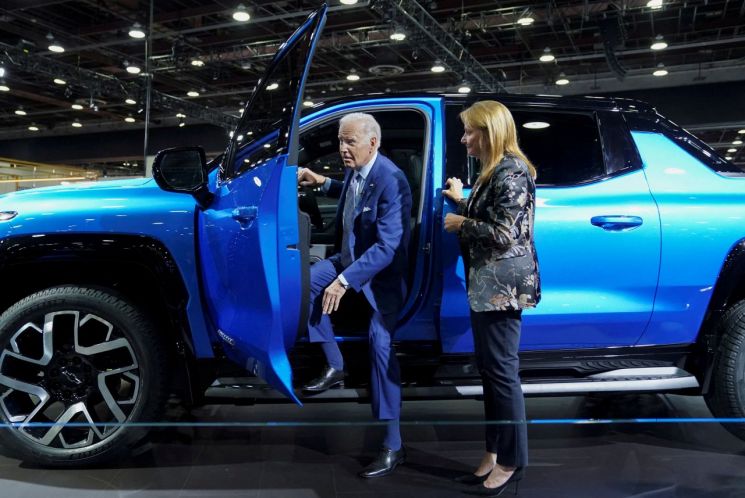 In September this year, U.S. President Joe Biden, who attended the Detroit Auto Show, is seen stepping down from Chevrolet's electric pickup truck. Next to him is Mary Barra, Chairwoman of General Motors. The United States has shown a strong commitment to fostering the electric vehicle and battery ecosystem, with President Biden personally taking the lead. This year, the adoption rate of electric vehicles is increasing at the fastest pace.
 Although the U.S. is home to Tesla, the world's largest EV manufacturer, EV adoption there has been slower compared to China and Europe in the past. However, neighboring Canada and Mexico, as well as South Korea and Europe, have been active markets with high EV demand, leading to increased export volumes. This year, the situation has changed. While U.S. EV exports slightly decreased compared to last year, imports from overseas doubled. Tesla appears to have focused more on meeting domestic demand rather than exporting production from the U.S. to overseas markets as domestic demand increased.
However, it is uncertain whether this trend will continue next year. Under the Inflation Reduction Act (IRA), a tax credit of up to $7,500 (approximately 10 million KRW) is not available unless the final assembly is done locally or the battery raw material content meets certain criteria. Except for U.S. manufacturers like General Motors (GM) and Ford and some foreign brands, most do not meet these conditions. For automakers without local U.S. factories, it is likely they will redirect supply to other markets with higher demand rather than the U.S. market, where price competitiveness is weakened.
© The Asia Business Daily(www.asiae.co.kr). All rights reserved.



















