Exchange Rate Falls from Over 1400 Won to 1300 Won Range
Import Price Burden Eases but Export Slowdown Persists
Signs of 'Recession-Type Surplus' Due to Weakened Export Competitiveness
Post-Next Year Consumption Decline Poses Challenge... Chinese Economy Variable
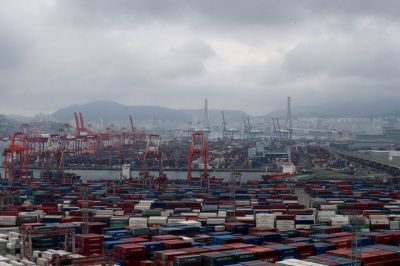 Containers loaded with import and export cargo are piled up at Busan Port's Sinsundae Pier and Gammam Pier. [Image source=Yonhap News]
Although the won-dollar exchange rate has fallen to the 1,300 won range, a red light has been lit for our economy as high U.S. interest rates and economic slowdown are expected to continue next year. Even if the current account records a surplus this year due to the decline in exchange rates and international oil prices, it is analyzed that maintaining a surplus will not be easy next year when the economic slowdown triggered by interest rate hikes becomes full-fledged.
According to sources inside and outside the Bank of Korea on the 19th, uncertainties at home and abroad have increased due to the U.S.'s high-intensity tightening and the prolonged Ukraine crisis, making it virtually difficult to achieve the Bank of Korea's initial annual current account surplus target of $37 billion. Considering that the accumulated surplus until September was about $24.1 billion, a monthly average surplus of about $4.3 billion is required for the remaining period, which is not easy given the current domestic and international economic conditions.
In September, the current account recorded a surplus of $1.61 billion (about 2.25 trillion won), but many analyses suggest this is close to a 'recession-type surplus' caused by a decrease in import volume due to falling international oil prices. A recession-type surplus means that although the economy is not doing well, the current account surplus is generated because imports decrease more than exports. After the 2008 financial crisis, a recession-type surplus was also experienced as exports and imports both declined simultaneously due to the global crisis.
Recently, as the won-dollar exchange rate returned to the 1,300 won range, there is an analysis that the burden on raw material import prices may decrease, but since export conditions are not good, the trend after the second half of the year is expected to be similar. In September, the surplus shrank to 15% of the level a year earlier, and exports decreased for the first time in 23 months.
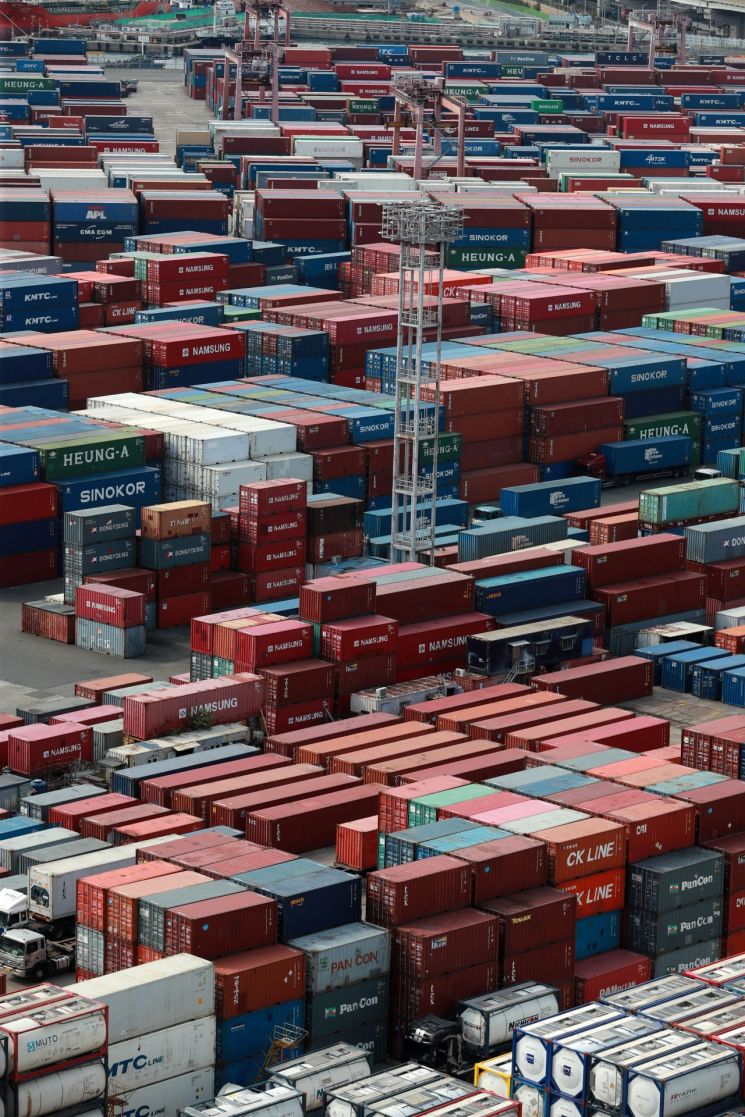
Since South Korea is highly dependent on exports, the recovery of exports is important going forward, but there are many variables such as the easing of China's quarantine measures, growth trends of major countries, the rebound of the IT sector, and the flow of energy prices including international oil prices, making predictions difficult. Hwang Sang-pil, head of the Economic Statistics Bureau at the Bank of Korea, explained that even the current account outlook for October is difficult to predict due to insufficient basic data. The Bank of Korea is likely to revise downward its annual current account target for this year this month.
The possibility of the won-dollar exchange rate rising again is also a burden on our economy. The U.S. consumer price index (CPI) for October rose 7.7% year-on-year, below expectations, causing the exchange rate, which had been above 1,440 won, to recently fall sharply to the 1,300 won range. However, recent tightening remarks from Federal Reserve (Fed) officials and heightened geopolitical tensions between Russia and Ukraine have caused increased volatility.
Inside the Bank of Korea, there is an analysis that China's political and economic situation will have a significant impact on South Korea's current account trend next year. China is South Korea's largest export market, but due to COVID-19 lockdowns and semiconductor self-sufficiency policies, exports have recently been declining. According to the Bank of Korea, exports to China based on customs clearance in September decreased by 6.5% year-on-year, marking the fourth consecutive month of decline.
A Bank of Korea official said, "For now, the domestic economy is relatively sound because domestic consumption supports it after COVID-19, but the problem will arise after consumption weakens due to high interest rates in the third quarter of next year," adding, "Depending on the extent of economic stimulus policies implemented by Chinese authorities, there will be a significant impact on our exports and economy."
© The Asia Business Daily(www.asiae.co.kr). All rights reserved.


















