Starting with Public Research Institutes, Is the Wave of Abolishing 'Blind Recruitment' Coming to the Private Sector?
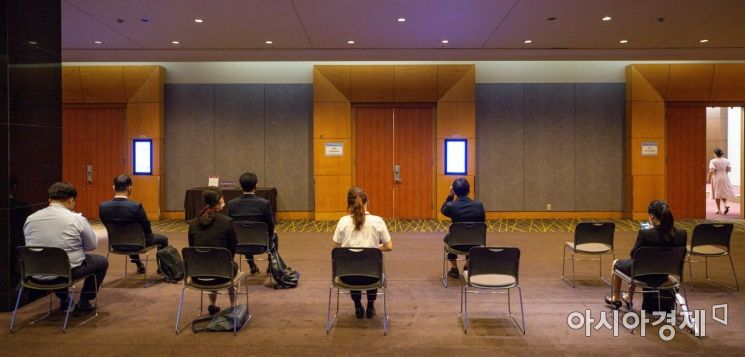
[Asia Economy Reporter Park Sun-mi] The Korea International Trade Association (KITA) will abolish blind recruitment starting next year.
According to the business community on the 18th, KITA decided not to adopt the existing blind recruitment method for hiring new employees from next year, following the completion of the final executive interviews for the "2023 New Employee Recruitment" schedule. They are currently reviewing detailed evaluation methods for the change in recruitment procedures.
Under the existing recruitment method, applicants do not write their alma mater, region, or GPA on the application form during the first stage of document submission. If an applicant includes such information, points are deducted during evaluation. Eligibility criteria for general positions, except for certain fields such as legal affairs, asset management, and information and communication, do not impose restrictions on education level, major, gender, or age. After passing the first written test, which evaluates basic work skills and general trade knowledge, candidates are hired through interviews.
However, there have been criticisms that this recruitment method has limitations in hiring suitable talent. Accordingly, the "2024 New Employee Recruitment" method to be applied from next year will abolish the blind recruitment system, moving toward allowing detailed information such as courses taken and GPA to be disclosed in advance, including education and major.
This change by KITA aligns with the growing sentiment that blind recruitment should be abolished starting from public institutions. During the previous administration, blind recruitment was mandated for public institutions to ensure "equal opportunity and fair process," but recent issues with blind recruitment have raised calls for its abolition in public research institutions. Consequently, there is a high possibility that the abolition of blind recruitment will spread from public research institutions to economic organizations and private companies.
Last month, President Yoon Suk-yeol stated at a meeting of the National Science and Technology Advisory Council that blind recruitment is an obstacle to securing excellent researchers and announced a policy to first abolish blind recruitment in public research institutions. Following government policy, 25 government-funded research institutes in the science and technology sector will also stop applying blind recruitment when hiring researchers starting next year.
Jung Manki, Vice Chairman of KITA, explained, "Blind recruitment allows employers to evaluate applicants based on limited information, which can cause side effects due to information asymmetry. This does not mean selecting candidates from specific schools, but rather seeking more information necessary to hire talent suitable for the job."
© The Asia Business Daily(www.asiae.co.kr). All rights reserved.
!["I'd Rather Live as a Glamorous Fake Than as a Poor Real Me"...A Grotesque Success Story Shaking the Korean Psyche [Slate]](https://cwcontent.asiae.co.kr/asiaresize/183/2026021902243444107_1771435474.jpg)
















