9 out of 10 Jeonse Deposit Guarantee Incidents Occur in the Seoul Metropolitan Area
Apartment Jeonse Price Ratio Nationwide 75.4%, Seoul 63.5% ... In Sejong, Jeonse Price > Sale Price
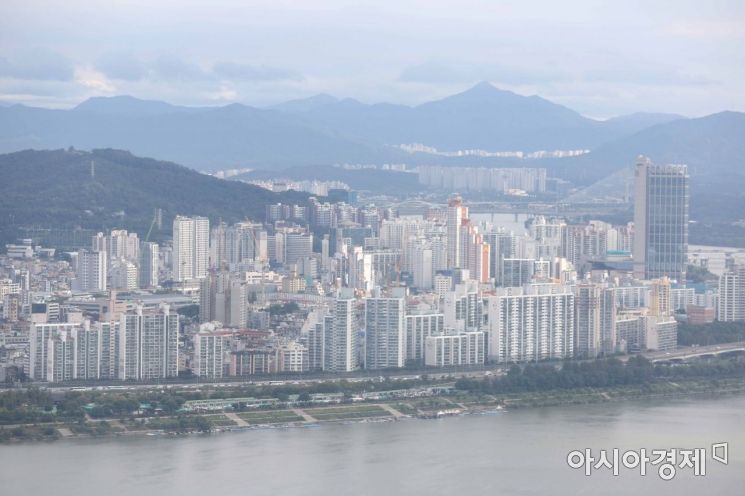
[Asia Economy Reporter Kim Junran] The amount of deposit refund accidents where jeonse tenants failed to receive their deposits from landlords reached an all-time high last month.
According to the 'Lease Market Siren' released on the 16th by the Korea Real Estate Board through Real Estate Tech, the amount of jeonse deposit accidents nationwide in October was 152.62455 billion KRW. This is a 39% increase compared to 109.8727 billion KRW in September. During the same period, the number of accidents increased by 34%, from 523 to 704 cases, and the accident rate rose by 2.0 percentage points from 2.9% to 4.9%.
Among the total 704 deposit accidents, 652 cases (92.6%) occurred in the Seoul metropolitan area. Seoul had the highest number with 239 cases, followed by Incheon (222 cases) and Gyeonggi (191 cases). Among the 25 districts in Seoul, Gangseo-gu recorded the highest number of deposit accidents with 93 cases. This was followed by Guro-gu (27 cases), Dongjak-gu (21 cases), Yangcheon-gu (19 cases), and Geumcheon-gu (16 cases). There were 52 deposit accidents in the provinces.
Deposit accidents are counted based on cases where tenants fail to receive their jeonse deposits within one month after terminating or ending the jeonse contract, or cases where auctions or public sales occur during the jeonse contract period and tenants do not receive their deposits after distribution.
Last month, the nationwide apartment jeonse price ratio was 75.4%, up 0.2 percentage points from 75.2% in September. The jeonse price ratio is the ratio of the jeonse price to the sale price. When this ratio is high and the jeonse price approaches or exceeds the sale price, the risk of tenants losing their deposits to landlords increases.
The jeonse price ratio is surveyed based on actual transaction data over the past three months as of the given month. By region, areas such as Hamangun in Gyeongnam (96.2%), Pohangbuk-gu in Gyeongbuk (94.4%), Gumi in Gyeongbuk (92.0%), and Sacheon in Gyeongnam (90.1%) showed jeonse price ratios exceeding 90%, indicating high risk.
The average apartment jeonse price ratio in the Seoul metropolitan area slightly rose to 70.6% from 70.4% in September. The average apartment jeonse price ratio in Seoul increased from 63.2% to 63.5%. Jung-gu in Seoul had the highest jeonse price ratio at 81.4%, followed by Gangseo-gu (75.8%), Jongno-gu (72.2%), Gwanak-gu (71.8%), and Dongdaemun-gu (71.1%).
The nationwide jeonse price ratio for multi-family and row houses slightly decreased from 83.4% in September to 82.2%. In Seoul, the jeonse price ratios for multi-family and row houses in Gwanak-gu (92.7%) and Gangbuk-gu (91.2%) exceeded 90%. In the provinces, some areas saw jeonse prices surpass sale prices. Sejong rose sharply by 25.1 percentage points from 91.7% in September to 116.8%. Osan in Gyeonggi also surged by 20.4 percentage points from 87.2% to 107.6% during the same period.
© The Asia Business Daily(www.asiae.co.kr). All rights reserved.
![Clutching a Stolen Dior Bag, Saying "I Hate Being Poor but Real"... The Grotesque Con of a "Human Knockoff" [Slate]](https://cwcontent.asiae.co.kr/asiaresize/183/2026021902243444107_1771435474.jpg)
















