Lee Supports Passage by Visiting Minnochoong
Justice Party Lawmakers Relay Protest
Opposition Declares Solidarity with Labor
Ruling Party Opposes Illegal Strikes and Conflict Promotion
"Bill That Undermines Industrial Balance"
[Asia Economy Reporters Koo Chae-eun, Geum Bo-ryeong, Kwon Hyun-ji] As the Cargo Solidarity and six public sector unions plan to proceed with a general strike on the 24th and 25th, the Yellow Envelope Act (amendments to Articles 2 and 3 of the Labor Union Act), which prohibits holding unions liable for losses caused by strikes, has once again emerged as a contentious issue in the political arena.
With a public hearing scheduled for the 17th and a bill subcommittee meeting on the 22nd, the Yellow Envelope Act has become a point of sharp confrontation between the government and ruling party and the opposition. The Democratic Party and the Justice Party are pushing for the passage of the Yellow Envelope Act, while the People Power Party strongly opposes it, calling it a "law that disrupts the balance of industry."
On the 16th, Lee Jeong-mi, leader of the Justice Party, held a "relay solo protest by lawmakers" at the National Assembly Rotunda, urging the enactment of the Yellow Envelope Act. Lee emphasized, "The Yellow Envelope Act is the minimum measure to create safe workplaces for all of us," adding, "The passage of the Yellow Envelope Act is necessary to protect powerless workers from the bombarding damages lawsuits."
Lee Jae-myung, leader of the Democratic Party, who visited the Korean Confederation of Trade Unions (KCTU) the previous day, also supported the passage of the Yellow Envelope Act. When the KCTU stated that amendments to Articles 2 and 3 of the Labor Union Act are their core demands, he responded, "(These are) issues that the Democratic Party has already selected as major tasks."
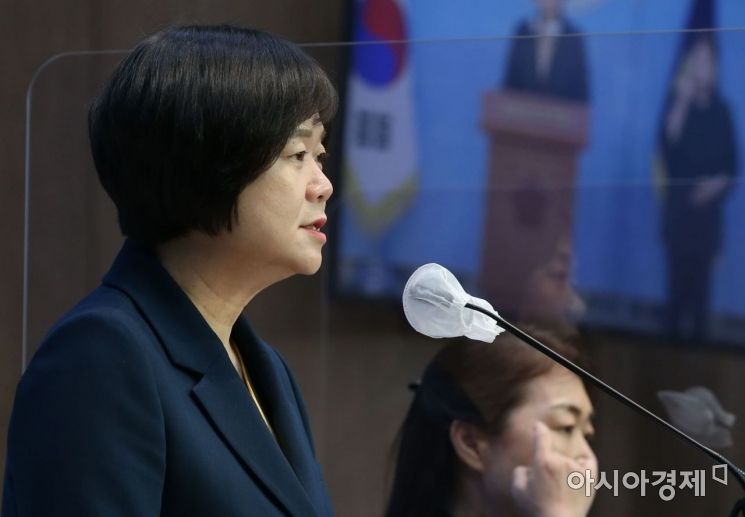 Lee Jung-mi, former leader of the Justice Party, is declaring her candidacy for Incheon mayor at the National Assembly Communication Office on the 19th. Photo by Yoon Dong-ju doso7@
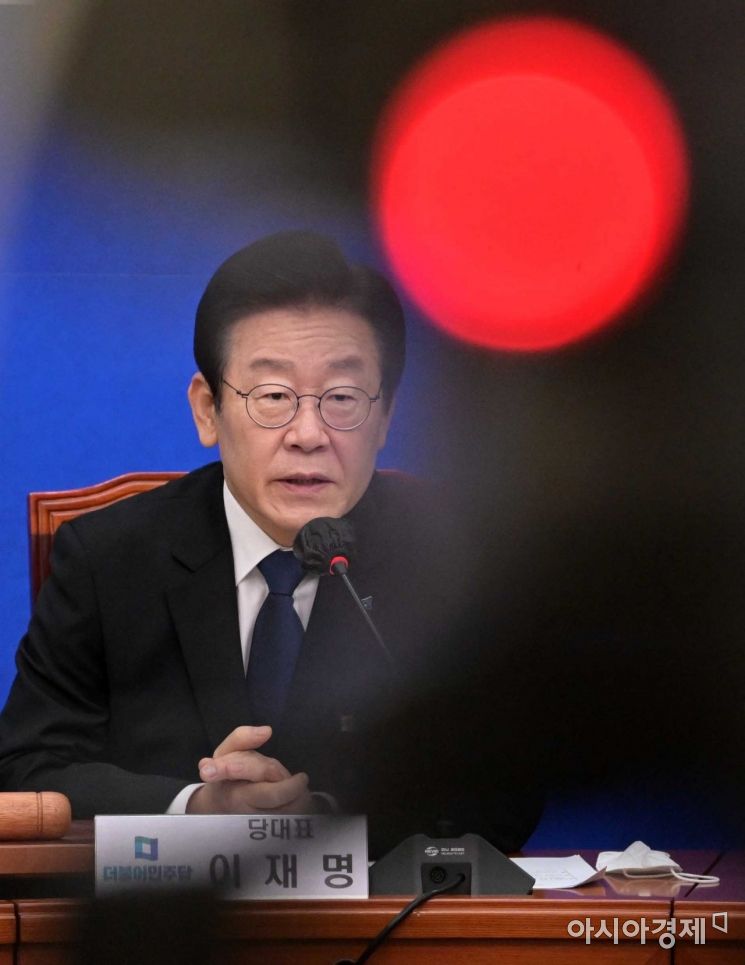 Lee Jae-myung, leader of the Democratic Party of Korea, is attending the Supreme Council meeting held at the National Assembly on the 9th and delivering opening remarks. Photo by Yoon Dong-joo doso7@
Currently, the Democratic Party’s Environment and Labor Committee members are reviewing the specific issues of the Yellow Envelope Act. A party policy committee official explained, "While maintaining the stance that ‘the scope of lawful strikes should be expanded,’ we are examining whether platform workers can be included within the scope of employers and whether illegal acts that do not involve violence should be considered lawful," adding, "We are reviewing the details of the system so that it does not appear as a law protecting militant unions from a legal sentiment perspective."
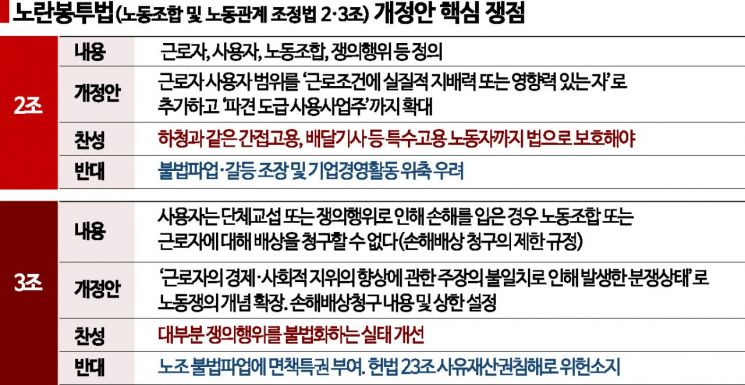
The Yellow Envelope Act primarily aims to restrict claims for damages or provisional seizure related to strike actions. The key provisions are in Articles 2 and 3 of the Labor Union and Labor Relations Adjustment Act. The amendment to Article 2 broadens the definitions of workers, employers, and the scope of strike actions. It includes adding "persons with substantial control or influence over working conditions" to the definition of employer or expanding it to include "dispatching or subcontracting employers." Article 3 also broadens the concept of labor disputes to include "disputes arising from disagreements over claims for improving workers’ economic and social status." The intent is to improve the current situation where most strike actions are deemed illegal. It also includes provisions to limit claims for damages related to illegal strike actions.
The People Power Party holds an uncompromising opposition stance. They argue that the law could encourage illegal strikes and conflicts, weaken corporate management activities, and potentially violate Article 23 of the Constitution concerning private property rights, raising constitutional concerns.
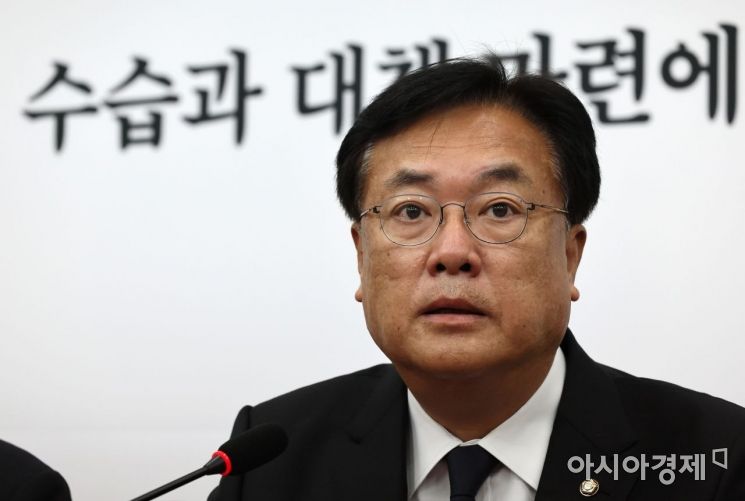 Jeong Jin-seok, Emergency Response Committee Chairman of the People Power Party, is attending the Emergency Response Committee meeting held at the National Assembly on the 31st and delivering opening remarks. Photo by Yoon Dong-joo doso7@
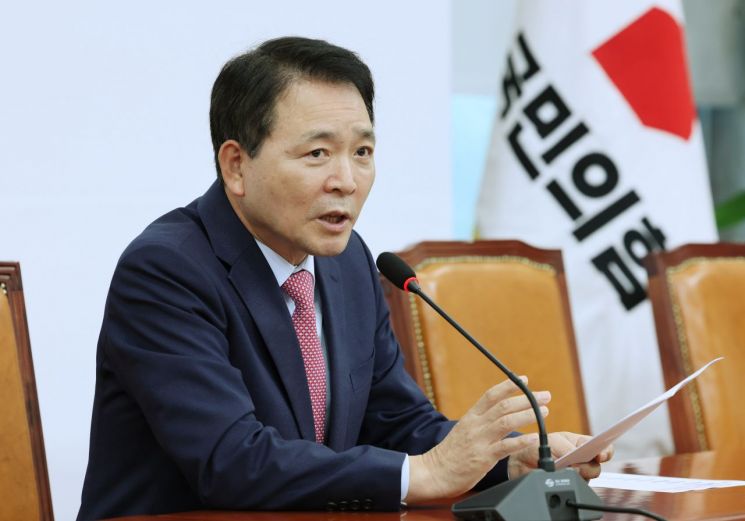
On the same day, Sung Il-jong, chairman of the People Power Party’s Policy Committee, said in a back briefing after the "Regulatory Reform Meeting for Fair and Reasonable Construction Sites," "The Yellow Envelope Act is a law that disrupts the balance of industry and is absolutely unacceptable," adding, "We will continue to consult with the Democratic Party to prevent damage to the national economy." A People Power Party Environment and Labor Committee official also stated, "At this point, there is no room for amendment or detailed adjustment of the bill; we are unconditionally opposed," and "Unless the Democratic Party fast-tracks the bill, it will be blocked from passing even at the bill subcommittee stage."
Through the meeting, the People Power Party expressed its stance to respond strictly to illegal strikes. Regarding the Cargo Solidarity strike, Chairman Sung refrained from commenting, saying, "There has been no discussion," but showed a tough stance on illegal strikes. After the meeting, when asked by reporters whether there were specific requests from the industry regarding illegal acts by construction unions, he said, "We heard such requests today, and about 400 cases have been reported to the task force (TF) to eradicate illegal acts at construction sites, which is a serious problem," adding, "The law must be observed at any site, anywhere. If illegal acts or legislative power disrupt the balance of many industrial sites, it would be problematic."
Kim Jeong-jae, the ruling party’s floor leader on the National Assembly Land, Infrastructure and Transport Committee and a member of the People Power Party, also said at the meeting, "Illegal acts at unionized construction sites have gone beyond limits, and anger is at its peak," adding, "While improvements in labor conditions and rights must be constitutionally protected, acts that obstruct construction through illegal means must be strictly punished through law enforcement."
© The Asia Business Daily(www.asiae.co.kr). All rights reserved.



















