Man in 30s Arrested for Distributing 3,000 Deepfake Porn Videos on Telegram
Detection Rate of Deepfake Distribution from Last Year to August This Year at 45.83%
Investigation Difficult Despite New Deepfake Punishment Law... Mainly Distributed from Overseas
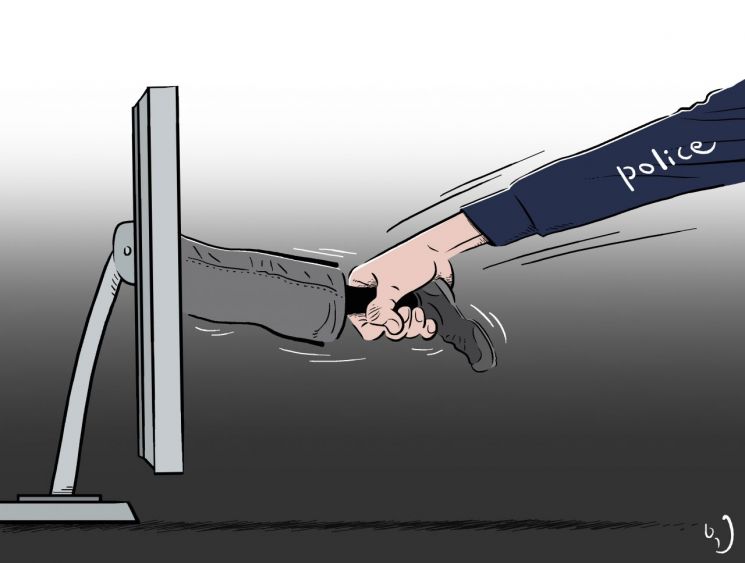
[Asia Economy Reporter Kim Jung-wan] Despite the rapid increase in damages caused by new types of digital sex crimes such as the distribution of 'deepfake sexual false videos' that misuse AI technology as well as synthesis, there are concerns that the response system remains insufficient.
According to the Jeju Police Agency on the 16th, a man in his 30s, Mr. A, who is suspected of producing and selling deepfake videos (violations of the Special Act on the Punishment of Sexual Crimes and the Act on the Protection of Children and Juveniles from Sexual Abuse), was recently sent to the prosecution.
From August 2020 until last month, Mr. A created over 3,000 videos by synthesizing photos of celebrities or children and adolescents' faces onto illegally downloaded pornographic material using deepfake technology. He is accused of selling these videos to members recruited through Telegram chat rooms for $30 per person per month.
Deepfake is a video editing technique that uses AI technology to synthesize the face or specific parts of an existing person. According to data submitted by the Korea Communications Standards Commission (KCSC) to Heo Eun-ah, a member of the National Assembly’s Science, Technology, Information and Broadcasting Committee from the People Power Party, since the enactment of punishment regulations for false videos in June 2020, the KCSC has issued correction requests and self-regulation measures for a total of 637 sexual false videos as of August this year.
Although the number of measures taken has increased every year, the arrest rate is less than half. The number of KCSC measures was 548 in 2020, 2,988 last year, and the number processed up to August this year already reached 2,821, which is below last year's total. On the other hand, according to police data, among 264 cases of deepfake false video distribution from last year to August this year, only 121 cases were arrested, resulting in an arrest rate of 45.83%.
In response to the increasing damage caused by deepfake pornographic materials, related laws were amended in 2020 to establish provisions punishing the 'distribution of false videos.' According to Article 14-2 of the Special Act on the Punishment of Sexual Crimes, known as the 'Deepfake Punishment Act,' if videos targeting a specific person's face, body, or voice are edited, synthesized, or processed in a way that can induce sexual desire or shame, the offender may face imprisonment of up to five years or a fine of up to 50 million won.
However, there are still limitations as investigations are not easy. Due to the nature of the crime, victims find it difficult to discover or recognize the damage, and even if they report it, it is challenging to respond to social networking service (SNS) companies with servers overseas. According to the KCSC, 99.8% of self-regulation and 91.9% of correction requests involve overseas sites.
Regarding this, Assemblywoman Heo emphasized, "As media and communication technologies rapidly develop, related crimes are also increasing. Therefore, investigative authorities must quickly grasp and respond to related technological trends by fostering specialized personnel, establishing dedicated departments, and building international cooperation networks to prepare proactive measures."
© The Asia Business Daily(www.asiae.co.kr). All rights reserved.
![Clutching a Stolen Dior Bag, Saying "I Hate Being Poor but Real"... The Grotesque Con of a "Human Knockoff" [Slate]](https://cwcontent.asiae.co.kr/asiaresize/183/2026021902243444107_1771435474.jpg)
















