Long Delays in Administrative Procedures like Permits... Only "Under Review" Responses
Private Businesses and Local Residents Suffer and Complain Greatly
Previously Agreed Terms Overturned, Review Requests Rejected
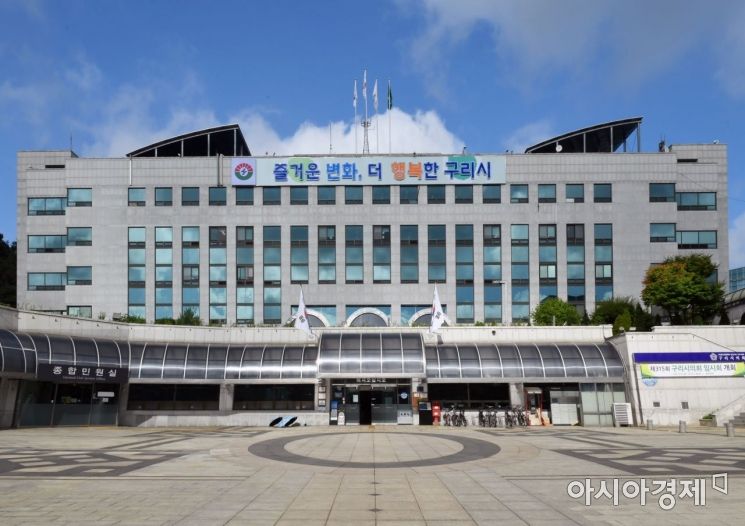
[Asia Economy Reporter Ra Young-cheol] Since the inauguration of Baek Kyung-hyun's administration in Guri City, major local development projects have come to a halt due to prolonged delays in administrative procedures such as permits and approvals, causing growing dissatisfaction among private developers and residents of the development areas.
The 'Eco Community Construction Private Investment Project,' 'Han River Riverside Urban Development Project,' 'Landmark Tower,' and 'I-Tower Construction Project' are representative victims.
There are also concerns that payments to service providers are being postponed until after project financing (PF), which could negatively impact the economy.
In particular, the 'Guri I-Tower Construction Project' has been delayed by six months beyond the original schedule, causing the private developer's losses to snowball.
However, Guri City, which should be responsible for the damages caused by the permit delays, is merely standing by without taking action.
The private developers aimed to apply for building review reflecting the traffic impact assessment results starting from May this year.
However, the Guri City Traffic Administration Department repeatedly rejected the submission of the traffic impact assessment for review, making the construction start date uncertain, and the building review scheduled for July is also in limbo.
This situation arose because Guri City, which holds the permit authority, unilaterally overturned previously agreed-upon terms.
A vehicle entrance and exit must be installed on the west side of the project site, but since there is a high school opposite, the private developer submitted the traffic impact assessment report based on the prior agreement with Guri City.
Previously, Guri City agreed with the private developer to install the vehicle entrance and exit on the north side, citing minimal disruption to surrounding traffic and based on related laws (Article 25, Paragraph 4, Item 7 of the Enforcement Decree of the National Land Planning Act).
However, after the current mayor Baek Kyung-hyun was elected in the June 1 local elections, Guri City revoked the agreement based on the law.
Kim Hyung-seop, head of the Traffic Facilities Team, said, "We do not have information on this matter, so it is difficult to provide an answer," and added, "It would be better to inquire with Guri Urban Corporation or the City Urban Development Department," avoiding a specific response.
Subsequently, the city rejected the resubmitted review application that had been changed according to the guidelines and added a condition that had never been mentioned before: "Obtain permits and approvals for the connection between the buffer green space and the sidewalk first."
However, when notified that "permits and approvals for the buffer green space connection are impossible without land ownership," the developer attempted to resubmit the application changed according to the original guidelines but was refused.
This is the third time in six months that the traffic impact assessment review application has been rejected or denied. Each time, the process was stalled with the excuse of "under review."
The private developers said, "If we were to assign responsibility, many issues would arise, but right now, the greater problem is the damage to our partners," and added, "The urgent task is to pass the traffic impact assessment review as soon as possible to reduce risks."
Ultimately, the risks and losses are borne entirely by the private developers, who are relatively disadvantaged.
With all permits and approvals either rejected or indefinitely delayed, the estimated losses for private developers amount to hundreds of billions of won.
Under the current system, local government heads exercise almost unlimited authority to the extent that they are called "regional kings."
However, there is a structural problem in that they face almost no checks and balances. They hold personnel authority over local government officials, budget allocation rights amounting to thousands of billions of won, and various permit and approval powers.
An anonymous Guri City official, A, said, "Most permit and approval powers are effectively held by higher-ups, so employees just follow orders."
This is why it is inevitable to suspect that the powerful local government head might have ulterior motives to benefit personally.
The 'Guri I-Tower Construction Project,' a public-private joint project with a total budget of 322.6 billion won, aims for completion in 2027.
However, it remains stuck at the traffic impact assessment stage, which is considered the actual start of the project.
© The Asia Business Daily(www.asiae.co.kr). All rights reserved.

















