Estonia and Denmark Introduce Tax Bill on Methane Emissions from Livestock Farms
Methane Has 80 Times Greater Climate Warming Impact Than Carbon Dioxide
Top 5 Global Meat Processors and Top 10 Dairy Companies Among World's Top 10 Greenhouse Gas Emitters
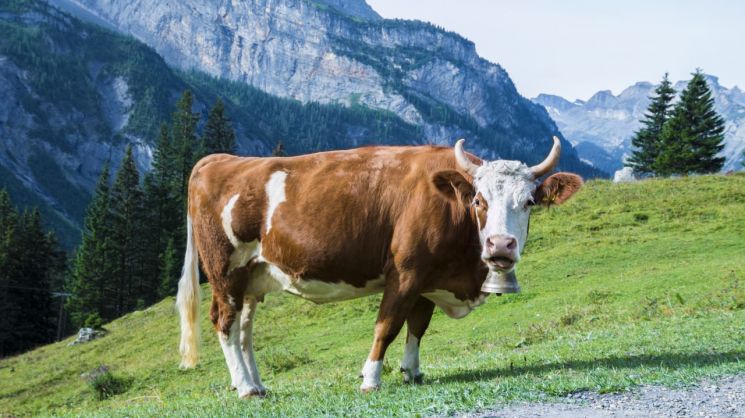
[Asia Economy Reporter Park Hyun-joo] The amount of methane gas emitted by the world's top five meat processing companies and top ten dairy companies exceeds 80% of the total emissions of European Union (EU) member countries. As methane gas released through livestock burps, flatulence, or manure is identified as a major cause of global warming, some countries such as Estonia and Denmark have introduced so-called 'cow fart tax' laws that impose taxes on methane emissions from livestock farms.
On the 15th (local time), the UK Guardian cited data analyzed by the think tank Institute for Agriculture and Trade Policy (IATP) and the environmental organization Changing Markets Foundation (CMF), reporting that the methane emissions from these 15 companies exceed those of several major countries such as Russia, Canada, and Australia. This accounts for 11.1% of global livestock-related emissions. Shefali Sharma, head of IATP's Europe office, said, "It's truly shocking," adding, "We cannot allow these few companies to raise so many livestock."
The researchers explained in the report that due to poor statistical data from the relevant companies, it was difficult to measure greenhouse gas emissions accurately, but they estimated methane emissions based on publicly available data on production volume by company and livestock farming status by region.
The report analyzed, "If these 15 companies were considered a single country, they would be the 10th largest greenhouse gas emitter," and "Their methane emissions exceed those of oil companies such as ExxonMobil, BP, and Shell." In particular, the world's largest meat processing company, JBS, emits more methane than the combined emissions of livestock farms in Germany, France, Canada, and New Zealand. The world's second-largest meat processor, Tyson, and the largest US dairy cooperative, Dairy Farmers of America (DFA), emit methane amounts comparable to livestock farms in Russia and the UK, respectively.
However, a DFA spokesperson responded via email, stating that the comparison of methane emissions between their company and UK livestock farms "is not a comparison based on the same standards and is aimed at sensational headlines," and added, "Our company is doing its best to address climate change." JBS and Tyson did not respond to interview requests.
Methane has long been identified as a major contributor to climate warming. According to the United Nations, methane emitted through livestock burps, flatulence, or manure has 80 times the warming effect of carbon dioxide and is increasing at an accelerating rate over a short period.
In this regard, some countries are considering imposing a so-called 'cow fart tax' on livestock farms to reduce national greenhouse gas emissions. Following Estonia, which imposed a fart tax on livestock farms since 2009, Ireland, Denmark, and others have also introduced related legislation.
New Zealand, the world's largest dairy country with 10 million cows and 26 million sheep, plans to finalize a greenhouse gas emissions trading scheme by December. Revenues from the law will be used for agricultural research, development, and consulting services. The legislation includes measures to provide incentives to farms that reduce greenhouse gas emissions and allows carbon offsetting by establishing forests on farms.
© The Asia Business Daily(www.asiae.co.kr). All rights reserved.
![Clutching a Stolen Dior Bag, Saying "I Hate Being Poor but Real"... The Grotesque Con of a "Human Knockoff" [Slate]](https://cwcontent.asiae.co.kr/asiaresize/183/2026021902243444107_1771435474.jpg)
















