South Korea National Assembly Should Promote Law to Prevent Free Riding on Network
Content Providers Must Contribute to Infrastructure Costs
Claims That YouTubers' Payments May Decrease Are Not True
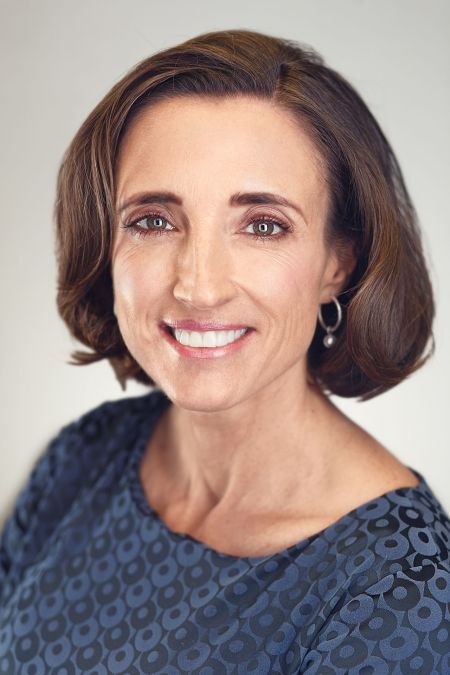
[Asia Economy Reporter Lim Hye-seon] Dr. Roslyn Layton, a telecommunications and broadcasting policy expert (Senior Columnist at Forbes USA and Professor at Aalborg University, Denmark, photo), recently advised the National Assembly’s Science, Technology, Information and Broadcasting Communications Committee that "it is right for the Korean National Assembly to promote a law preventing free-riding on networks so that Korea can maintain its status as the world’s top ultra-high-speed internet country," adding, "I hope they do not get swayed by big tech companies whose goal is to maximize their own profits." Network usage fees refer to the charges content providers pay to telecommunications operators for using the internet networks they have built.
According to the National Assembly on the 15th, Dr. Layton submitted a statement on the network free-riding prevention law to the Science Committee on the 10th, saying, "The world is paying attention to Korea’s leadership." Dr. Layton has been studying Korea’s telecommunications industry for the past decade. She stated, "Various countries, including the UN International Telecommunication Union (ITU), are stepping up to resolve issues related to network usage fees," and argued, "Just as telecommunications operators have public service obligations, content providers should also contribute to the costs related to infrastructure for end users."
Regarding the bills proposed in the National Assembly, she pointed out, "Network usage costs are not zero," and "The bills include competition law language that contracts must be made under fair and reasonable conditions without abuse of market dominance and in good faith." Dr. Layton explained, "Although there are concerns that operators might enter into contracts unfavorable to consumers, such things will not happen in Korea’s highly competitive market."
On Google’s behavior of mobilizing YouTubers to shape public opinion, Dr. Layton criticized it as "transnational activism that creates political theater to pressure lawmakers into policies favored by Google." Transnational activism refers to activities by individuals, corporations, and NGOs that operate on a global scale to structurally adjust political situations by changing national norms and practices.
She believed that Google mobilized YouTubers because it failed to change the minds of policymakers. Dr. Layton stated, "No one thinks a company with a 23% operating profit margin should be allowed to free-ride," and argued, "Google’s campaign using YouTubers is close to intimidation."
She also firmly denied claims that payments to YouTubers would decrease. Dr. Layton said, "Advertising fees received from major advertisers such as Samsung, LG, Hyundai, KT, Kia, Dongseo, GM, Amorepacific, and SK are distributed to YouTubers," adding, "Network usage fees have no relation to YouTubers’ earnings."
She pointed out that big tech companies, including Google, invest far less in infrastructure compared to internet operators’ network infrastructure investments. Dr. Layton said, "Big tech companies earned $6 trillion globally in 2020 but contributed less than 1% of their revenue to areas that can be classified as network infrastructure," and "ultra-high-speed internet providers contribute 20 to 30 times that amount."
She added, "Google prioritizes its profitability over content creators, developers, or end users," and said, "If Google truly valued content creators and end users, it would naturally want to ensure that end users can access the highest-level networks to enjoy content."
© The Asia Business Daily(www.asiae.co.kr). All rights reserved.

















