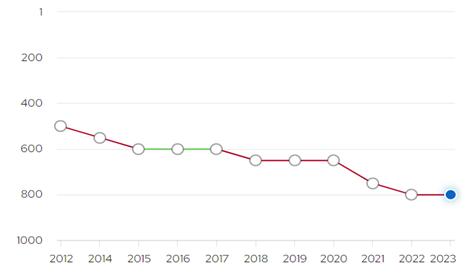
University of Seoul, QS World University Ranking Drops Sharply from Top 500 in 2012 to Top 800 in 2022... Leave of Absence Rate at 33%, 10%p Higher than Other Universities, Annual Dropout Number Reaches 300... 628.9 Billion KRW Supported by Citizens' Taxes over 10 Years Since Half-Price Tuition Implementation... Chairman Kim Hyun-gi Points Out "Time to Stop Half-Price Tuition Policy and Restore Original State"
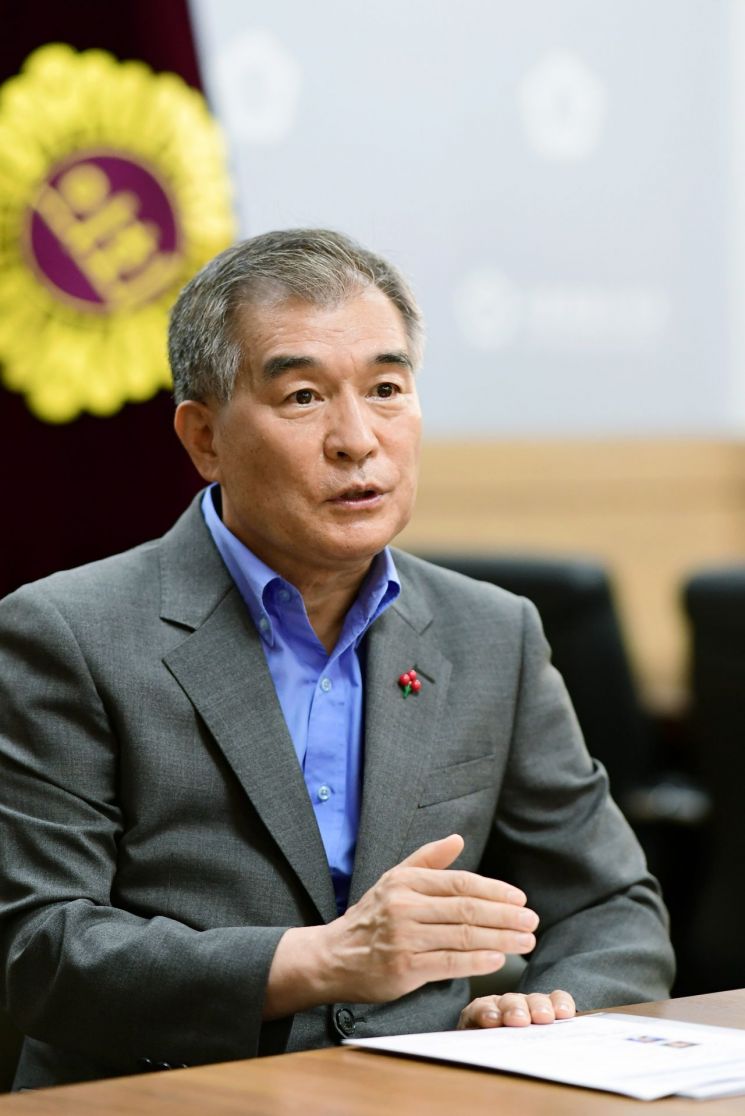
[Asia Economy Reporter Park Jong-il] Kim Hyun-ki, Chairman of the Seoul Metropolitan Council (People Power Party, Gangnam District 3rd Constituency), stated, “Since the implementation of half-price tuition at the University of Seoul, the university’s ranking has plummeted from around 500th place in 2012 to around 800th place in 2022, revealing a severe decline in university competitiveness,” and pointed out, “The half-price tuition policy should be discontinued and restored to its original state for normalization.”
Chairman Kim said, “The ratio of students on leave of absence compared to enrolled students at the University of Seoul was recorded at 32.8% (as of April 2022), which is about 10 percentage points higher than the average rate of 22.9% for universities located in Seoul. Additionally, the dropout rate has been increasing annually (3% of total enrolled students in 2022), with over 85% of dropouts leaving to transfer to other universities.”
Kim Hyun-ki revealed, “According to data submitted by the University of Seoul, the university’s ranking in the annual QS World University Rankings has dropped by about 300 places over the past 10 years.”
The University of Seoul attributes the ranking decline primarily to the “increase in the number of universities being evaluated,” but similar domestic universities have either maintained or improved their rankings.
According to QS, the domestic university ranking for the University of Seoul also fell from 15th to 23rd place. QS World University Rankings: Quacquarelli Symonds (abbreviated QS), a UK-based university evaluation organization, has been publishing annual global university rankings since 1994.
Chairman Kim stated, “In the THE (Times Higher Education) rankings, the University of Seoul’s competitiveness has also steadily declined, falling from around 300th place in 2014 to around 1200th place in 2022. In THE’s domestic university rankings, it dropped from 9th place in 2014 to 24th place in 2022.”
He further explained, “The main reasons for the low evaluations by QS and THE are that QS points out low ‘foreign student ratio’ and ‘number of papers per faculty member,’ while THE cites a lack of ‘research performance’ and ‘industry-academia cooperation.’”
Chairman Kim said, “When examining the reasons for the high leave of absence rate, only 44% are due to military enlistment, while 55% of students take leave for ‘personal reasons,’ which undermines the original intent of the half-price tuition policy to allow students to devote their part-time job hours to studying. Furthermore, over 85% of dropouts leave to transfer to other universities. Maintaining university enrollment status while studying to transfer, similar to ‘반수’ (retaking university entrance exams), disrupts the academic atmosphere, especially in the current university education environment that encourages group discussions and group assignments.”
Chairman Kim pointed out, “70.6% of full-time faculty members receive teaching hour reduction benefits, and there are six cases where nominal affiliated research institutes conducting fewer than five research projects annually have been established, with the institute heads receiving monthly allowances of 1 million KRW.”
In the first semester of 2022, 329 professors received teaching hour reduction benefits, accounting for 70.6% of the total 466 full-time faculty members. Each received an average reduction of 3.3 hours, which corresponds to a 20% reduction of the 18-hour weekly teaching responsibility for full-time faculty.
Chairman Kim criticized, “Since the implementation of half-price tuition, the support funds for the University of Seoul, which are prepared from citizens’ taxes, increased from approximately 30.5 billion KRW in 2011 to 84.4 billion KRW in 2022, a 2.8-fold increase of about 54 billion KRW, yet there has been no effort by the university itself to increase its own revenue. This is entirely a burden shifted onto Seoul citizens’ taxes (a total of 628.9 billion KRW invested from 2012 to 2022).”
He also noted that despite the legal possibility to raise tuition within the inflation rate range, the tuition has been frozen at the same amount for 10 years without any increase, resulting in an opportunity cost of at least 23.35% in tuition hikes, which has been entirely borne by Seoul citizens’ taxes.
The proportion of students from Seoul attending the University of Seoul has also decreased by about 10 percentage points, from 35% in 2012 to 26% in 2222, further weakening the justification for the city’s financial investment.
Chairman Kim pointed out, “While the promised public service returns to Seoul citizens at the time of implementing half-price tuition have been neglected, demands for support funds for university buildings and facility investments continue to increase.”
The expenditure scale of the lifelong education center operated by the University of Seoul is about 280 million KRW, which is only 60% of the operating cost of the Dong Resident Center community hall run by Dongdaemun District (450 million KRW as of 2022).
Additionally, it was found that more than 10% of the total classrooms owned by the University of Seoul are idle classrooms used less than 20 hours per week, suggesting that improving the utilization of existing facilities should take priority over constructing new buildings or extensions.
Chairman Kim Hyun-ki emphasized, “It is time to assess whether the half-price tuition has produced effects commensurate with the city funds invested over the past 10 years. This is not about raising tuition but about normalization, aiming to improve academic quality and enhance university competitiveness.”
© The Asia Business Daily(www.asiae.co.kr). All rights reserved.
![Clutching a Stolen Dior Bag, Saying "I Hate Being Poor but Real"... The Grotesque Con of a "Human Knockoff" [Slate]](https://cwcontent.asiae.co.kr/asiaresize/183/2026021902243444107_1771435474.jpg)

















