Tax Bills to be Sent Around the 22nd
Aftermath of the Failure to Introduce Special Deduction
An Additional 100,000 People Excluded Previously Now Included
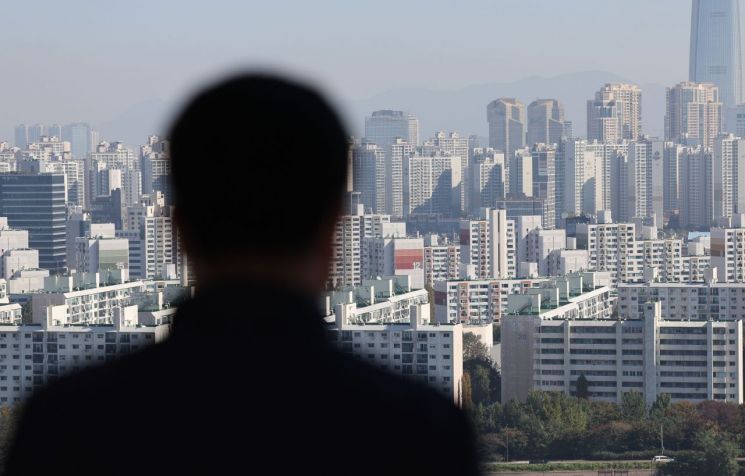
[Asia Economy Sejong=Reporters Haeyoung Kwon, Minyoung Kim] Despite consecutive declines in housing prices, comprehensive real estate tax bills totaling around 4 trillion won are expected to be sent to 1.2 million people by the end of this year.
According to the Ministry of Economy and Finance on the 14th, the government plans to send tax bills to those liable for the comprehensive real estate tax around the 22nd. Last year, the number of taxpayers was 931,000, and the tax amount was 4.4 trillion won. This year, the number of taxpayers is expected to increase by 28.9% to 1.2 million, with the tax burden expected to be over 4 trillion won, similar to last year’s level. The final number of taxpayers and tax amount may decrease by the time of billing, but it is still expected to be significant.
Previously, the government attempted to introduce a special deduction of 300 million won to ease the tax burden on single-home households, but the Democratic Party opposed it, causing the plan to fail. As a result, about 100,000 additional taxpayers have been added to the comprehensive real estate tax base, increasing the overall tax burden on single-home households by 60 billion won.
The government’s proposed reduction in the comprehensive real estate tax rate (maximum rate from 6% to 2.7%), announced through tax reform plans, is scheduled to be implemented next year even if it passes the National Assembly, meaning that taxpayers will effectively pay a similar amount of tax as last year this year. However, the opposition party’s resistance to what they call a ‘tax cut for the wealthy’ makes passing the law difficult.
However, the Ministry of Economy and Finance explained that through a revision of the enforcement decree, which does not require National Assembly approval, the comprehensive real estate tax estimated at around 9 trillion won has been reduced to about 4 trillion won. The government previously lowered the official market value ratio to the legal minimum of 60% and excluded temporary two-homeowners, inherited homes, and low-priced homes in rural areas from the housing count, recognizing them as single-home households.
With the failure to introduce the special deduction, some complexes that were previously excluded from the comprehensive real estate tax will now receive tax bills. Representative examples include Mapo Raemian Prugio (84.59㎡), Mapo Yeomni Mapo Xi (84.69㎡), and Wangsimni Tens Hill (84.92㎡), with official prices around 1.2 to 1.3 billion won. Ramian Godeok Hillstate (84.74㎡) and Gwangjang Hyundai Complex 5 (84.53㎡) will also have to pay the comprehensive real estate tax starting this year as they no longer receive the special deduction benefit.
Meanwhile, according to the Korea Real Estate Board, apartment prices in Seoul fell by 0.38% in the first week of this month (as of the 7th) compared to the previous week. This marks the 24th consecutive week of decline and the largest weekly drop since the Real Estate Board began compiling related statistics in May 2012.
© The Asia Business Daily(www.asiae.co.kr). All rights reserved.

















