Development Completed for 3000t-class Jangbogo-III Compatible Infiltration Submersible
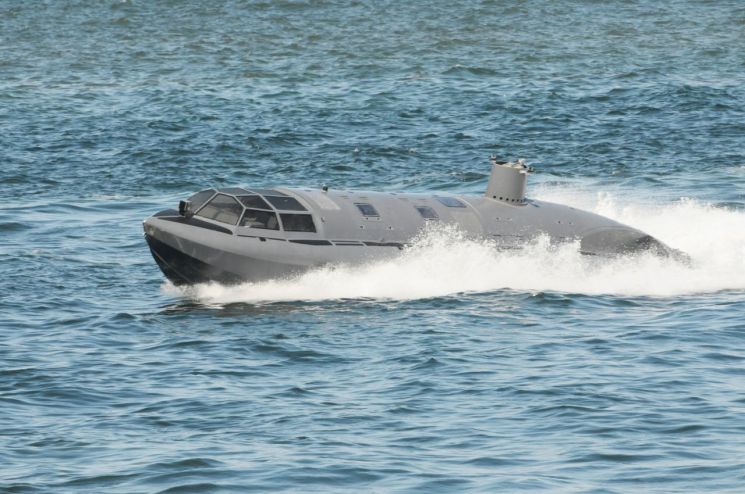
[Asia Economy Yang Nak-gyu, Military Specialist Reporter] Before the Navy introduced the Dolphin-class mini-submarines, it operated midget submarines. Vessels with submerged displacement under 500 tons are called midget submarines. The Cosmos-class special operations midget submarine, manufactured by Italy, carried a small crew and special forces personnel to conduct special missions such as reconnaissance, mine clearance, and reconnaissance operations against North Korea. The Cosmos-class special operations midget submarines were introduced in the mid-1970s, prior to the introduction of the Dolphin or Type 209 submarines. Crew members who gained experience on the Cosmos-class later became the core operators of the Dolphin-class. Subsequently, the Dolphin-class mini-submarines were introduced.
In addition to the submarine acquisition project, the Navy is also pursuing the acquisition of an '8-person midget submarine.' The midget submarine can dive up to 250 meters deep and can infiltrate the North Korean West Sea coastal area when departing from the Northwest Islands. Once developed, the midget submarine can also be deployed on the Navy’s next-generation 3,000-ton 'Jangbogo-Ⅲ Batch-2' submarines. The company developing the 8-person midget submarine is Bogo Industries.
During a recent visit, the company was busy producing various special vessels, including midget submarines. Since starting production of Navy high-speed boats in 1996, this company has produced over 332 vessels across more than 10 types, including armored high-speed boats, diver propulsion vehicles, and special infiltration boats.
At the production assembly hall, the recently developed 8-person midget submarine was revealed. The submarine’s length was less than 11 meters. Inside, eight seats for special forces personnel were installed on both sides. When the submarine is in a semi-submerged state, with half of it above water, no water enters the interior, preventing hypothermia among the crew.
However, when submerged, the interior fills with water. Special forces personnel breathe using individual breathing apparatuses, and in case of emergency, each crew member is equipped with a separate oxygen respirator. The domestically first-developed midget submarine operates solely on electric power, which offers the advantage of low noise. With an operational range of 80 nautical miles (148 km), the mothership submarine carrying the midget submarine does not need to penetrate deeply into enemy territory.
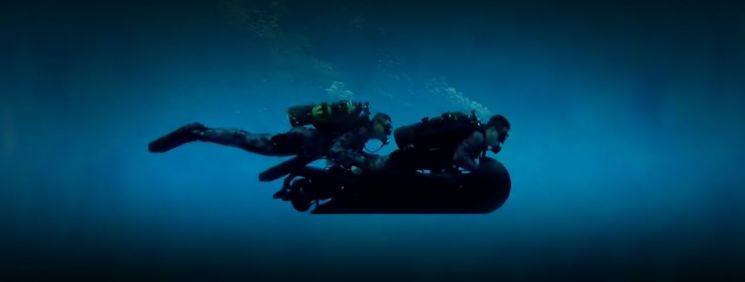
Nearby, diver propulsion vehicles caught the eye. These vehicles help special divers move quickly underwater. The propulsion vehicle resembles a drum cut in half. A company representative introduced the interior, saying, "It is designed to be as mission-focused as possible rather than having complicated functions." There are two control sticks: the right stick controls the propulsion vehicle’s direction up, down, left, and right, while the left stick controls speed. This allows divers to operate it with one hand even at depths of up to 40 meters. When folded in half, the propulsion vehicle’s size reduces to about 1 meter, making it easy to load into narrow midget submarines or submarines.
Lim Jeong-wook, Head of Sales, said, "Demand for the special vessels produced so far continues to increase in Southeast Asia and Latin American countries," adding, "We plan to produce special vessels using eco-friendly hydrogen or electric propulsion in the future."
© The Asia Business Daily(www.asiae.co.kr). All rights reserved.


















