University of British Columbia in Canada Gives $10,000 to 200 Participants from 7 Countries
Happiness of Low-Income Country Participants Receiving Money Is Three Times Higher Than That of High-Income Country Participants
"There Is No Scientific Consensus Yet on Whether Money Can Buy Happiness"
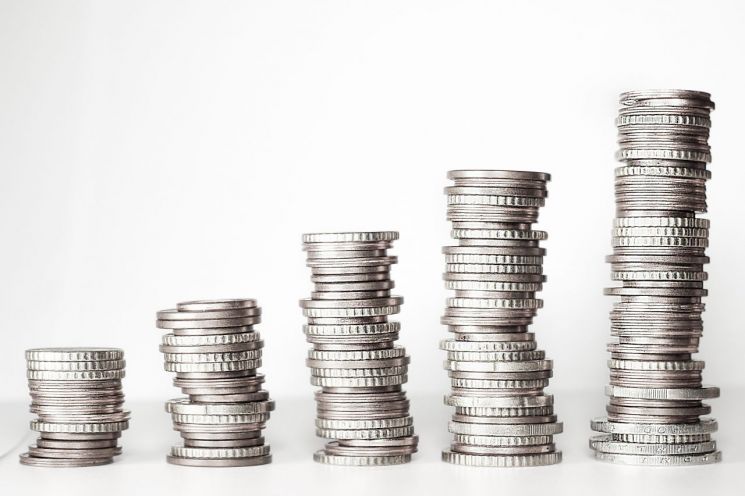
[Asia Economy Reporter Kim Hyunjung] A six-month experiment comparing people who received a windfall of $10,000 (approximately 13.21 million KRW) with a control group who did not receive the money suggested that money can buy happiness for households with an annual income of $123,000 or less.
According to NBC News on the 10th (local time), this experiment was conducted as a joint study by Ryan Dwyer and Elizabeth Dunn, doctoral students in the Department of Psychology at the University of British Columbia, Canada. The researchers partnered with TED to fund the study with money received from two anonymous high-value donors and recruited participants via Twitter. In December 2020, TED posted an advertisement on Twitter inviting people to participate in an "interesting, surprising, somewhat time-consuming, potentially stressful, but possibly life-changing 'mystery experiment.'" After several months, the selected group received an email informing them that they would receive $10,000. The money was paid in cash via PayPal.
The experiment included participants from seven countries: three low-income countries?Brazil, Indonesia, and Kenya?and four high-income countries?Australia, Canada, the United Kingdom, and the United States. Among the participants, 200 people were given $10,000, while 100 were not. Participants were asked to rate their life satisfaction on a 7-point scale and the frequency of positive or negative emotions such as happiness or sadness on a 5-point scale. Those who received $10,000 were instructed to spend all the money within three months.
As a result, after three months, the group that received $10,000 showed higher levels of happiness compared to the group that did not receive the money. Even after another three months, at the six-month mark from the start of the experiment, they reported higher happiness levels than at the beginning. However, people with an annual household income of $123,000 (approximately 162.5 million KRW) or more did not show a noticeable improvement in happiness. Additionally, the study found that participants from low-income countries who received money experienced a threefold increase in happiness compared to participants from high-income countries. Those earning $10,000 annually (approximately 13.21 million KRW) experienced about twice the increase in happiness when spending the windfall compared to those earning $100,000 annually (approximately 132.1 million KRW). This experiment was conducted to investigate the effects of wealth redistribution, and the research paper analyzing the results was published on the 7th in the Proceedings of the National Academy of Sciences (PNAS), a U.S. scientific journal.
Co-author Dwyer said, "In certain parts of the world, $10,000 can buy a lot," adding, "Some people used the money to pay off mortgages or to make major home repairs." Since participants recorded where and how they spent the money, the researchers are analyzing the data to determine which types of purchases brought the most happiness.
NBC reported that although there have been several studies on the correlation between windfalls such as lottery winnings and happiness, the results have varied across experiments. A 2019 study showed that winning a large lottery prize increased life satisfaction, but earlier studies indicated that lottery winnings did not significantly affect happiness. Regarding this, Harvard behavioral scientist Anya Yaroshevich said, "There is still no scientific consensus on whether money can buy happiness."
© The Asia Business Daily(www.asiae.co.kr). All rights reserved.

















