Daesan Literary Award Novel Category: Han Kang's 'I Do Not Say Goodbye'
Poetry - Na Hee-deok's 'The Possibilist'
Criticism - Han Ki-wook's 'The Open Path of Literature'
Translation - Han Gukhwa & Sami Rangjeraere 'Cent ombres (Baek-ui Geurimja)'
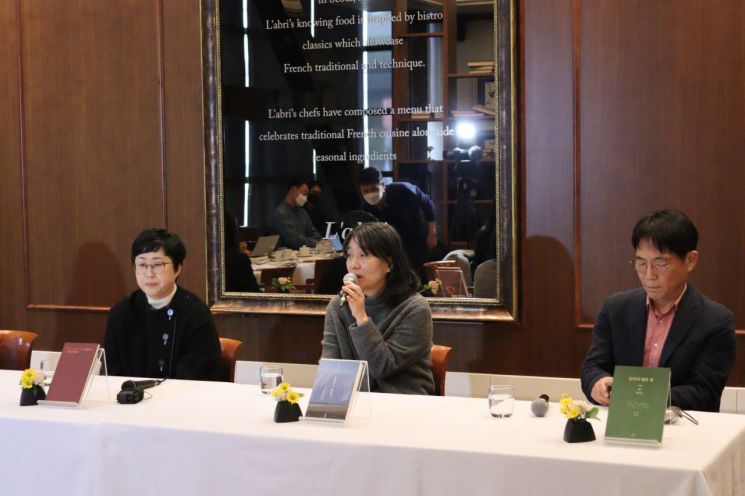
[Asia Economy Reporter Seo Mideum] “Starting from the first two pages where I wrote down the dream I had in the summer of 2014... it took exactly seven years to complete... By not giving up on this novel, I feel like I barely managed to protect myself.”
This is the sentiment expressed by author Han Kang, who won the 30th Daesan Literary Award for her novel Jakbyeolhaji Anhneunda (Farewell Does Not Happen) (Munhakdongne), which deals with the Gwangju and Jeju 4·3 incidents. At a press conference held on the 9th at a restaurant in the Kyobo Building in Gwanghwamun, she said, “By not giving up on this novel (although there were times I almost did), I feel like I barely protected myself. Perhaps this novel did not give up on me and protected me as well,” adding, “I deeply bow my head before the heart that cannot say farewell, the heart that vows not to part.”
The judging panel, composed of writers Kwon Taek-young, Bang Hyun-seok, Shin Su-jeong, Eun Hee-kyung, and Im Cheol-woo, stated in their evaluation, “We highly appreciate the resolute will to ‘not say farewell’ by connecting and intertwining the Gwangju and Jeju 4·3 incidents, mourning with their whole being the blood-stained times inherent in the life here and now.”
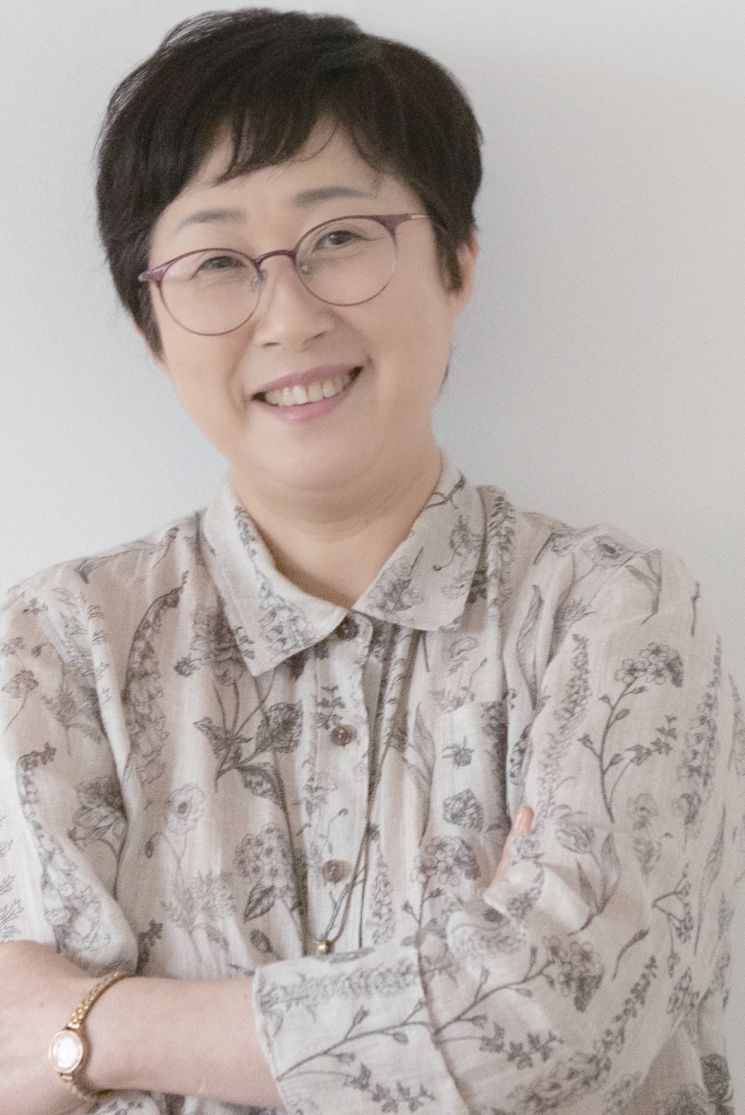
In addition to the novel category, the Daesan Literary Award also recognized winners in poetry, criticism, and translation. Poet Na Hee-deok, honored for Ganeungjuija (The Possibilist), said, “The world is still in chaos, and receiving an award for a poetry collection that writes about that pain felt like betraying my own poetry,” but added, “Nevertheless, I did not give up on poetry because of my belief that poetry is a desperate voice that testifies to and mourns reality.” The poet debuted in 1989 through the JoongAng Ilbo New Year's Literary Contest and has published works such as Puriege (To the Roots) and Geu Mari Ip-eul Muldeureotda (That Word Colored the Leaves). She currently serves as a professor in the Department of Creative Writing at Seoul National University of Science and Technology.
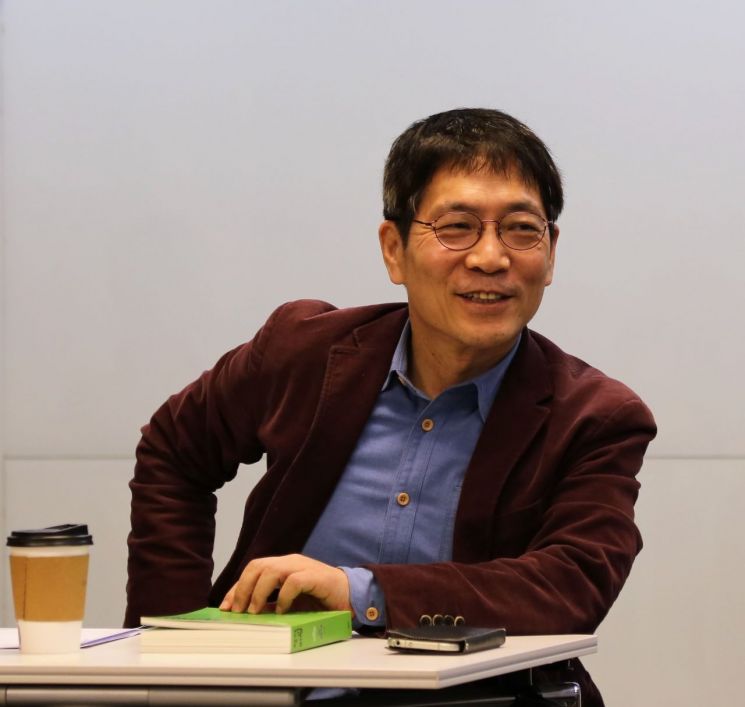
In the criticism category, critic Han Ki-wook received the award for his book Munhak-ui Yeollin Gil (The Open Road of Literature) (Changbi). He was praised for “a collection of criticism that explores the ‘road of literature’ based on practical reflections of realism that respond to reality and the spirit of the times, showing a unique dialogical concern between sensitive awareness of our reality and literary achievement.”
He said, “I simply followed the path because I loved literature, so receiving such a major award was somewhat embarrassing. However, the next moment I realized that every sentence and every thought in my writing is not solely my personal possession,” and expressed gratitude, “I thank the authors and poets who struggled to write meaningful works, fellow critics, and the colleagues and editorial staff of the quarterly Changjakgwa Bipyeong (Creation and Criticism), who worked together toward a common goal on the front lines of literature.” Han is a professor in the Department of English Language and Literature at Inje University and has published criticism collections such as Munhak-ui Saeroum-eun Eodiseo Oneunga (Where Does the Newness of Literature Come From) and Munhak-ui Yeollin Gil.
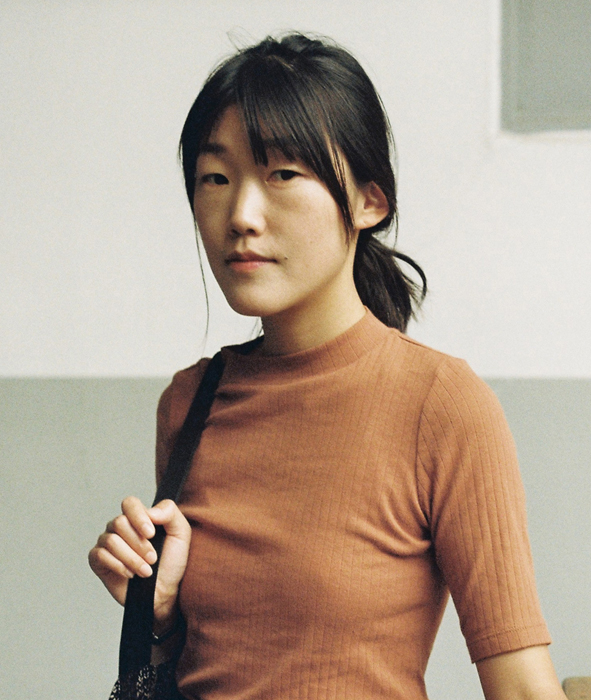
In the translation category, Koreanhwa and Sami Langeraert were awarded for their French translation of Cent ombres (One Hundred Shadows) by Samy Langeraert. The judging panel explained, “Their creative translation strategy, which enhanced readability and preserved literary qualities so that the author’s unique resonance and emotions could be well conveyed to foreign readers, received high praise.” Translator Koreanhwa earned a master’s degree in creative writing from Paris 8 University and is currently active in France.
Hosted by the Daesan Cultural Foundation, the Daesan Literary Award marked its 30th anniversary this year. Each of the four winners selected this year will receive a prize of 50 million KRW and a bronze sculpture titled Sonamu (Pine Tree) by sculptor Yang Hwa-seon. Additionally, the winning works in poetry and novel categories will be translated into major foreign languages through the 2023 translation support contest and introduced overseas.
The award ceremony will be held on the 1st of next month at 6:30 PM in the Maehwa Hall on the 19th floor of the Korea Press Center.
© The Asia Business Daily(www.asiae.co.kr). All rights reserved.



















