[Asia Economy Reporter Byeon Seon-jin] The government forecasts that the winter resurgence of COVID-19 could reach up to 200,000 cases, but expects it to be at a level similar to the summer surge. Based on this projection, the government plans to maintain the current COVID-19 prevention guidelines while increasing vaccination rates and prescription rates of therapeutics among high-risk groups.
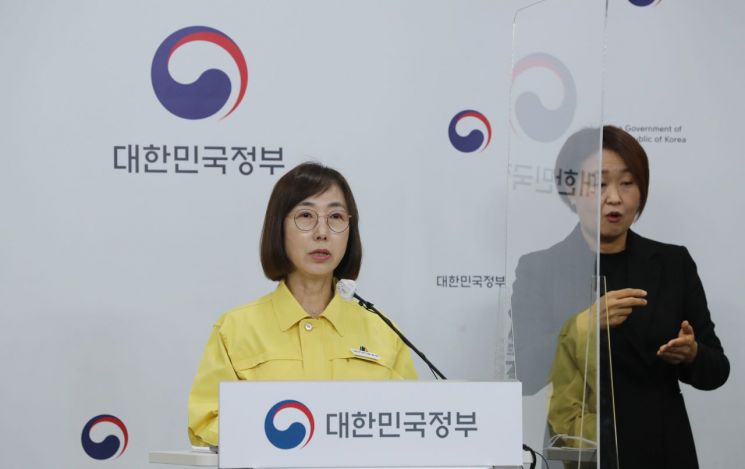
At a briefing on the 9th, the Central Disease Control Headquarters (CDCH) stated, "According to mathematical modeling results from the Korea Disease Control and Prevention Agency and private researchers, depending on scenarios such as variant emergence, the winter surge is broadly projected to range from 50,000 to 200,000 cases per day. However, unpredictable factors could cause the numbers to increase or decrease."
The government predicts that the peak of the winter surge will occur in December or later, depending on the influx of variants. They also emphasized focusing on vaccination, oral therapeutics administration, protection of infection-vulnerable facilities, and variant surveillance to curb the spread.
The CDCH stated that the quarantine and medical capacity to prepare for the winter surge is sufficient. Currently, up to 850,000 people can undergo polymerase chain reaction (PCR) testing daily, and there are 12,327 medical institutions equipped for rapid antigen testing (RAT). Approximately 6,000 dedicated hospital beds are available, with 12,000 general isolation beds being prepared. Therapeutics for 2,004,000 people have been secured, and 1,404,000 doses have been introduced.
Adults aged 18 and over who have completed their primary vaccination can receive additional winter booster shots focusing on three vaccines: Moderna and Pfizer targeting the Omicron variant BA.1, and Pfizer bivalent vaccines targeting BA.4/5. The CDCH stated, "The bivalent vaccines targeting the Omicron variant are expected to provide protection against severe illness and death, as well as some prevention against Omicron infection."
Continuation of Suspension of Pre- and Post-Arrival Testing Requirements from September and October
The government will continue to suspend the pre- and post-arrival testing requirements that were halted in September and October. However, if a new variant of concern designated by the World Health Organization (WHO) emerges or if there is a rapid increase in incidence or fatality rates in any country, that country will be designated as a "caution country" (LEVEL 2), and measures such as visa issuance restrictions and flight operation limitations will be implemented, or reintroduction of pre- and post-arrival testing will be considered. Indoor mask-wearing and the mandatory 7-day isolation for confirmed cases will be maintained until the winter surge stabilizes. The government plans to gradually ease measures such as indoor mask mandates and isolation requirements after evaluating the situation post-winter surge stabilization and consulting expert advisory committees.
COVID-19 Risk Level Remains 'Moderate' for Two Consecutive Weeks... "Will Increase Vaccination Rates Among High-Risk Groups"
On the same day, the CDCH assessed the weekly COVID-19 risk level for the first week of November as "moderate" nationwide, in the metropolitan area, and in non-metropolitan areas, the same as the previous week (fourth week of October). This is due to a three-week consecutive increase in new confirmed cases and a rise in severe and fatal cases. According to the CDCH, the weekly average daily confirmed cases increased by 27.5% compared to the previous week, reaching 42,476, and the effective reproduction number has exceeded 1 for three consecutive weeks. An effective reproduction number above 1 indicates "epidemic expansion." The number of new severe cases in the first week of November was 281, and deaths were 225, representing significant increases of 23.5% and 44.2%, respectively, compared to the previous week.
The CDCH plans to focus government and local government efforts on increasing the winter booster vaccination rate. To assist elderly individuals who have difficulty with online reservations, the government will actively cooperate with local governments to continue reservation support through administrative welfare centers. Additionally, to ensure rapid vaccination in infection-vulnerable facilities, each of the 17 provinces and cities will be encouraged to conduct on-site and visiting vaccinations, with active budget support for operating visiting vaccination teams. The government also plans to strengthen encouragement and promotion of vaccination for high-risk groups aged 60 and over and members of infection-vulnerable facilities in cooperation with related ministries, senior citizen organizations, disability associations, and local medical associations.
© The Asia Business Daily(www.asiae.co.kr). All rights reserved.
![User Who Sold Erroneously Deposited Bitcoins to Repay Debt and Fund Entertainment... What Did the Supreme Court Decide in 2021? [Legal Issue Check]](https://cwcontent.asiae.co.kr/asiaresize/183/2026020910431234020_1770601391.png)
















