Interest Rate Hikes and Corporate Bond Market Tightening
Companies Face Growing Financial Cost Burdens
Busy Selling Assets to Secure Cash
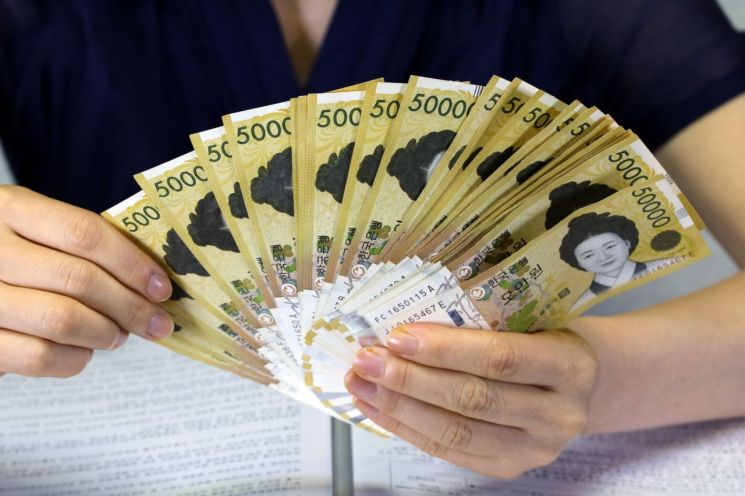
[Asia Economy Reporter Choi Seoyoon] Domestic companies are disposing of unnecessary assets and even selling core businesses to secure cash on all fronts. This is because concerns over profitability deterioration are becoming a reality amid continued consumption contraction due to the global economic downturn. With the burden of corporate bond issuance and financial institution loans increasing due to interest rate hikes, companies are opting for direct sales.
According to the industry on the 10th, SK Gas is in the process of selling its 36.49% stake in Singapore SK HOLDCO, which is investing in the Turkey Eurasia underwater tunnel project. Upon completion of the sale, approximately 143 billion KRW will be secured. SK Gas explained that this is for liquidity 확보.
Doosan Group's holding company, Doosan Co., Ltd., raised 572.2 billion KRW by disposing of 4.47% of its 34.97% stake in its subsidiary Doosan Enerbility to repay borrowings and improve its financial structure. Doosan Enerbility also sold 100% of its stake in Doosan Mecatech to Beomhan Industry and Metis Stone Equity Partners last September. The sale proceeds of 105 billion KRW will be used to enhance financial soundness. SK Square plans to dispose of its entire 28.4% stake in medical device manufacturer NanoEnTek through an over-the-counter transaction for about 58 billion KRW to secure new investment funds.
Building and land sales are also active. Mando, an automobile parts manufacturer under Halla Group, sold its Global R&D Center building in Seongnam, Gyeonggi Province for 400 billion KRW, and Hanjin Kal's Kal Hotel Network sold the Jeju KAL Hotel building and land for 95 billion KRW. STX Heavy Industries sold its Daegu factory building and land for 40.7 billion KRW, and HJ Heavy Industries sold buildings and land in Incheon for 77 billion KRW. All sales are aimed at repaying borrowings and improving financial structure.
After securing funds by selling core businesses, companies are also expanding new businesses. SKC sold its cash cow film business to Hahn & Company for 1.6 trillion KRW in June. This is part of restructuring its business portfolio to focus on secondary batteries and semiconductors and to invest funds in new growth businesses. Hyosung Advanced Materials is currently working on selling land and buildings of its Ulsan Eonyang plant. The company stated that it plans to invest the sale proceeds of 150 billion KRW in future growth engines.
Due to recent credit market tightening triggered by the Legoland incident and short-term funding market congestion, even large corporations with high credit ratings are finding it difficult to raise funds through corporate bond issuance. Professor Shin Kwan-ho of Korea University’s Department of Economics said, "Companies have traditionally raised necessary funds through corporate bonds or CP issuance, but due to recent series of incidents causing market tightening, companies are now seeking self-help measures. Since the interest rate hike trend continues, the trend of domestic companies securing cash is expected to continue until early next year."
According to the Federation of Korean Industries, 3 to 4 out of 10 large companies find it difficult to cover interest expenses with operating profits. Furthermore, if the base interest rate rises to 3%, the number of vulnerable companies increases to about 6 out of 10 (59%).
© The Asia Business Daily(www.asiae.co.kr). All rights reserved.

















