[Asia Economy (Suwon) = Reporter Lee Young-gyu] According to a survey, 69.4% of small and medium-sized enterprises (SMEs) in Gyeonggi Province are not adequately prepared to respond to the 'Carbon Border Adjustment Mechanism' (CBAM) set to be implemented next year, indicating a need for customized support such as specialized training.
Gyeonggi Province and the Gyeonggi Regional FTA Utilization Support Center announced on the 9th that this finding came from a survey on the current status of CBAM preparation conducted among companies participating in the 'Environmental, Social, and Governance (ESG) Management and Carbon Border Tax' training.
The carbon border tax is a tariff imposed on products produced or imported from countries with higher carbon dioxide emissions than the home country. The European Union (EU) will pilot the Carbon Border Adjustment Mechanism starting January next year.
Accordingly, exporters must report the carbon emissions per product. From 2026, products imported into the EU that have higher carbon emissions than those produced within the EU will be subject to additional charges.
In preparation for the implementation of the CBAM, the province has been conducting 'Environmental, Social, and Governance (ESG) Management and Carbon Border Tax Education and Briefings' since March.
Among 98 companies participating in the briefing, when surveyed about the timing of the CBAM introduction and applicable items, a majority (56%, 55 companies) responded that they 'somewhat know' about it, but regarding whether they know the amount of air pollutants emitted at their workplaces, a majority (59%, 58 companies) answered 'do not know.'
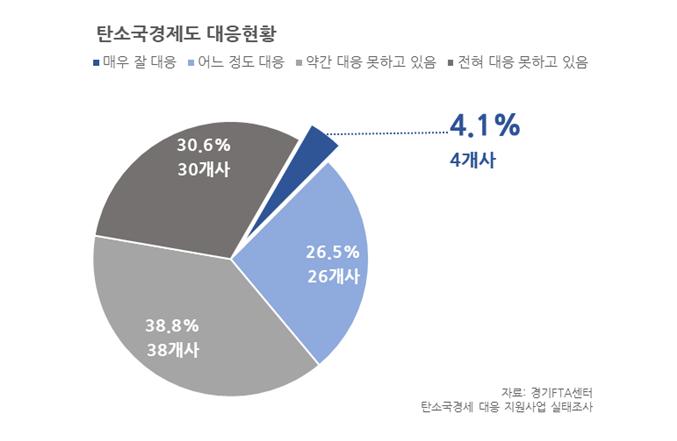
Regarding responses to the CBAM, only 4 companies (4.1%) answered that they are 'responding very well.' However, 69.4% of the responding companies stated that they are not adequately responding to the CBAM.
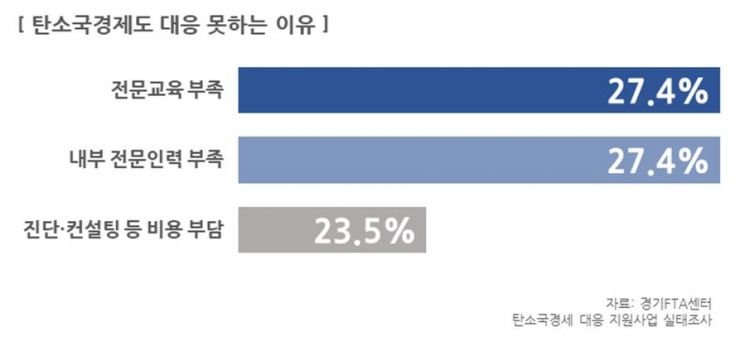
The reasons for inadequate response included ▲lack of specialized training (27.4%) ▲lack of internal experts (27.4%) ▲cost burdens such as diagnosis and consulting (23.5%).
Park Geun-gyun, Director of the Foreign Affairs and Trade Division of the province, said, "Although the necessity to respond to the carbon border tax is recognized, export companies in the province face difficulties in preparing carbon emission reduction measures due to limited access to information and lack of funds. We will actively support strengthening corporate capabilities so that they can respond to the changed trade environment."
© The Asia Business Daily(www.asiae.co.kr). All rights reserved.
![User Who Sold Erroneously Deposited Bitcoins to Repay Debt and Fund Entertainment... What Did the Supreme Court Decide in 2021? [Legal Issue Check]](https://cwcontent.asiae.co.kr/asiaresize/183/2026020910431234020_1770601391.png)