Arias Studio Secures Seed Investment from US Silicon Valley VC
DeepBrain AI Raised 50 Billion KRW Last Year... Valued at 200 Billion KRW
PlumD Wins Grand Prize at Last Month's Jeong Ju-Young Startup Competition
Global Virtual Human Market Expected to Reach Approximately 688 Trillion KRW by 2030
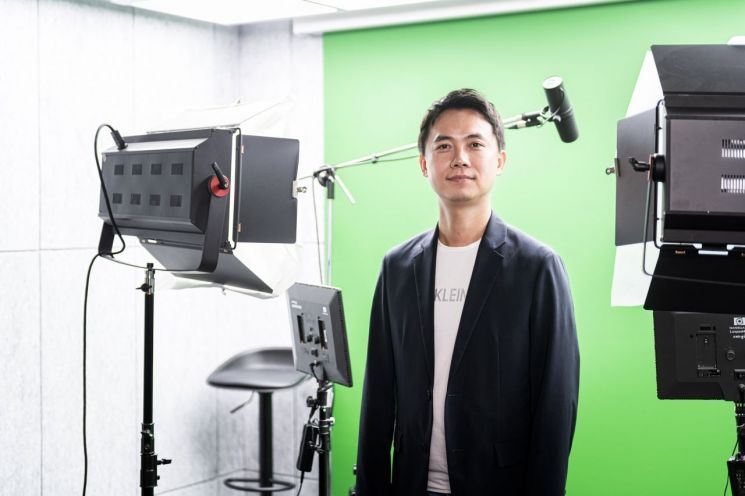
[Asia Economy Reporter Kwak Minjae] With the popularity of the metaverse gaining attention due to the novel coronavirus infection (COVID-19), startups creating virtual humans are attracting investors' interest. This is interpreted as a result of various companies utilizing virtual humans as marketing tools such as advertisements, increasing interest in companies that produce them. The global virtual human market is expected to reach approximately 688 trillion KRW in the future.
According to the industry on the 8th, AI-based content production company Ariastudio secured seed investment last month from Primer Saz? Partners, a venture capital (VC) in Silicon Valley, USA, and KB Investment. Ariastudio is an enter-tech company that produces audience-participatory content by combining an ‘AI Story Engine’ that generates virtual humans and story structures using an AI-based interactive content production pipeline with a virtual studio. Ariastudio is developing a virtual human named ‘Ari (ARii)’, characterized by a more realistic appearance and rich emotional expressions compared to existing virtual humans. It also features an ‘AI Logic’ that logically leads the story by possessing a worldview through its own interactive IP (intellectual property). The company explains that it is designed to logically produce the next situation even when multiple choices are given during the story.
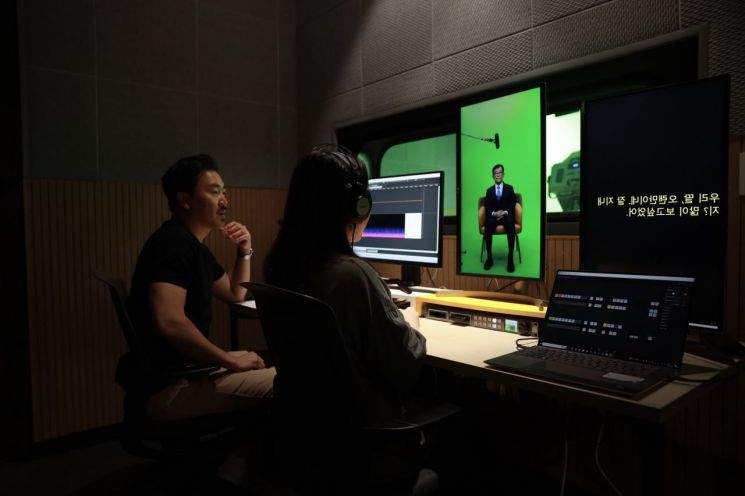
Virtual human producer DeepBrain AI raised 50 billion KRW in investment last year and was valued at 200 billion KRW. DeepBrain AI possesses world-class technology in conversational artificial intelligence (AI) utilizing deep learning-based video synthesis and voice synthesis core technologies. In particular, DeepBrain AI recently attracted industry attention by unveiling an AI human solution that creates virtual humans capable of real-time two-way communication through deep learning AI technology. A DeepBrain AI representative explained, "By utilizing AI human technology, we have implemented actual services such as AI bankers, AI tutors, AI announcers, and AI commerce, proving the marketability and technological innovation of companies in various fields, which led to the final investment attraction."
 Members of Plumd, who won the preliminary track grand prize at the Chung Ju-yung Startup Competition, are taking a commemorative photo. [Photo by Asan Nanum Foundation]
Plumd, which is developing the AI-based real-time motion recognition solution ‘Avatalk’, also won the grand prize at the Jeong Ju-young Startup Competition on the 27th of last month. Avatalk provides a solution based on technology that implements a 3D avatar mimicking the user's facial expressions and motions in real time using only one webcam by utilizing its own AI algorithm. Lee Kyung-min, CEO of Plumd, said in his acceptance speech, "We are continuously communicating with about 200 to 300 VTubers, and the majority have expressed their intention to use Plumd’s solution," adding, "We will develop technology that allows people to show their charm without prejudice."
The growth of these companies owes much to large corporations utilizing virtual humans as marketing tools such as advertisements. In April this year, KT announced a partnership with DeepBrain AI to create KT’s AI platform, Giga Genie, as a virtual human. Hyundai Motor Company is developing an in-vehicle assistant service based on virtual humans in collaboration with another startup possessing virtual human solutions, ‘Cleon’. The service is reportedly conceptualized as a personal assistant in human form on the vehicle’s display, performing roles such as weather searches, hotel and restaurant reservations, and explanations of nearby attractions.
Startup information company Startup Recipe analyzed, "Since last year, virtual human startups have begun receiving large-scale investments," adding, "As virtual influencers gained popularity among the MZ generation, interest in companies producing them increased, and large corporations’ use of virtual humans as a major means of advertising and marketing is the background for attracting investments."
The virtual human market is expected to continue growing steadily. Global market research firm Emergen Research forecasted that the global virtual human market size will grow 53 times over 10 years, from 10 billion USD (approximately 14 trillion KRW) in 2020 to 527.58 billion USD (approximately 688 trillion KRW) in 2030.
© The Asia Business Daily(www.asiae.co.kr). All rights reserved.



















