Highest Number of COVID-19 Cases in 9 Weeks
Up to 200,000 Expected in Re-epidemic
Concerns Over Bed Shortage if Respiratory Infectious Diseases Spread Simultaneously
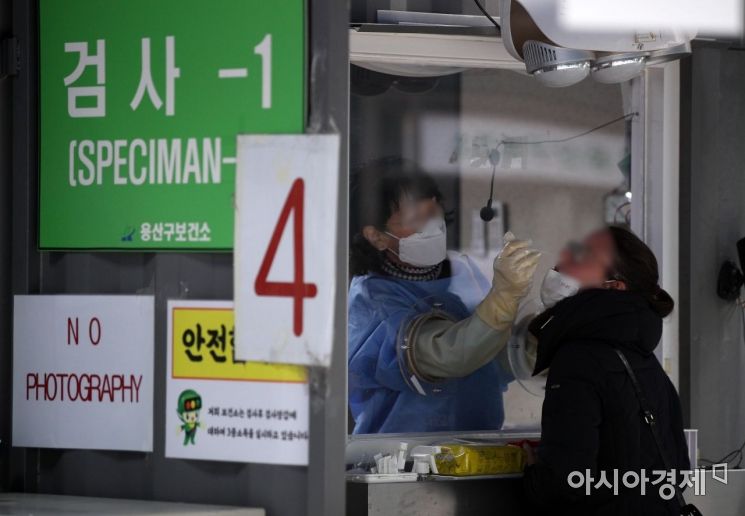 As health authorities forecast that daily confirmed cases could reach up to 200,000 during the full-scale winter resurgence, citizens are undergoing PCR tests at the COVID-19 screening clinic in Yongsan-gu, Seoul on the 7th. The Central Disease Control Headquarters reported that as of midnight that day, confirmed cases increased by 18,671, bringing the total to 25,856,910. The Monday announcement marks the fourth consecutive week of rising trends. Photo by Kim Hyun-min kimhyun81@
As the resurgence of COVID-19 this winter approaches, projections suggest that the daily number of confirmed cases could reach up to 200,000. This indicates that the peak could surpass the scale of the sixth wave last summer. Additionally, with other respiratory viruses such as influenza and respiratory syncytial virus (RSV) also spreading vigorously, concerns about a 'multidemic' are growing.
Highest in 9 Weeks Again... Winter Resurgence Imminent
According to the Central Disease Control Headquarters on the 7th, as of midnight that day, the number of new COVID-19 cases was 18,671, marking the highest Monday announcement figure in 7 weeks since September 19 (19,382 cases). The number of critically ill patients hospitalized was 365, the highest in 40 days since September 28 (375 patients). On the 6th, the number of confirmed cases was 36,675, which is 2,183 more than a week earlier (34,492) and 10,441 more than two weeks earlier on October 23 (26,234), marking the highest Sunday announcement figure in 9 weeks.
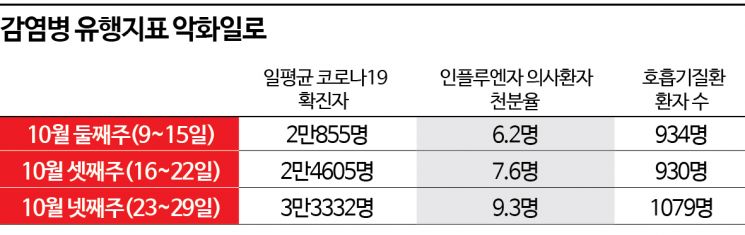
Until the first week of September, the average daily number of COVID-19 cases exceeded 68,000, then decreased to about 54,000 in the second week, 33,000 in the third week, and dropped to around 20,000 in the second week of October. However, it increased again to about 24,000 in the third week of October, about 33,000 in the fourth week, and rose to approximately 42,000 daily in the first week of November, showing a clear rebound. In just over a month, the number of confirmed cases has doubled again.
The health authorities anticipate that daily confirmed cases could reach up to 200,000 during this winter resurgence due to weakened immunity formed during the Omicron surge last March and the recent emergence of new variants. Considering that immunity gained from infection and vaccination decreases after about four months, it is estimated that 68% of the population (approximately 35 million people) already have significantly reduced immunity. On the other hand, the additional vaccination rate using the updated 'bivalent vaccine' targeting new variants is only 2.5% of the adult population as of the 4th.
Influenza Spreading Among Adolescents and Respiratory Infections Rising in Infants and Toddlers
Influenza is spreading rapidly among adolescents aged 13 to 18. According to the Korea Disease Control and Prevention Agency, during the 44th week of this year (October 23?29), the rate of suspected influenza symptoms among adolescent outpatients was 19.9 per 1,000, exceeding four times the influenza epidemic threshold (4.9). The overall rate of influenza-like illness across all age groups was 9.3, up 22.4% (1.7) from the previous week (7.6), marking the highest level since February 2020. It is analyzed that suspected cases are increasing in this age group because middle and high school students live in group settings at school but are not eligible for free influenza vaccination.
Among infants and toddlers, cases of human metapneumovirus increased by 9.3% and RSV cases by 16.5% within a week. Metapneumovirus and RSV can lead to bronchitis and pneumonia but have no clear preventive treatments like vaccines. Health authorities believe that infants aged 0 to 3 are particularly vulnerable to respiratory infections this winter because they have had almost no exposure to droplet infections since COVID-19 began. Last week, the total number of viral acute respiratory infection patients was 1,079, a 16.0% increase from the previous week (930).
The concern is that if these infectious diseases spread simultaneously, creating a multidemic, it could lead to medical gaps such as a shortage of hospital beds. Professor Eom Jung-sik of the Department of Infectious Diseases at Gachon University Gil Medical Center warned, "Each hospital must allocate respiratory isolation beds not only for COVID-19 patients but also for patients infected with influenza, RSV, and other respiratory viruses, which could worsen the shortage of beds."
© The Asia Business Daily(www.asiae.co.kr). All rights reserved.
![Clutching a Stolen Dior Bag, Saying "I Hate Being Poor but Real"... The Grotesque Con of a "Human Knockoff" [Slate]](https://cwcontent.asiae.co.kr/asiaresize/183/2026021902243444107_1771435474.jpg)

















