17.3% of Facilities Over 30 Years Old Completed Last Year
Low Infrastructure Coverage Rate... "Government Investment Is Crucial"
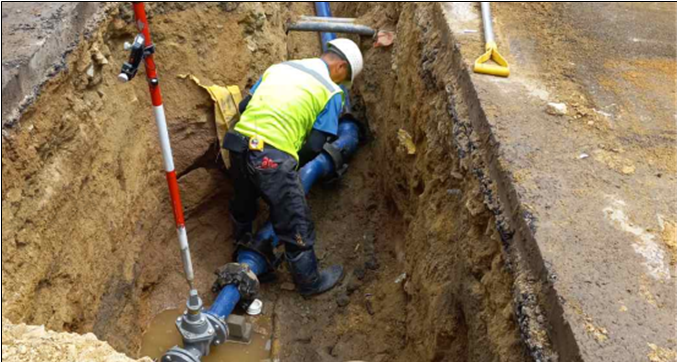
[Asia Economy Reporter Noh Kyung-jo] It is expected that within the next 10 years, 30% of aging facilities will reach 30 years since their completion. Amid a decrease in the social overhead capital (SOC) budget next year, there are calls to maintain SOC investment at an appropriate level considering the time lag and future prospects.
According to the Construction Trend Briefing (No. 897) recently published by the Korea Research Institute for Construction Industry on the 4th, as of the end of last year, out of a total of 159,847 facilities managed under the 'Facility Safety Act' in Korea, 27,602 facilities (17.3%) have been in use for over 30 years since completion. By facility type, the numbers were highest for ▲buildings (16,000) ▲bridges (6,532) ▲rivers (1,455) ▲tunnels (668), in that order.
Facilities that have passed 20 years since completion and are approaching 30 years totaled 44,569 (27.9%). Therefore, the Korea Research Institute for Construction Industry anticipates a rapid increase in aging infrastructure within the next 10 years.
The institute also pointed out the relatively low infrastructure coverage rate compared to major countries. It stated, "Although Korea has continuously invested in SOC, it is still at a lower level compared to countries like France and Germany," adding, "This is also true relative to the extent of economic growth."
According to OECD statistics, as of 2018, the SOC capital stock (total amount) combining land and air facilities was 21.5% of the gross domestic product (GDP), which is more than 5 percentage points lower than France and Germany. When including water supply and sewage facilities, the SOC capital stock was 25.0%, higher than the United States (22.3%) but still below France and Germany.
However, the government has finalized next year’s SOC budget at 25.1 trillion won, a 10% decrease from this year’s 28 trillion won. The plan is to promote expenditure restructuring and investment efficiency, reinvesting the saved funds into improving transportation convenience, technology innovation foundations, and safety assurance.
In response, the Korea Research Institute for Construction Industry emphasized that government investment will be important after the first half of next year as the possibility of economic contraction increases. It explained that improving the productivity of infrastructure investment has spatial ripple effects not only in the immediate area but also in neighboring regions.
The institute said, "Although austerity policies are necessary now, the economic situation next year could change rapidly due to economic contraction," adding, "Excessive government spending cuts could reduce the government's capacity to respond to changes in the economic environment."
It continued, "SOC investment has been proven by many studies to have effects on economic growth and income distribution," and added, "Since it contributes to reducing corporate costs, improving productivity, and enhancing the quality of life for citizens, it is necessary to maintain an appropriate level of SOC investment."
© The Asia Business Daily(www.asiae.co.kr). All rights reserved.

















