Nearly Double Increase in 5-Year Mid-Term Defense Budget
Controversy Over Possession of 'Enemy Base Attack Capability' Continues
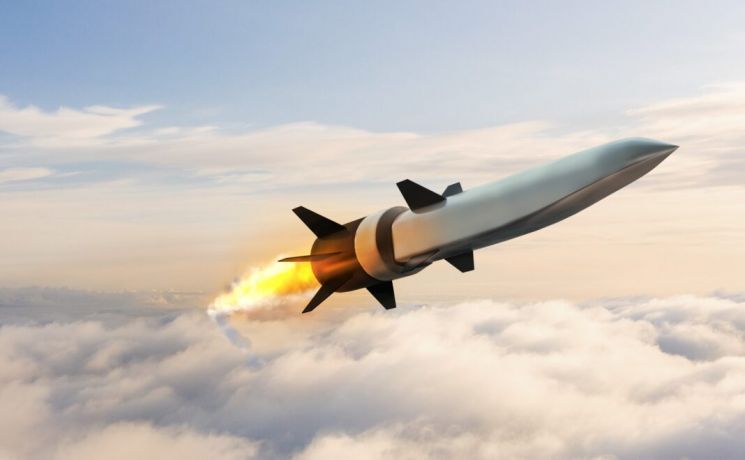
[Asia Economy Reporter Hyunwoo Lee] Japan's Ministry of Defense announced plans to strengthen deterrence against North Korea and China's successive missile and nuclear threats by considering the deployment of hypersonic missiles by 2030 and significantly extending the range of existing missiles. The Japanese government intends to completely revise its current security strategy by the end of this year, but political controversy is expected to continue over the defense enhancement measures that could undermine the principle of exclusive self-defense.
According to the Nihon Keizai Shimbun (Nikkei) on the 3rd, Japan's Ministry of Defense revealed a defense enhancement plan aimed at strengthening deterrence against missile and nuclear provocations from North Korea and China, including considering the operational deployment of hypersonic guided missiles by 2030. Along with deploying hypersonic missiles, plans are also being considered to import cruise missiles such as the Tomahawk from the United States and to extend the range of Japan's domestically developed Type 12 anti-ship missile from less than 200 km to over 1000 km.
According to these defense enhancement plans, Japan's Ministry of Defense stated that the medium-term defense budget over the next five years needs to be increased to 48 trillion yen (approximately 464 trillion won). This represents a 1.7-fold increase compared to the medium-term defense budget of 27.4 trillion yen since 2019.
To implement this increase, revisions to the three key security-related documents?the National Security Strategy, the National Defense Program Guidelines, and the Mid-Term Defense Program?are essential. The Japanese government aims to complete the revisions of these three documents by the end of this year, but political controversy continues.
In particular, public opinion is divided over the 'enemy base attack capability' that would arise from deploying hypersonic missiles and extending missile ranges. Opponents argue that these weapons, which enable preemptive strikes on enemy missile launch sites, violate Japan's long-held principle of exclusive self-defense. Concerns are also growing about an arms race and diplomatic friction with neighboring countries such as South Korea and China.
Military analyst and former Tokyo International University professor Tetsuo Maeda pointed out in an interview with the Mainichi Shimbun, "If Japan gives the impression of possessing equipment beyond the scope of self-defense, neighboring countries may increase shows of force against Japan, leading to an arms race."
© The Asia Business Daily(www.asiae.co.kr). All rights reserved.
!["The Woman Who Threw Herself into the Water Clutching a Stolen Dior Bag"...A Grotesque Success Story That Shakes the Korean Psyche [Slate]](https://cwcontent.asiae.co.kr/asiaresize/183/2026021902243444107_1771435474.jpg)
















