Over 4.32 Million People... 64% Increase Compared to the Same Period Last Year
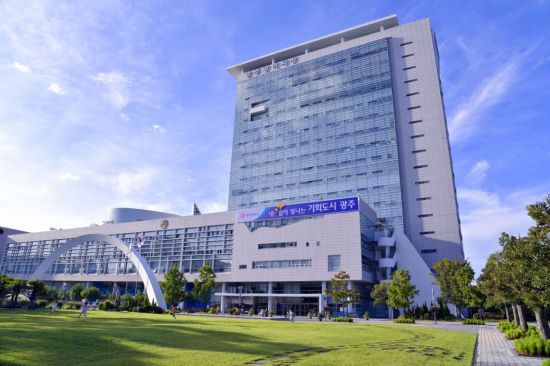
[Asia Economy Honam Reporting Headquarters Reporter Yoon Jamin] The number of tourists visiting Gwangju Metropolitan City up to the third quarter of this year reached 4,323,977, far surpassing the total number of tourists from the previous year.
Gwangju Metropolitan City announced on the 1st that the number of tourists in the Gwangju area for the third quarter, as counted in the major tourist site visitor statistics compiled by the Korea Culture and Tourism Institute under the Ministry of Culture, Sports and Tourism, was a total of 1,550,779.
This represents an 86% increase compared to 832,911 during the same period last year.
The cumulative number of tourists up to the third quarter of this year was 4,323,977, a 64% increase compared to 2,631,551 during the same period last year, and it far exceeded last year's annual tourist count of 3,075,106.
It is expected that by the end of the year, the number will easily surpass the pre-COVID-19 figure of 6,268,660 tourists in 2019.
Among the 42 major tourist sites in Gwangju, the number of visitors to Yeongsangang Culture Center, the May 18 Democratic Movement Memorial Hall, and the National Gwangju Museum increased significantly.
By site characteristics, the numbers were ▲Ecotourism 610,000 ▲MICE tourism 280,000 ▲Exhibitions and museums 280,000 ▲Experience tourism 150,000 ▲Historical tourism 100,000 ▲Culture and arts 59,000 ▲Lifestyle tourism 25,000.
Changes in the types of tourists are also observed. As of September this year, the average room occupancy rate of four local tourist hotels was 45%, up from 37% in 2020 and 41% in 2021.
This indicates a rapid increase in lodging tourists in Gwangju as the endemic era begins.
According to the status of tourist accommodation compensation payments in Gwangju, the total number of tourist accommodation nights up to the third quarter of this year was 2,557 nights. During the COVID-19 period, it was 880 nights in 2020 and 965 nights in 2021. The status of lodging tourists in Gwangju is gradually recovering.
The operational capacity of local travel agencies for Gwangju tourism products has also improved. Local travel agencies attracted 1,152 (19%) of the incentive tourists this year.
The amount of compensation claims by local travel agencies was 29 million KRW in 2019 and 6 million KRW in 2020, but after policy changes began, it increased steadily to 46 million KRW in 2021 and 68 million KRW in the third quarter of 2022, showing a consistent upward trend except for 2020, the first year of the COVID-19 pandemic.
Four to five years ago, local travel agencies mainly operated outbound tours (domestic tourists traveling abroad), and there was a shortage of inbound (foreign tourists visiting Korea) or intrabound (domestic tourists traveling within Korea) agencies.
However, with the establishment of the Gwangju Tourism Foundation in 2020, which supports and fosters local travel agencies (12 partner travel agencies and 17 dedicated travel agencies selected in 2022), and the increase in the city’s budget for tourist attraction compensation this year, local agencies have become interested in domestic tourism, resulting in strengthened tourist attraction capabilities.
Additionally, the main tourist destinations visited by tourists have diversified. Until a few years ago, most tourists to Gwangju aimed to climb Mudeungsan Mountain, but this year, cultural arts and historical travel such as Yangnim-dong Modern History and Culture Village, the National Asian Culture Complex (ACC), Gongyeon Maru, and Jeonil Building 245 have taken the lead. This is seen as a result of steadily expanding art tourism and cultural tourism resources.
Along with this, the recent creation of diverse nighttime tourism resources using media art, such as the ‘Geumnam Butterfly Garden’ in Geumnam-ro Park and the ‘Fountain of Light’ in the May 18 Democratic Square, is also analyzed to have contributed to the shift in tourism behavior from day trips to stay-type tourism including lodging.
October is traditionally the month with the highest number of visitors to Gwangju, and in line with this, Gwangju City is presenting various festivals and events under the theme ‘October Gwangju.’ Large-scale events such as the Nostalgic Gwangju Chungjang World Festival (530,000 visitors), Buskers World Cup in Gwangju, and Gwangju World Kimchi Festival (around 60,000 visitors) continue without interruption, and the fourth quarter is expected to see a significant increase in festival-linked tourists to Gwangju.
Kim Junyoung, head of the City’s New Vitality Promotion Headquarters, said, “The improvement in tourism statistical indicators such as the number of visitors and incentive operation status means that the revitalization of Gwangju tourism is taking place from the grassroots level. We will create a vibrant new tourism city of Gwangju that both citizens and outside visitors can feel by building various tourism infrastructures such as the upcoming Municipal Arboretum and the Yeongsangang-Hwangryong Riverside Y-Belt Exciting Project, along with developing storytelling-type tourism products that connect these infrastructures.”
© The Asia Business Daily(www.asiae.co.kr). All rights reserved.
!["The Woman Who Threw Herself into the Water Clutching a Stolen Dior Bag"...A Grotesque Success Story That Shakes the Korean Psyche [Slate]](https://cwcontent.asiae.co.kr/asiaresize/183/2026021902243444107_1771435474.jpg)
















