Decreased Attention and Concentration, Anxiety and Tension, Sleep Problems Reported
17.2% Say "Psychological Distress is Severe"
[Asia Economy Reporter Park Hyesook] A survey found that 64.6% of Incheon citizens who were infected with COVID-19 experienced mental aftereffects such as decreased concentration and lack of sleep.
Since February, Incheon City has conducted a 'mental health follow-up survey' targeting 571 confirmed COVID-19 cases in the region and announced the interim results on the 31st. This survey was conducted to prepare support measures for the daily recovery of those who experienced COVID-19 and was carried out through an online questionnaire.
According to the survey results, when asked about the degree of daily recovery, 66.7% of the 571 respondents answered "recovered a lot," followed by 21.2% "moderately," 10.7% "a little," and 1.4% "not at all."
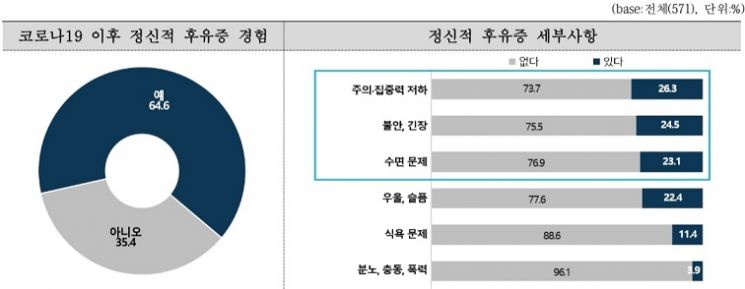
Additionally, 17.2% of all respondents reported experiencing severe psychological distress, and 64.6% said they experienced mental aftereffects.
Among the mental aftereffects, "decreased attention and concentration" was the most common at 26.3%, followed by "anxiety and tension" at 24.5%, "sleep problems" at 23.1%, and "depression and sadness" at 22.4%.
Furthermore, respondents indicated the necessary psychological support services as "support for leisure activities and cultural experience programs" at 63.4%, "awareness improvement campaign activities" at 40.8%, and "mobile counseling for COVID-19 vulnerable groups" at 39.6% in that order.
The city sent these test results to all survey participants and plans to publish a report in December after organizing the data and analyzing the results.
An official from Incheon City stated, "Stress related to health and illness has increased due to COVID-19, and the demand for psychological support services is also high. Based on the survey report, we will prepare various policies to promote mental health and support customized programs."
Meanwhile, according to data analysis by the National Health Insurance Service, the number of people visiting hospitals for mental illnesses last year was 4,058,855, an 11.9% increase compared to 2019.
© The Asia Business Daily(www.asiae.co.kr). All rights reserved.
!["The Woman Who Threw Herself into the Water Clutching a Stolen Dior Bag"...A Grotesque Success Story That Shakes the Korean Psyche [Slate]](https://cwcontent.asiae.co.kr/asiaresize/183/2026021902243444107_1771435474.jpg)
















