Thailand 'Legalization of Cannabis → Exclusion of Cannabis from Narcotics → Home Cultivation of Cannabis'
Recreational Use Allowed, Medical Use for Under 20 and Pregnant Women Still Prohibited
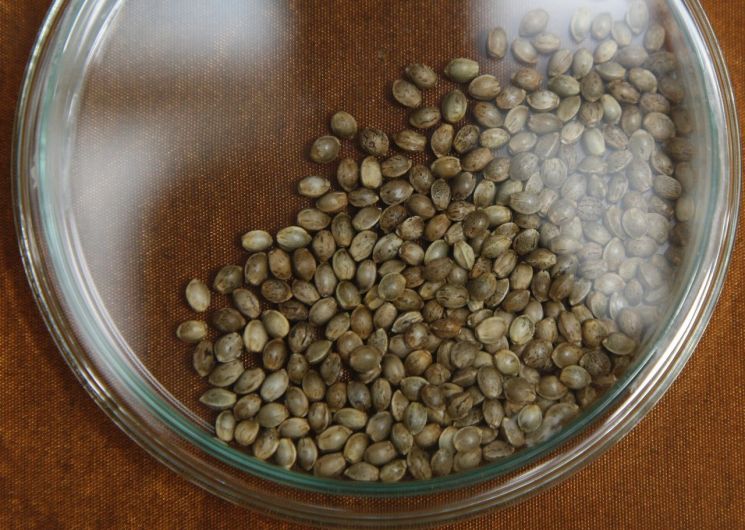 The Thai government announced on the 29th that it will allow the import of cannabis and cannabis seeds. The photo shows cannabis seeds. Photo by EPA Yonhap News
[Asia Economy Reporter Kim Hyunjung] Thailand, which legalized cannabis last June, announced on the 29th (local time) that it will allow the import of cannabis and cannabis seeds.
This announcement, made abruptly through the Thailand Ministry of Agriculture and Cooperatives Gazette, stated that cannabis and cannabis seeds meeting the following criteria can be imported from any country. The conditions for importable cannabis and cannabis seeds are ▲ Non-GMO (not genetically modified) ▲ free from organic or inorganic contaminants including soil, sand, insects, etc. ▲ importers must present an export or re-export phytosanitary certificate issued by the National Plant Protection Organization (NPPO) of the country of origin ▲ seeds must pass customs inspection by the Ministry of Agriculture. Additionally, cannabis and cannabis seeds can be imported via air, land, or sea routes.
Thailand was the first Asian country to legalize medical cannabis in 2018, and on June 9th of this year, it removed cannabis from the list of narcotics and allowed home cultivation. However, cannabis use is not permitted for everyone. Recreational use of cannabis remains prohibited, and even for medical purposes, sales to those under 20 years old, pregnant women, and nursing mothers are banned. Furthermore, all extraction, processing, sale, and import/export of marijuana require government approval, and the tetrahydrocannabinol (THC) content of marijuana or cannabis products for sale must be below 0.2%. Substances containing 0.2% or more of the hallucinogenic THC are classified as illegal narcotics.
The Thai government views medical cannabis cultivation as a promising industry expected to grow to a scale of over $3 billion (approximately 4 trillion KRW) within five years and continues to ease various regulations. Medical cannabis is used to treat rare intractable epilepsy, multiple sclerosis, and other conditions. However, concerns about cannabis abuse remain significant, so the Thai Medical Association issued cannabis prescription guidelines for doctors in July. The guidelines are as follows.
▲ Use only cannabidiol and tetrahydrocannabinol-containing extracts prescribed by doctors educated in methods of using cannabis for treatment ▲ Do not use cannabis extracts as the first-line treatment; use only when other drugs are ineffective in treating or controlling disease symptoms ▲ Do not use cannabis extracts for pregnant or nursing women or those under 25 years old as it may inhibit brain development ▲ Do not mix cannabis into food ▲ Do not use marijuana flowers medicinally as they are too potent and may harm health ▲ Do not prescribe cannabis to individuals without disease.
© The Asia Business Daily(www.asiae.co.kr). All rights reserved.
![Clutching a Stolen Dior Bag, Saying "I Hate Being Poor but Real"... The Grotesque Con of a "Human Knockoff" [Slate]](https://cwcontent.asiae.co.kr/asiaresize/183/2026021902243444107_1771435474.jpg)
















