Brian McMurray GMTCK CEO Meeting
"Utilizing Virtual Engineering Technology Throughout Entire Development Process... Shortening Period"
Electric Vehicle Lyric Mass Production Advanced by 9 Months
"Korean R&D Sites Must Reduce Redundant Tasks"
[Asia Economy Reporter Choi Dae-yeol] "As with all new technologies, failure is also a part of development. In that sense, it is important to fail quickly and safely. In the past, physical testing was emphasized, but by utilizing virtual technology, it is possible to find new solutions that were thought impossible with actual testing."
Brian McMurray, CEO of GM Technical Center Korea (GMTCK), made this remark during his keynote speech on June 28 at the Daegu International Future Mobility Expo, emphasizing the usefulness of 'Virtual Engineering' technology. GMTCK is General Motors' (GM) R&D subsidiary in Korea and is one of the largest R&D organizations GM has worldwide, excluding its U.S. headquarters. McMurray joined the Korean operation in 2019 after gaining R&D experience at various GM global sites.
As the automotive industry environment rapidly changes with electrification and autonomous driving, virtual engineering has become increasingly important in the vehicle development process. This is because development periods must be shortened amid increasingly complex driving, safety, and convenience functions.
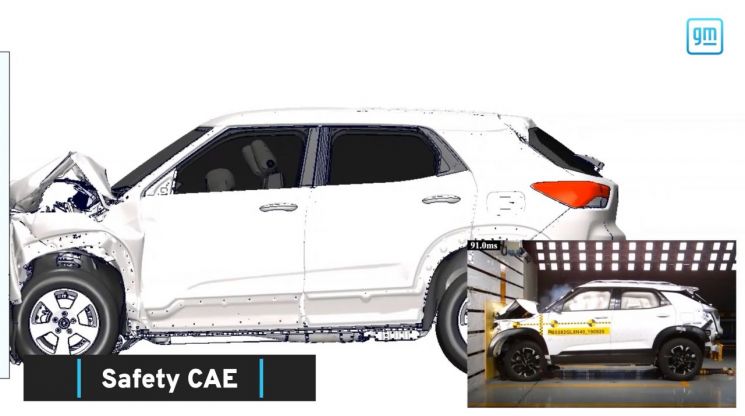
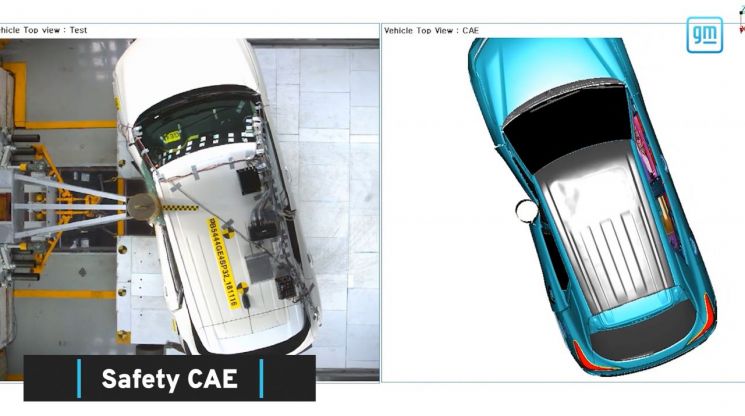
After his speech, McMurray explained at a press conference, "Some people think of (virtual engineering) only as computer-aided engineering (CAE) analysis or large-scale data utilization, but it is used in many areas, including verifying whether a product meets specified standards and quality, early development stages, and ergonomics. It was also applied to the Trailblazer developed in Korea and the compact SUV to be released next year, enabling a revolutionary reduction in the lead time required for vehicle development."
The Lyriq, Cadillac’s first electric vehicle and an SUV scheduled for domestic release next year, utilized virtual engineering and the electrification-dedicated Ultium platform during its development process, advancing its mass production timeline by about nine months from the original target. McMurray emphasized that virtual engineering also played a significant role in developing advanced driver assistance systems (ADAS) applied to GM’s autonomous driving systems, Super Cruise and Ultra Cruise.
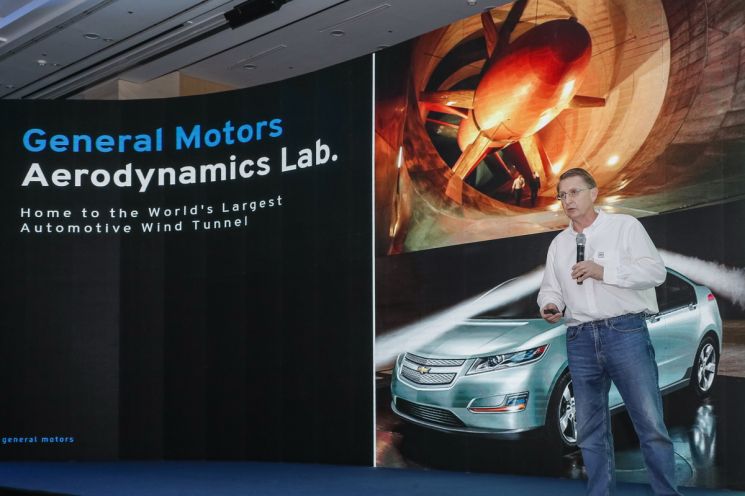 Brian McMurray, CEO of GMTCK, is delivering a keynote speech at the Daegu International Future Mobility Expo on the 28th.
 GM is known as an automaker that has segmented brands targeting different market conditions and customer bases, achieving economies of scale larger than Volkswagen and Toyota. However, GM has historically developed and introduced technologies ahead of any other company. It was the first to introduce an automatic transmission in 1940 and the first to apply a turbocharged engine to increase power in 1962. GM was also the first to introduce airbags and hands-free voice recognition systems?technologies now widely used.
At the U.S. headquarters level, GM has announced a mid- to long-term business vision called ‘Triple Zero,’ aiming to eliminate traffic accidents, carbon emissions, and traffic congestion. Electrification transition and autonomous driving technology development are major pillars. Specifically, the hardware strategy includes the Ultium platform dedicated to electric vehicles, and the software strategy is called ‘Dual Platform,’ known as Ultifi.
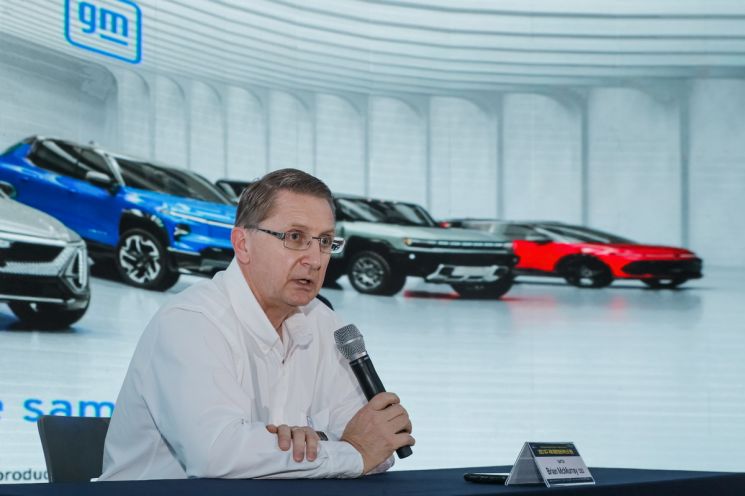
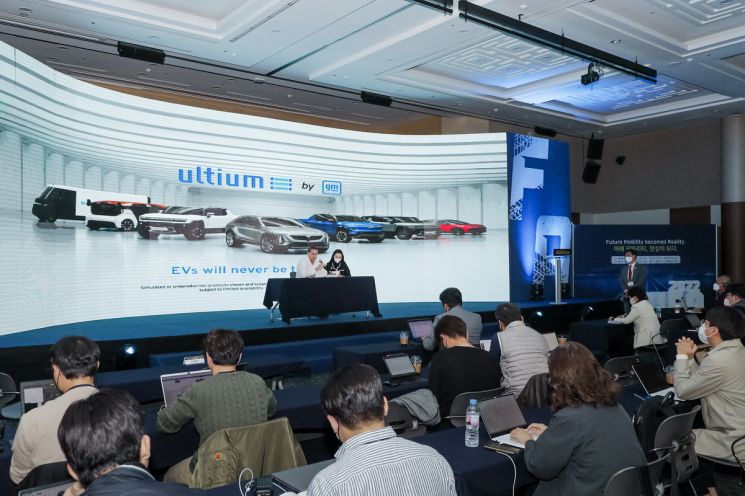 Brian McMurray, CEO, during a press conference following the keynote speech at the Daegu International Future Mobility Expo on the 28th
 Although GMTCK is one of the larger R&D organizations within GM, McMurray said there is no specific information disclosed about its concrete role in this major transformation process. Regarding autonomous driving unmanned taxis, which started in some parts of the U.S., he only mentioned that for both services and products, "we plan to collaborate with appropriate partners" for the Korean launch.
He also hinted at the possibility of restructuring. He said, "The Korean operation needs to reduce redundant tasks to improve efficiency," adding, "We aim to increase speed and efficiency in all aspects, from project initiation to efficient development program processes, within the global engineering process."
© The Asia Business Daily(www.asiae.co.kr). All rights reserved.



















