Development of Autonomous Robots Accelerating the COVID-19 Pandemic
"Over 1,000 Robots in Seoul Hotels by the Year After Next"
Indoor 'Jipgaemi' and Outdoor 'Ilgaemi' Released
Business Expansion with Robot Joint Core Component 'Dynamixel'
At Robotis, a specialized robot development company listed on KOSDAQ, a unique warm-up session takes place at the start of every meeting led by the CEO. Employees, mainly developers, share meaningful incidents they have experienced in their daily lives. Recently, one employee mentioned, "I noticed that regardless of whether the door said 'push' or 'pull,' people tended to push it." However, when a handle was installed on the door, people pulled it, and when a flat plate was attached, people pushed it with their palms.
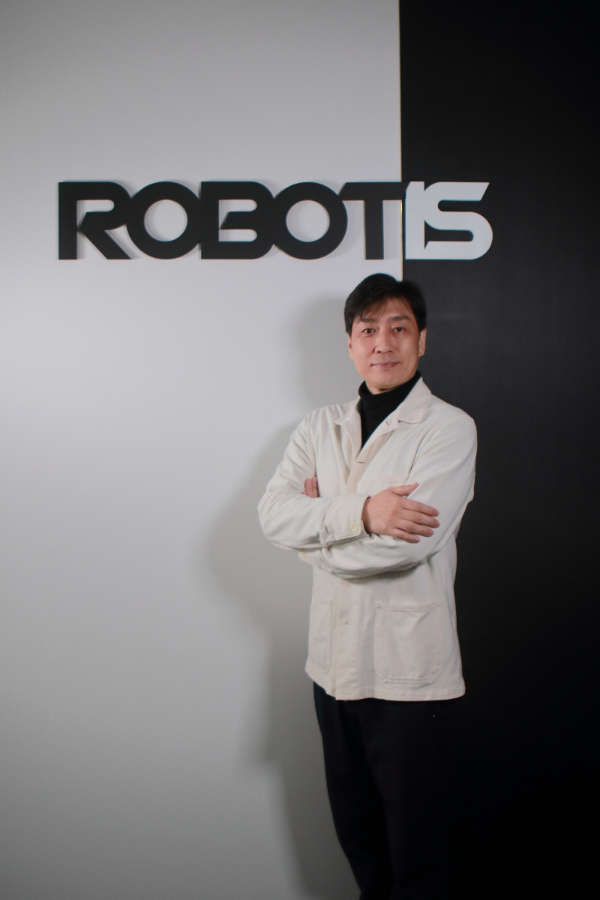
Kim Byung-soo, CEO of Robotis (pictured), said, "Even if it is not directly related to robots, we place great importance on observing and exploring people's lives." Rather than focusing solely on robot development, they take the time to look into human life and contemplate what technologies society truly needs.
The corporate culture at Robotis embodies a spirit of the humanities. CEO Kim emphasized, "Our role is to liberate humans from the shackles of labor," but also stressed, "Robots are not taking away people's jobs." He added, "People are leaving jobs, and robots are filling those positions." From manufacturing factories to delivery workers, it is a reality that companies across industries struggle to find manpower. CEO Kim envisions a world where robots replace tasks that people avoid or that are dangerous. He foresees a future where "thanks to robots, people will transform into beings who spend more time on value-added work and meaningful activities."
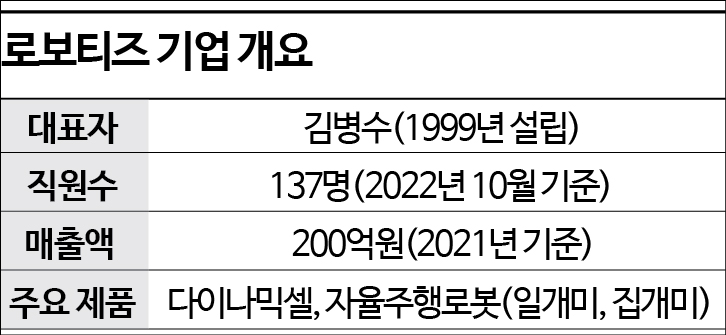
Kim, who majored in electrical engineering, is a legendary figure in the industry, having swept various domestic and international robot competitions while active in a robotics club. In 1999, he founded Robotis with the question, "Can we take robots out of factories?" and began the service robot business. At that time, service robots were an unfamiliar concept in Korea, and the market was just emerging. Robotis initially developed and produced robot toys and then continued its growth by creating robot-specific actuators (product name: Dynamixel). Actuators are key components used in robot joints and mobility devices.
By mid-next year, they plan to launch a more advanced version of Dynamixel. CEO Kim described it as an "ultra-lightweight, ultra-precise product," adding, "It is recognized for its performance and versatility enough to be applied not only to service robots but also to industrial robots." They are also paying attention to the collaborative robot market, where robots work alongside humans, not just for simple repetitive tasks.
Robotis entered the KOSDAQ market in October 2018. CEO Kim recalled, "We were the first company to be listed through a technology special listing as a service robot developer," and noted, "At that time, the preliminary listing review was much stricter and more demanding." He believes this played a positive role in improving awareness of the service robot industry, saying, "It would have been difficult to pass the review without demonstrating potential for sales growth." He also advised startups preparing for IPOs, "Once listed, it becomes a time for a real test where you must show results. You should carefully consider the timing of the listing and the current state of your company before making a decision."
Since going public, Robotis has accelerated the development of autonomous driving robots. They have released the indoor autonomous robot 'Jipgaemi' and the outdoor autonomous robot 'Ilgaemi.' The COVID-19 pandemic accelerated market demand for autonomous robots. CEO Kim analyzed, "Business success requires the convergence of technological advancement and market demand," adding, "COVID-19 acted as a catalyst for opening the service robot market, such as delivery robots."
Robot regulations remain an obstacle. "Robots are lighter than people and slower than bicycles, but they face more perceived regulations than 2-ton autonomous cars," he lamented. "Various experiences and data need to accumulate, but progress is sometimes hindered by regulations." He expressed some discouragement when thinking about competing with Chinese companies that are rapidly growing with full government support.
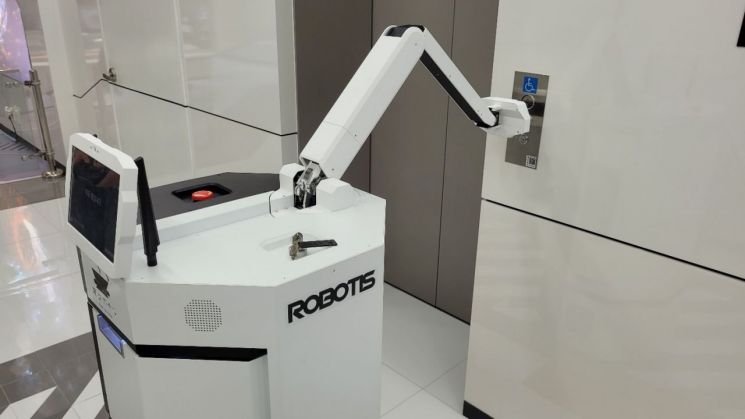
However, Robotis's hardware technology, recognized in the market, is a unique strength. In particular, their autonomous robot equipped with an arm capable of pressing elevator buttons is almost unrivaled. Other companies face difficulties because their robots lack arms and must link elevators and robots, which raises security issues. CEO Kim said, "With the hardware technology built on the foundation of existing Dynamixel actuators combined with artificial intelligence, we are confident in our market competitiveness." He added, "We have already started services in hotels in Seoul. We expect 100 units to be operating in the first half of next year and 1,000 units by 2024."
CEO Kim said, "One day, grandfathers will operate about ten food delivery robots inside their homes." He dreams of a future where, instead of delivery riders riding motorcycles to deliver food, ordinary people remotely control multiple delivery robots. He predicted, "Robots will eliminate spatial constraints and provide jobs to people in marginalized areas regardless of age or social class."
© The Asia Business Daily(www.asiae.co.kr). All rights reserved.



















