Legislative Notice for Amendments to Subordinate Laws of the National Land Planning Act and the Development Restriction Zone Act
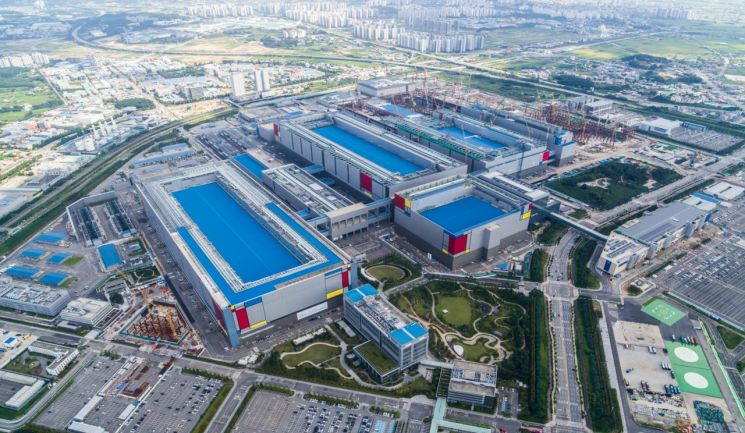
The Ministry of Land, Infrastructure and Transport announced on the 27th that it will publicly notify the amendment drafts of the "Enforcement Decree and Enforcement Rules of the Act on Planning and Use of National Land" and the "Enforcement Decree of the Special Act on Designation and Management of Development-Restricted Areas" from October 28 to December 7. These amendments reflect the institutional improvements announced in the "Semiconductor Superpower Achievement Strategy (7.21)" and the "Lease Market Stabilization Measures (6.21)" and aim to simplify various permit and review procedures.
First, to support investments such as the expansion of production facilities in national advanced strategic industries like semiconductors, the floor area ratio (FAR) of industrial complexes where strategic technology-holding companies under the "National Advanced Strategic Industry Act" are located will be allowed to be relaxed up to 1.4 times the legal limit.
As a result, the FAR in general industrial areas within industrial complexes will increase (from 350% to 490%), which is expected to increase the number of semiconductor cleanrooms (Pyeongtaek campus from 12 to 18, Yongin cluster from 9 to 12), leading to an estimated employment increase of about 9,000 people (1,000 employees per cleanroom).
Additionally, this FAR increase benefit can also be applied to strategic industries other than semiconductors, and since production facility expansions can be quickly carried out through FAR increases within existing industrial complexes, it is expected to effectively respond to the demands of various strategic industries.
When constructing newly purchased leasehold rental housing, the FAR can be relaxed up to 1.2 times the legal limit to allow more rental housing supply in existing residential areas.
Until now, the FAR relaxation regulation applied only when constructing private or public rental housing with a lease obligation period of 8 years or more. Newly purchased leasehold rental housing with a lease obligation period of 5 years or more, despite being public rental housing, did not qualify for FAR relaxation.
Accordingly, the amendment will allow all public rental housing to apply FAR relaxation up to 1.2 times regardless of the lease obligation period. This is expected to activate purchase agreement projects such as purchasing and demolishing semi-basement houses and reconstructing them as public rental housing.
The development activity permit procedure for small-scale extensions will also be simplified. Currently, when expanding factories, urban planning committee review is exempted only if the extension is within 5% of the total site area, so even minor extensions require review procedures, making it difficult to promptly proceed with development activity permits.
However, going forward, urban planning committee review will be exempted for extensions within 10% of the total site area or when the site expands within 10% due to the extension, shortening the review period (at least 60 days or more).
The approval procedure for implementation plans of urban and rural planning facility projects will also be simplified. Currently, if changes are less than 10% of the total floor area of a building, approval for the implementation plan is exempted, but when multiple buildings are extended, re-approval was required as the floor area was calculated per individual building.
In the future, if multiple buildings with the same use are extended, the total floor area of those buildings will be summed, and if changes are within 10%, approval for the implementation plan can be exempted. This will enable rapid extension and reconstruction in cases where various facilities such as amusement parks, cultural and sports facilities, and medical facilities are combined.
In development-restricted areas, if minor changes occur to facilities approved after hearing residents' opinions and review by local urban planning committees, re-approval will not be required, simplifying the procedure.
Also, when installing gas supply facilities (gas pipeline facilities) in development-restricted areas, if existing urban and rural planning facility sites such as roads are utilized underground, separate urban and rural planning facility decisions will be exempted.
By omitting the overlapping decision procedure for urban planning facilities, the time required to install gas supply facilities will be shortened, enabling rapid promotion of urban planning facility projects.
Gil Byung-woo, Director of Urban Policy at the Ministry of Land, Infrastructure and Transport, said, "This amendment is expected to help expand production facilities through smooth investment in advanced strategic industries such as semiconductors, contribute to stabilizing the lease market by efficiently utilizing existing sites and expanding the supply of newly purchased leasehold rental housing, and also alleviate public inconvenience and activate corporate investment through simplification of procedures such as development activity permits."
The full text of the amendment draft can be found on the Ministry of Land, Infrastructure and Transport website under 'Policy Data / Legal Information / Legislative Notice & Administrative Notice.' Opinions on the amendment draft can be submitted by mail, fax, or through the Ministry’s website.
© The Asia Business Daily(www.asiae.co.kr). All rights reserved.

















