Reduce unsecured loans to lower interest burden and be cautious to prevent mortgage loan delinquencies
Actively use the right to request interest rate cuts for safe conversion loans switching from variable-rate long-term mortgages to fixed-rate mortgages
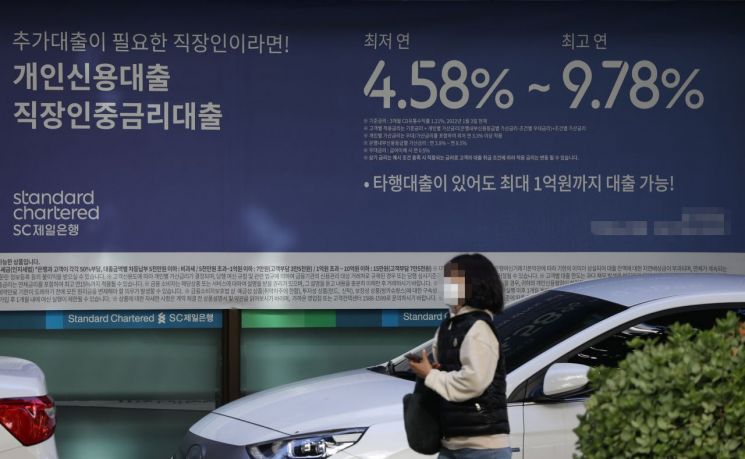
[Asia Economy Intern Reporter Lee Gyehwa] Mr. Lee, a worker in his 30s, bought a house two years ago by taking out a mortgage loan (hereinafter referred to as a mortgage) during the so-called 'Youngkkeul (borrowing to the limit)' craze. Considering the recent consecutive interest rate hikes, Mr. Lee is now contemplating whether it would be better to switch from a variable interest rate to a fixed interest rate, which is slightly lower.
The upper limit of variable mortgage interest rates has exceeded 7%. According to the financial sector, as of the 21st, the variable mortgage interest rates of the five major banks?KB Kookmin, Shinhan, Hana, Woori, and NongHyup?ranged from 4.59% to 7.10% per annum. The rise in mortgage interest rates is due to the COFIX (Cost of Funds Index) soaring to its highest level in 10 years.
The interest burden on the 'Youngkkeul' group is expected to increase further. At the National Assembly’s Planning and Finance Committee’s audit of the Bank of Korea on the 7th, Kim Tae-nyeon, a member of the Democratic Party, stated, "There are 1.57 million vulnerable borrowers with a total amount of 183 trillion won," adding, "When interest rates rise by 1 percentage point, the total interest burden increases by 820 billion won, and the monthly interest cost per person rises by 520,000 won."
At the end of last year, variable mortgage interest rates ranged from 3.39% to 4.80%. Compared to now, the upper and lower limits have increased by 2.3% and 1.2%, respectively. According to Representative Kim’s analysis, vulnerable borrowers are now paying over 1 million won more in interest per person.
As a result, the banking sector advises both existing and new borrowers to take out loans with fixed interest rates rather than variable rates. This is because the Bank of Korea’s base rate is expected to rise further next year, just as it did this year.
The most representative ways to reduce interest burdens include utilizing the Safe Conversion Loan and the right to request an interest rate reduction, as well as repaying unsecured loans. Using the Safe Conversion Loan, a policy financial product that converts variable-rate mortgages to long-term fixed rates as low as 3.7% per annum, is also a good option.
If you have a variable-rate mortgage and are a one-home owner with a combined household income of 70 million won or less and a house price (market value) of 400 million won or less, you can apply for the Safe Conversion Loan. The loan limit is 250 million won. Starting November 7, the second phase of applications will begin, expanding the house price limit beyond 400 million won. The Korea Housing Finance Corporation plans to separately announce the second application requirements and application methods at the end of this month.
The right to request an interest rate reduction allows borrowers to ask financial institutions to lower their interest burden if their income, assets, or credit score have increased. Since the financial sector began publicly comparing the performance of interest rate reduction requests last month, acceptance rates may rise due to competition among banks, making it more advantageous for borrowers to apply going forward.
For new mortgage loans, it is recommended to use a 'hybrid (fixed) interest rate loan.' This product typically applies a fixed interest rate for the first five years, then switches to a variable rate. After switching to a variable rate, policy financial products like the Safe Conversion Loan can be utilized.
The banking sector strongly recommends repaying unsecured loans, which have increased interest burdens due to variable rates, first. Reducing unsecured loans as much as possible to lower interest burdens and ensuring no delinquencies occur on mortgage loans to avoid foreclosure is emphasized as the best way to protect assets.
© The Asia Business Daily(www.asiae.co.kr). All rights reserved.

















