Siemens Gamesa in Germany to Lay Off 10% of Staff
Denmark's Vestas Reports 1.25 Trillion Won Loss
Imports of Chinese Wind Turbines Double in Two Years
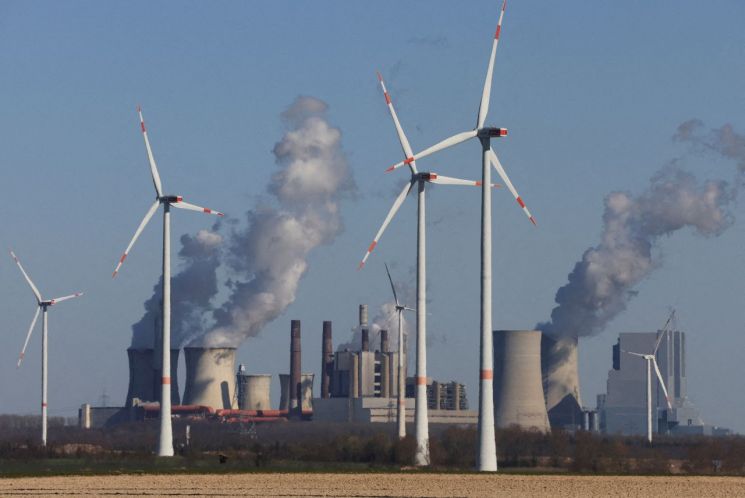
[Asia Economy Reporter Park Byung-hee] The European Union (EU) has declared that it will significantly increase renewable energy facilities such as solar and wind power after being unable to import gas from Russia, with which it is in conflict due to the Ukraine war. However, European wind power companies themselves are struggling, announcing large-scale losses and layoffs one after another. This is because the cost burden has increased due to inflation, and they are losing out in competition with Chinese companies that are greatly expanding wind power generation.
German wind turbine manufacturer Siemens Gamesa announced on the 29th of last month (local time) that it would lay off about 2,900 employees. This accounts for more than 10% of its total workforce of 27,000. GE is also reported to have notified large-scale layoffs to employees of its onshore wind business worldwide, including Europe, earlier this month. The onshore wind business is the largest segment of GE’s renewable energy operations, employing more than 38,000 people as of the end of last year.
Danish wind turbine manufacturer Vestas recorded a net loss of 884 million euros (about 1.25 trillion KRW) in the first half of this year. It turned to a loss from a net profit of 19 million euros in the first half of last year. Siemens also posted a quarterly loss in the first quarter of this year for the first time in nearly 12 years, due to asset write-downs in its Russian operations and large losses at its wind turbine subsidiary Gamesa.
Inflation has caused prices of key raw materials for wind turbines such as copper and steel to surge, sharply increasing the cost burden on wind power companies.
Moreover, the rapid growth of China’s wind power industry has heightened the crisis for European wind power companies. The scale of European imports of Chinese wind turbines nearly doubled from 211 million euros in 2019 to 411 million euros last year in just two years.
Chinese wind power companies are expanding their market dominance based on their rapidly growing domestic market.
According to data from the Global Wind Energy Council (GWEC), the newly installed global wind power capacity last year was 93.6 gigawatts (GW), of which 47.6 GW, or 50.9%, was installed in China. Chinese companies enjoy government support and intense competition in their domestic market, which has led to reduced manufacturing costs, giving them an advantage in competitiveness over European companies.
Matthew Donnan, an analyst at Morningstar, warned, "Chinese companies are not only financially more stable but can manufacture wind turbines at lower costs," adding, "European wind companies may be outcompeted by Chinese companies."
There are particular concerns that Chinese companies will intensify their push into the European market as the EU announces the expansion of the renewable energy industry. The European Commission announced the 'RePowerEU' strategy last May, which aims to increase the renewable energy share from the current 32% to 45% by 2030.
Ben Backwell, CEO of GWEC, also said, "Chinese companies are currently targeting emerging markets but could strengthen their efforts to enter the European market."
John Lesamitz Kotaza, head of public relations at Siemens, pointed out, "European wind companies are all facing financial difficulties due to rising costs," adding, "If the situation does not improve, a green Europe could be established without European technology." In other words, it could be a case of sowing the seeds only to benefit others.
Major European wind companies such as Siemens and Vestas already sent an open letter to the EU in February, requesting faster approval of wind power development plans. At that time, wind companies argued that delays in permits were causing cost increases, which could also lead to losing out in competition with Chinese companies.
© The Asia Business Daily(www.asiae.co.kr). All rights reserved.

















