[Interview] 1st Anniversary of An Hosang, President of Sejong Center for the Performing Arts
Declaration of In-house Theater Production an Inevitable Task, First Performance by Seoul City Choir Sold Out
Leading Figure of Korea's First Generation Arts Management, Achieved Traditional Reinterpretation through Changgeuk at National Theater
Sejong Season 2022 'SyncNext22' Sold Out with Enthusiastic Young Audience Response
Expanded Various Outdoor Performance Programs Aligned with Reopening of Renovated Gwanghwamun Plaza
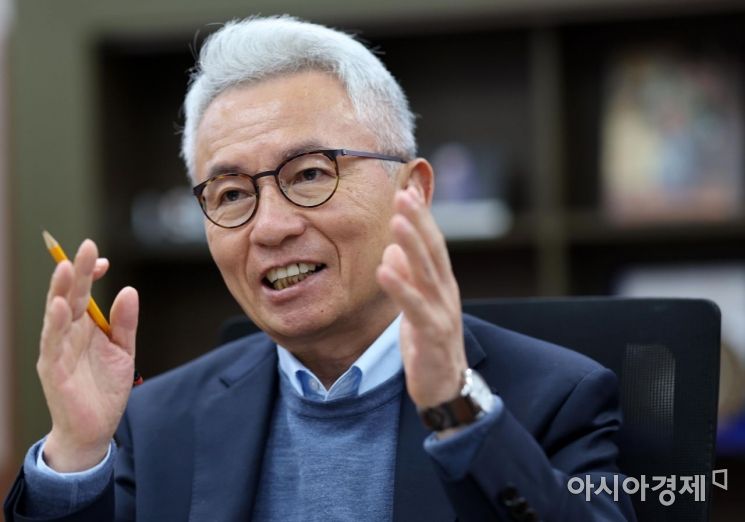
[Asia Economy Reporter Kim Heeyoon] “We are entering an era where each consumer subjectively consumes different content. Now, the competitor of performing arts is Netflix. In this situation, changes in performances and theaters are not a choice but an inevitable task.”
Sejong Center President Ahn Hosang’s analysis and outlook, marking his first year in office, are clear-eyed. At the 2022 Sejong Season briefing in February, he declared that he would transform Sejong Center into a production theater centered on its resident arts groups. COVID-19 has completely changed consumption patterns not only in performances but also in the content market. While the influence of theaters and performances has significantly declined, global content-based OTT platforms have recorded explosive growth. Facing this harsh reality as the head of a theater with extremely limited room to maneuver, he chose to confront it head-on by strengthening the capabilities of the resident arts groups under his jurisdiction.
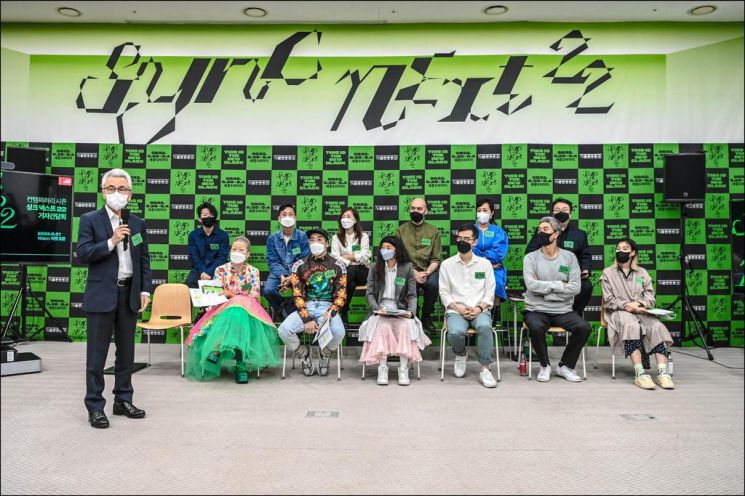 President Ahn Ho-sang introducing the cast at the Sejong Center for the Performing Arts 'Think Next 22' press conference. Photo by Sejong Center for the Performing Arts
Sejong Center operates six resident arts groups (Korean traditional orchestra, dance, choir, musical, theater, opera). Although these arts groups account for 42% of Sejong’s total budget, the audience for their performances accounted for only 12.3% of the total over the three years before President Ahn took office. Change was necessary. President Ahn explained, “By handling 90% of the spring season performances this year through the arts groups, we were able to understand our audience and assess the capabilities of the arts groups.” He added, “We confirmed meaningful results and are steadily recruiting PDs and new members to complete the production system by the first half of next year.”
Previously, during his tenure as director of the National Theater, he introduced a repertoire season system, achieving diversification of production programs and marketing success. Currently, the National Theater and Sejong Center are among the few theaters in Korea capable of producing their own works through affiliated groups. The declaration of Sejong Center as a production theater after Ahn’s appointment was a predictable change. The first performance, the Seoul City Choir’s “The Place Longed for by Spring Sunshine,” was unusually sold out and received positive reviews both internally and externally.
President Ahn stated, “Only the best art is chosen, and audiences come to see the best performances.” He emphasized, “The theater has the obligation to create the best programs and unique repertoires?performances only Sejong can offer. If Sejong produces works that are recognized as the best nationwide a few times a year, audiences who focus on these will emerge.” He explained that repertoire and audience are inseparable and one entity.
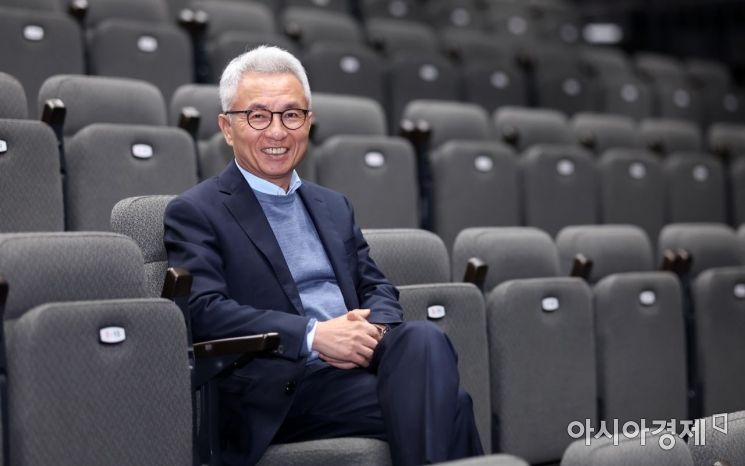
His insight that the theater’s top priority is the audience was not formed overnight. Considered a leading figure of the first generation of arts management in Korea, he joined the arts scene in 1984 as part of the first public recruitment at the Seoul Arts Center. “There were criticisms that Seoul Arts Center alumni monopolized leadership in the performing arts, but unlike government-funded national theaters, Seoul Arts Center had no financial support and had to survive through independent management,” he said. “New employees started with stage cleaning and ticket sales to learn the venue firsthand, and during performance planning, they focused intensely on funding and revenue, which cultivated experts skilled in financial independence.”
He finds the greatest fulfillment in creating new value. During his time at Seoul Arts Center, he received praise for planning the complete Mahler symphony concerts and opera festivals. While serving as director of the National Theater, he introduced new interpretations of traditional Korean opera (changgeuk). At Sejong Center, through the contemporary season “SyncNext22,” he presented new stages to audiences featuring contemporary artists’ theater, dance, musicals, as well as media art and audiovisual works. This program, involving artists such as Ahn Eunmi, Ambiguous Dance Company, Inalchi, and Tacit Group, was sold out and received enthusiastic responses from young audiences, injecting new vitality into Sejong. President Ahn said, “I wanted to focus on contemporary art and create opportunities for artists connected to art and audiences to meet. Sejong Center will become a place where boundaries between genres, artists, and between stage and audience disappear, offering new experiences to audiences.”
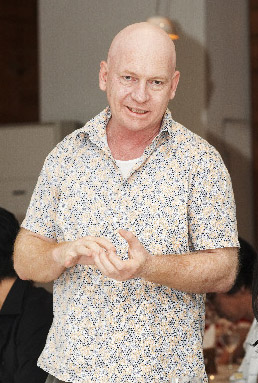 President Ahn introduced the late Roger Lynd, an Australian theater director, as a memorable figure among the countless artists he worked with through performances. Photo by Yonhap News
Among the countless artists he has worked with over 38 years in performance, President Ahn recalls Australian theater director the late Roger Lynd as a memorable figure. After joining Seoul Arts Center and working in the theater construction department, he was transferred to the performance department in his tenth year and met Roger Lynd during his first production. President Ahn recalled, “To target the main audience of his children’s English plays, I visited every English learning center office in Seoul to promote the performances. I only knew theaters before, but I wanted to make the production a success. At that time, all eight performances were sold out, achieving great results.” Roger Lynd, who was deeply impressed by Korea, later settled in Korea and worked as artistic director of a dedicated English theater, presenting various works.
With the reopening of the newly renovated Gwanghwamun Plaza, Sejong Center’s transformation is also accelerating. Having long focused on the relationship between the city and art, President Ahn said, “We plan to expand various outdoor performance programs that citizens visiting the plaza can enjoy.” He added, “Since it is still early after the reopening, various government-led programs are underway, so we have not fully stepped forward yet, but Sejong Center aims to offer diverse opportunities for citizens to enjoy culture outdoors.”
© The Asia Business Daily(www.asiae.co.kr). All rights reserved.



















